Author Archives: afs.admin

  1. The Doc Days Festival Is Here: Interview with THE SENTENCE Filmmaker Rudy Valdez

    Leave a Comment

    AFS’ inaugural documentary film festival Doc Days starts tonight, Thursday, May 10 at the AFS Cinema. Doc Days is a long weekend festival of brand-new documentary films with visiting filmmakers from the US and abroad. In addition to screening our favorite new documentaries from the festival circuit, the weekend will include events, parties, discussions, and moderated Q&As by Austin’s documentary film community.


    You can see the whole Doc Days schedule here.


    Below, the festival’s co-programmer Todd Savage brings us this in-depth interview with filmmaker Rudy Valdez, about his intensely moving and personal film THE SENTENCE.

     
    THE SENTENCE screens during Doc Days on Saturday, May 12 at 4:30pm. Valdez will be in attendance for at Q&A after the film.
    Rudy Valdez was not a filmmaker when he picked up a camera after his sister was served with a 15-year prison sentence. His goal at the time was to document the childhood of his young nieces. A decade later, his film THE SENTENCE (an Audience Award winner at Sundance) explores the hot-button political issue of mandatory minimum sentencing on the most intimate and personal plane possible. We talked with Valdez about the film and his approach as both a filmmaker and a family member.

    What were your goals for the film?
    This film didn’t start out being a documentary film. It started off me just wanting to try to capture the lives of my nieces for my sister. Photos are wonderful and the phone calls she was able to make home were great for her, but I just wanted her to be able to see her daughters live, watch them run and play and yell and scream. When she came home, I wanted to be able to put a super cut together and her to be able to watch her kids grow up.

    When did you make the shift to making a film?
    I can pinpoint the exact moment when I became a documentary filmmaker. There’s a scene at the very beginning where I went back to capture my sister’s oldest daughter Autumn’s first dance recital. I knew Cindy wanted nothing more than to be there and watch it, and I knew I had to be there to capture it. Completely unprovoked and unplanned, my sister called while [Autumn) was getting ready. My sister was saying how much she wanted to be there, and all of a sudden she says to my niece: ‘When you go to dance, I’m going to lay down on my bed, and I’m going to close my eyes and think about you.’ That was the moment I realized that was there something special here, there was a story that was completely untold, that people don’t realize when they send people away for 15, 20, 30, 40 years, life, that there are people left behind. And as painful as it was for my sister to sit back and imagine what the dance was like, it was just as heart-wrenching that Autumn had to imagine what it would be like for her mom to watch. I became a filmmaker on one hand so that I could tell my story. I wanted nothing more than to be as good as I could possibly could be so that I could make my film as strong as it could be. I am learning throughout the film and you can see it. It was a journey in a lot of ways. It was a journey for my sister, it was a journey for the family left behind, it was a journey in the fight for justice, it was the journey of somebody learning trying and figuring out how to tell a story.

    How did you communicate to your family what you were doing?
    The most important thing when you’re making a documentary, especially an intimate personal documentary, verité style, is gaining the trust of your subjects and the people you’re filming. I had that from the very beginning. They trusted me. They knew why I was doing it. Once I decided it was going to be a documentary, I made it very clear to them what my intentions were. It was always for the greater good. It was a terrible thing that happened; it’s only going to be a tragedy if we allow it to be. If something good comes of it, then all of this wasn’t wasted. That didn’t make it any easier for my family to be vulnerable and honest in front of the camera for me, but it allowed them to know that what I was doing. Everyone really bought into it and believed in that, and so they were able to let their guard down and just let me film everything.

    You addressed this in the film but can you talk more about how was it being behind the camera? Did that role change your participation in what was going on with your family?
    Yes, that was kind of a sacrifice and a coping mechanism for me. Part of holding the camera was allowing myself to separate. Nobody wants to see his father cry, let alone record it. In the back of my mind I knew this is for the greater good. That didn’t make it any easier to watch my father cry, but one part of my brain is feeling for my father and wanting to hug him and tell him everything was going to be okay. The other part of my brain was saying, ‘Am I framed up? Am I focused? Do I have enough battery for this scene? Where is this scene going?’ It allowed me to partition in a certain way and allowed me to really cover myself from some of the emotion. I still had that emotion but it was delayed—I would think about it at night. I was constantly thinking about if I was doing the right thing, if I was doing my family justice by capturing moments. If for some reason I never end up making a documentary with this footage, am I doing myself a disservice by not being present during these times for my family? It was a constant struggle. I never had a break from it.

    Your nieces were so natural in front of the camera, but when they turned the camera on you, you seemed surprisingly uncomfortable.
    I think it was because I was Uncle Rudy. They trusted me, and it was just second nature. I oftentimes gave them the camera and let them run around so they were very comfortable with it. As a professional, I ask people to be open and honest and vulnerable in front of me, and it dawned on me right there in front of the camera that I had to force myself to do that. I’m asking my family, I’m asking my parents, my nieces, everyone to be open and honest with me in front of the camera, and I never asked that of myself. So I looked to the camera and wanted to convey what I was feeling and how I was coping with this whole thing. Because it was truly—I can’t even begin to tell you—this was something that weighed on me for 10 years. And so that was where that scene came from and where that talking to the camera came from. I actually kept that from my editor for a long time, on purpose. I didn’t want to be a main character in this film, I didn’t want it to be about me or my fight. I wanted the film to be the girls and the strength of the family. I’m not completely dismissing the fact that when they’re talking to the camera they’re talking to a family member. I needed it to be clear.

    The story seemed almost universal, like this could happen to any family and how would I have dealt with it.
    I’m so happy that you said that, because that is exactly why I made it the way I did. It wasn’t to show you that we’re some super human family. We’re not. This is a family that believes in love and believes in hope. I want you to see your father in this film. I want you to see yourself in this film. We’re not doing anything extraordinary. We just believed in each other. That’s it.

    How did she react to the film? Has she seen a lot of the other footage?
    She only saw the film right before Sundance. It was very, very difficult for her to watch the film—just watching the girls grow up in 84 minutes. She didn’t even understand what the film was about because she was just so caught up in seeing them, and seeing them grow up. She’s seen it now about 10 times at festivals and it was about fourth or fifth time when she was finally like, ‘Rudy this is an amazing film.’ I’m still working on the supercut of everything. I’m trying to not be an artist with it. I’m trying to be like, ‘Here are the girls.’ It’s something that’s just for her.

    Join Valdez at THE SENTENCE during Doc Days on Saturday, May 12 at 4:30pm.

    See the Doc Days trailer here:
  2. Like Superhero Movies? So Do We: RBG Opens This Thursday at AFS Cinema

    Leave a Comment

    If you’re wondering why everyone is talking about the new documentary RBG, it’s probably because Justice Ruth Bader Ginsburg is every bit the superhero that the film asserts, and all of us who value civility, scholarship and good judgment love Ginsburg, who has embodied these traits so well for so long.

    But directors Betsy West and Julie Cohen don’t have to break out the Super-CGI effects to make their point – they simply let RBG take center-stage. What results is an awe-inspiring ode to a monumental woman.

    Preview audiences have been erupting into spontaneous applause and you will too. Could you use a feel-good movie like this right now?

    RBG opens at AFS Cinema on May 3 and, in what is surely a heartening sign for the Republic, shows are starting to sell out. Don’t worry though, we’ll keep adding more.

    Tickets now on sale. Be there!

    ‘How are the reviews,’ you ask. Well…

    “Ginsburg isn’t just an 85-year-old cultural icon, she’s also an 85-year-old cultural icon who spent a lifetime opting for litigating over protesting, for painstaking incremental legal work that took years to bear fruit, and who still feels more comfortable in the world of words and text than in the world of fame and notoriety. RBG captures that paradox beautifully.” – Dahlia Lithwick, Slate

    “RBG makes the case for Ginsburg as a hero, but for all aspects of her life, not just the splashy cases that help shape the nation… But what might be most inspiring about Ginsburg – and RBG… – is how she’s continued to hammer away at her dreams and her desires, even when buffeted back by forces she can’t control.” – Kate Erbland, IndieWire

    “We are living in an era full of sound and fury, not to mention bitterness, hysteria and rampant incivility. So there is something deeply soothing about RBG…” – Leslie Felperin, Hollywood Reporter 

    “The notion of Ruth Bader Ginsburg, the diminutive and soft-spoken Supreme Court justice, as a judicial “rock star”… may seem a strange one. But the lively and thorough profile painted of her… makes a persuasive argument for that characterization… RBG shines a strong, clear spotlight on female jurists who are out to change the world, one small step at a time.” – Michael O’Sullivan, Washington Post

    Watch the trailer here:

  3. Meet the New French Cinema Week Filmmakers: Karim Moussaou

    Leave a Comment

    Karim Moussaoui’s first feature, UNTIL THE BIRDS RETURN, tells a series of stories that take place in his home country of Algeria. We asked Karim three questions about his films’ strong relationships to place.

    UNTIL THE BIRDS RETURN premieres Saturday, April 28th at 7PM at the AFS Cinema.

    Austin Film Society: Describe how the identity of Algeria has become a central focus in your films.

    Karim Moussaoui: When I direct films, I only tell stories that take place in Algeria.  My goal is never to give a glimpse of what one could call the identity of Algeria. I’m only giving a view of what can take place in Algeria. It’s a personal and subjective take, which has its limits.

    Austin Film Society:  UNTIL THE BIRDS RETURN often utilizes wide angles. Can you talk about this strategy as it relates to the narrative?

    Karim Moussaoui: Wide angles contribute to my instinct to bring into existence, at the same time, my characters and the places in which they live. It’s this way of filming that can deliver to the audience much more information in a very small amount of time. The landscapes like the architecture, or the state of the public spaces, give a glimpse of the political and social context.

    Austin Film Society: US audiences rarely see new films from Algeria. Can you describe the filmmaking scene in Algeria for the US audience?

    Karim Moussaoui: Cinema in Algeria has ceased being a national priority since the 1970s. This decline lasted until the beginning the 1990s, almost to the point of disappearing. During the 2000s, a few directors made films that were recognized in many international festivals. That allowed for a re-dynamization of Algerian cinema, without convincing the public powers of the necessity to put in place true mechanisms for its development.

  4. The Critics Agree: OH LUCY! is “Nothing Less Than Transfixing”

    Leave a Comment

    The comedy/drama OH LUCY! opens this weekend at the AFS Cinema for a limited run. Atsuko Hirayanagi’s film has delighted audiences from Tokyo to Hollywood, and actress Shinobu Terajima is a delight as a middle-aged woman who pursues her dream of love across the vast Pacific Ocean. With Josh Hartnett as the apple of her eye and a wonderful supporting cast that includes Megan Mullally.

    And for once the critics and audiences are near-unanimous in their praise, as the film has a rare 100% rating on Rotten Tomatoes.

    Here are some of the gems:

    “It’s a near-minor miracle that just about everything works in this emphatically modest comedy-drama… The writer-director Atsuko Hirayanagi isn’t selling a packaged idea about what it means to be human; she does something trickier and more honest here, merely by tracing the ordinary absurdities and agonies of one woman’s life.”Manohla Dargis, New York Times

    “Within the confines of this cross-cultural shaggy-dog tale, Hirayanagi locates both a sharp vein of absurdist comedy and a bitter, melancholy undertow.”Justin Chang, Los Angeles Times

    “Nothing here is wrapped up with a red ribbon the way it would be in an American film, studio made or otherwise. OH LUCY! has the guts to leave things messy and unkempt, just like life.” – Adam Graham, Detroit Free Press

    “Hirayanagi has a way of gradually getting inside her characters that slowly renders them comprehensively known, intimately exposed and surprisingly surprising.” Colin Covert, Minneapolis Star Tribune

    Watch the trailer here:
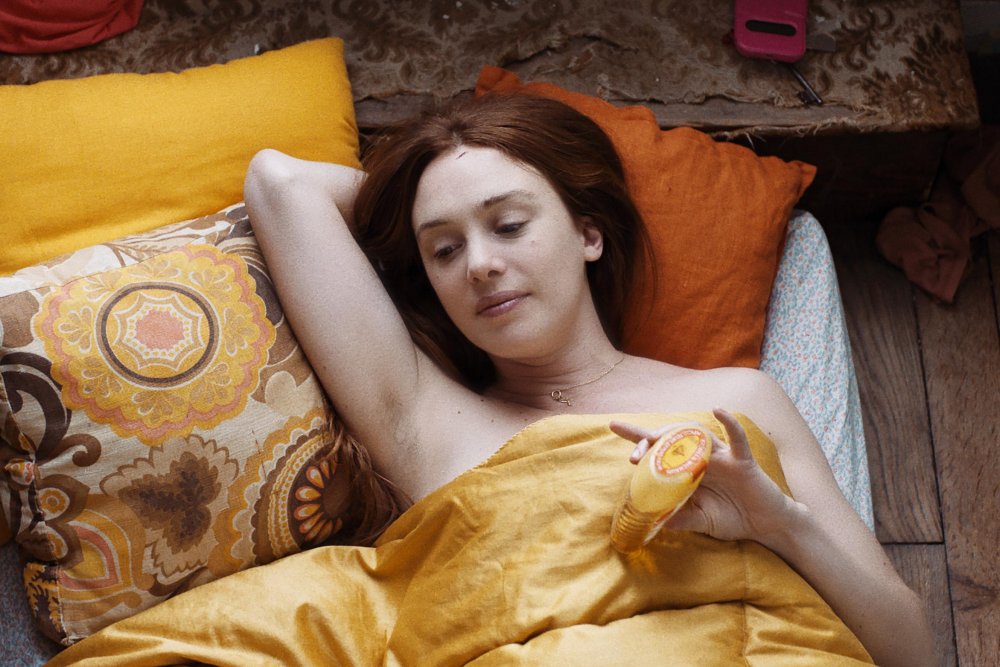
  5. Meet the New French Cinema Week Filmmakers: Composer Julie Roué

    Leave a Comment
    April 25th through 29th is the 4th Annual 2018 New French Cinema Weekend. Join us at the AFS Cinema to enjoy a diverse and provocative line-up of award-winning French language films.

    To celebrate the fourth year of the showcase, we interviewed a few of our participating filmmakers and artists. Julie Roué, composer for Léonor Serraille’s film MONTPARNESSE BIENVENUE, will be joining us for the festival. Learn about Roué’s inspiration and work on the film below:

    Austin Film Society: You are a musician and sound designer. What drew you to filmmaking?

    Julie Roué: Going out of my comfort zone! I chose a career where you don’t go to work at the same place every day at the same time. I could do my own music–which I do on my free time–but I like exploring the multiple facets of my musical personality. Directors push me in one direction or another. They make me to go to places where I never would go by myself.

    Each film I’m on is a universe I enter, with its inner laws, its colors, its rhythm. And each director is a personality to discover, a person I need to understand in order to enter their system. I am fascinated by people and how they manage to tell stories that resonate with other people. I like understanding each storyteller’s algorithm and add my own maths to their system.

    AFS: You’ll be speaking at a Moviemaker Dialogue during your time with us in Austin. What topics of discussion are most important when speaking with musicians who are hoping to break into film or television work?

    Roué: Being very new in this industry myself, I would like to make this moment a real dialogue where I can share my experience on very specific situations. So far I have worked mainly on short films. I have no recipe, I reinvent my way of composing for each film. I would like to show a few examples of the challenges I had to face, how I tried to understand what the director had in mind to transform it into music. I also want to talk about how the composer and the sound designer can work hand in hand to create a harmonious soundtrack.

    AFS: Tell us about why you decided to take on MONTPARNASSE BIENVENUE, and what attracted you to the project.

    Roué: I had already worked on Léonor Serraille’s short film, BODY. I admired her talent for portraying strong characters, women, evolving in a world where they don’t fit very well. Her writing is sharp, precise, loving and full of asperities. I read the script of MONTPARNASSE BIENVENUE at an early stage and immediately was struck by Paula, the main character. First, I hated her. And then, unintendedly, started to understand her, and love her. I could totally relate to her, not in the sense that she was like me, but in the sense that she triggered strong emotions, questioned my beliefs. Léonor Serraille wanted me to write songs, songs that would be the sound set of the places Paula goes through, but also her inner playlist, a cartography of her mental states. I love writing songs; she didn’t have to say more.

    Roué will participate in a Moviemaker Dialogue on Wednesday, April 25. She will also participate in the post-screening Q+A of MONTPARNESSE BIENVENUE on Thursday, April 26 at the AFS Cinema. Tickets to the film and series passes for the full New French Cinema Weekend lineup are available for purchase; AFS members receive a discount. Additionally, AFS members are invited to the members-only Opening Reception on April 25.

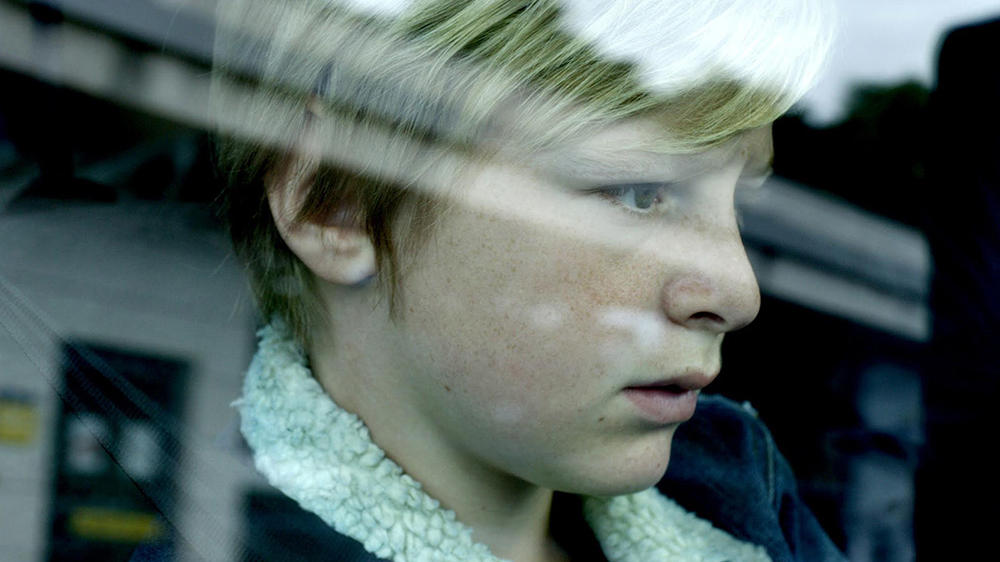
  6. Meet the New French Cinema Week Filmmakers: Xavier Legrand

    Leave a Comment

    April 25th through 29th is the 4th Annual 2018 New French Cinema Weekend. Join us at the AFS Cinema to enjoy a diverse and provocative line-up of award-winning French language films.

    Below, Xavier Legrand, director and winner of the Silver Lion Award for Best Director at the Venice Film Festival, discusses the story and casting CUSTODY plus future plans.

    Austin Film Society: Tell us what led you to discover that the subject of a divorce had so many dramatic possibilities.

    Xavier Legrand: When I discovered the problems associated with domestic violence, I detected a lot of pain that could bring families into terrifying situations. Spousal abuse is not just beatings, but a formidable psychological hold, constant manipulation, sick jealousy and an obsession to want to own the other. And unfortunately, children are not spared in these conflicts and are all too often forgotten victims. In France, a woman is murdered by her spouse or ex-spouse every 3 days. In 2016, 123 women were murdered and 35 children died as a result of domestic violence. These murders occur in most cases at the time of separation or just after.

    AFS: The film owes so much to the performances of the actors, as so much of the tension comes from the fact that we are learning critical details about the characters as the story progresses. Can you tell us the secrets of your phenomenal casting work?

    Legrand: Any small role must be useful to the story and must be built with a lot of detail. Right from the writing stage, I made sure that each role could contribute something to the issues and the plot. Besides, being an actor myself, I know actors well. The majority of the cast is made up of theatre actors who are rarely seen on screen. I have seen them in the theatre and know how they all work. Finally, since the subject of the film is family, I made sure to find a coherent resemblance with each other.

    AFS: You have been celebrated in the US with an Academy Award nomination for a short, plus named this year as one of Variety’s 10 Directors to Watch. Any plans to make films in the US?

    Legrand: That’s not in my outlook right now. But maybe someday, if the subject of the film asks.


    Legrand will join us for a post-screening Q+A of CUSTODY on Friday, April 27 at the AFS Cinema. Tickets to the film and series passes for the full New French Cinema Weekend lineup are available for purchase; AFS members receive a discount. Additionally, AFS members are invited to the members-only Opening Reception on April 25.
  7. “Intense, Mesmerizing & Heartbreaking,” DID YOU WONDER WHO FIRED THE GUN? Opens this Friday

    Leave a Comment

    “Human beings have a need to know: who we are, where we came from – essentially, what happened. We keep records, take photographs, tell stories, and build memorials. We try to keep track of our history. But sometimes there are missing pages. And sometimes there’s darkness.” Danielle White, Austin Chronicle

    As you may have heard, quite a lot of people are pretty shaken up by the new essay doc by Travis Wilkerson, DID YOU WONDER WHO FIRED THE GUN? In it, Wilkerson, who is originally from Alabama, interrogates a true crime drama with the journalistic detail of the podcasts Serial or S-Town. But Wilkerson doesn’t have the same kind of distance from the subject, because the racist murderer at the core of the story was his own great-grandfather, whose standing in white society did not change one bit after the incident. In fact the whole matter seems to have vanished from the civic record entirely.

    It is high drama, and more relevant now than ever. It’s the kind of film that you will walk around thinking about for days after, maybe longer.

    DID YOU WONDER WHO FIRED THE GUN? opens Friday, April 20 at AFS Cinema. Tickets on sale here. 

    We’ll let the critics tell you the rest:

    “A scorching and rigorous essay on memory and accountability… neither a profession of guilt nor a performance of virtue…Instead of consolation, Mr. Wilkerson offers commitment. Instead of idealism, honesty. ” – A.O. Scott, NY Times 

    “It’s an enormous story… He provides, in effect, a travelogue of the history of racism” – Richard Brody, The New Yorker 

    “…intense, mesmerizing, and heartbreaking… It’s hard not to experience Did You Wonder Who Fired the Gun? and not get shivers up your spine — from fear, from anger, and from the beauty of Wilkerson’s filmmaking.” – Bilge Ebiri, The Village Voice 

    Here’s the trailer:

  8. Jane Fonda’s BARBARELLA: Performing Future Woman

    Leave a Comment

    BARBARELLA plays at the AFS Cinema for select shows from 4/20-4/23. Tickets are available now.

    BARBARELLA (1968) is often lumped in with the soft-pornographic, MAD MEN-era brand of sexist iconography. It’s erotic imagination is as unsophisticated as an ad for a manly fragrance: if only all beautiful women were as chill as Barbarella, life would be easier. If only all women would stop having preferences, and just enjoy the underside of the boot. While there’s a deliberate lack of physical contact on screen, the movie doesn’t need actual sex to remind us of porn.

    Barbarella could easily have been a throw-away role – blandly seductive or childishly passive. But, we’re talking about Jane Fonda here. As Karina Longworth put it, referring to any Fonda performance: “She’s almost always the most active presence in any given scene… There’s no way you could watch a Jane Fonda performance and not know what her character wanted.”

    In BARBARELLA, she takes the concept of agreeability and turns it up to 11. She’s so alert and eager to please that her agency breaks through the two-dimensionality of the character. She’s the overly precocious, straight-A student of sexual awakening. Some of this eagerness is built in to Fonda as a performer. As Pauline Kael would write, much later, “Jane Fonda’s motor runs a little fast… she’s always a little ahead of everybody, and this quicker beat–this quicker responsiveness–makes her more exciting to watch.”

    This quickness – almost jumpiness – doesn’t just fit the character. It transforms it. Fonda-rella candidly delivers cheeky one-liners, presenting as a genuinely likable human being, instead of an icy bombshell like Brigitte Bardot, director-husband Roger Vadim’s first wife and “discovery”. She takes the sex goddess off the pedestal.

    Even discerning modern audiences are taken in by BARBARELLA’s pseudo-feminism. She carries a gun and shoots it. She has a motive outside domesticity and male pleasure. She enjoys sex. The film cherry picks motifs from the budding culture of psychedelia and sexual liberation. We buy into it because the bar is still low, and we’re all starved for a retro feminist superhero. Fonda herself has asserted that “it could have been a really strong feminist movie.” Modern audiences detect this, as well as the distance between the could-have and the reality.

    Fonda knows how to sell the character, even if she doesn’t sell the sex object with the same oomph the producers may have intended. Nothing she does in the Orgasmatron looks like a real woman having a real orgasm. It’s a spoof of an orgasm – it’s hammed up for the male gaze. When she sells sex in KLUTE, we see the difference – right before she looks at her watch and let’s us know it’s all an act. (Tori Galatro)

    Tori Galatro is a current AFS Marketing Senior Intern.

    Watch the trailer for BARBARELLA here:


  9. New Desplechin Alert: ISMAEL’S GHOSTS Opens This Friday at AFS Cinema

    Leave a Comment

    Anytime one of the lions of world cinema makes a new movie it is an event. Writer-director Arnaud Desplechin certainly falls into this category. As his classic works MY GOLDEN DAYS, KINGS & QUEEN and A CHRISTMAS TALE demonstrate, Desplechin is never shy about following his own north star wherever it may take him – and his audiences.

    His newest film, ISMAEL’S GHOSTS, stars Louis Garrel, Marion Cotillard, Charlotte Gainsbourg, and the director’s own favorite actor Mathieu Amalric in a story of lost love regained… sort of. Expect a collision of diverse emotions, the funny and the sad dancing around one another in the exquisite Desplechin manner. It opens this weekend at AFS Cinema so you can see it for yourself.

    But don’t just take our word for it. Here’s what the critics are saying:

    “A messy but vibrant drama… serves as a reminder that the messiness so vital to Desplechin’s work… is in fact the carefully achieved product of a tricky and elusive alchemy.” – Justin Chang, LA Times

    “…a crazy ride – and pure ‘amour-fou’ bliss…… reminds You Why Marion Cotillard Is a Star…  So often, this preternaturally talented actress is simply asked to be Pretty Mystery Lady when she’s recruited for Hollywood movies. Desplechin gives her chance to run the gamut from guilty to breezy here, and it’s a gift to Cotillard – and us.” – David Fear, Rolling Stone

    “…this movie’s nerve endings vibrate most avidly and tenderly in scenes where not a word is spoken… It’s moments like these that make ISMAEL’S GHOSTS an unforgettable experience.” – Glenn Kenny, NY Times

    Watch the trailer here.

    ISMAEL’S GHOSTS opens Friday, April 13 at AFS Cinema. Tickets on sale here
  10. “Gorgeous… Sprawling… Brutal… Majestic…” What Critics Are Saying About SWEET COUNTRY, Opening This Weekend

    Leave a Comment

    With a 94% Fresh rating on Rotten Tomatoes and prizes from the Venice and Toronto International Film Festivals, the new Australian historical drama SWEET COUNTRY has very much earned its place on the big screen this weekend at AFS Cinema. Here are just a few of the rave reviews:

    “A bleak story presented with great style, it’s a finely made Australian western that demonstrates the malleability of that most American of genres as well as the impressive gifts of Indigenous filmmaker Warwick Thornton.” Kenneth Turan, LA Times

    “Thornton delicately peels back all the layers of Aussie injustice in this film, but what’s most unnerving is that the story proves to be so universal.” April Wolfe, The Village Voice

    “This gorgeous, sprawling tale of early 20th century desert survival and racist villains packs the brutal punch of Sam Peckinpah, but folds the majestic vistas and gunplay into a disquieting statement on persecution with echoes of 12 YEARS A SLAVE.” Eric Kohn, Indiewire

    “A drama of imposing breadth and emotional depth.” David Rooney, Hollywood Reporter

    “Stately but universally accessible in its deft genre touches and border-crossing political import, …“Sweet Country” has the makings of an international arthouse talking point.” Guy Lodge, Variety

    SWEET COUNTRY, directed by Warwick Thornton, and starring Sam Neill, Hamilton Morris and Bryan Brown, opens at AFS this Friday, April 13. Tickets are on sale here>>

    Watch the trailer here:

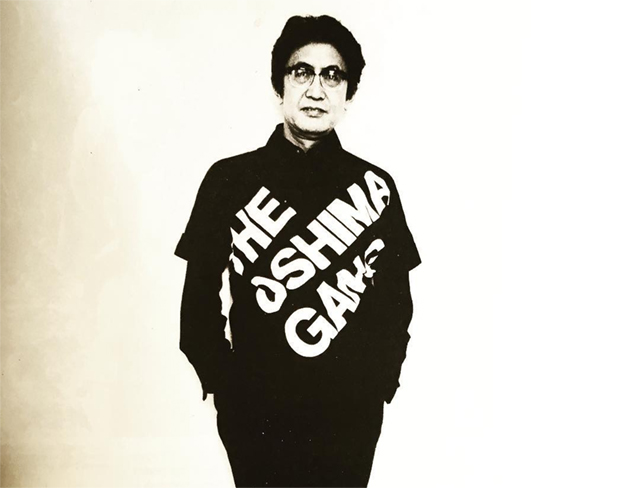
  11. Attn. Ôshima Gang: Rare Nagisa Ôshima Films Now Playing at AFS Cinema

    Leave a Comment

    Our FORBIDDEN COLORS: THE TRANSGRESSIONS OF NAGISA ÔSHIMA series is now playing at the AFS Cinema. Now is your chance to see the films of one of the 20th Century’s great cinema provocateurs on the big screen and (except for one digital and one 16mm) on 35mm film.

    From his earliest films (CRUEL STORY OF YOUTH, NIGHT AND FOG IN JAPAN) where he established himself as a filmmaker with something to say, through to his erotic masterpiece IN THE REALM OF THE SENSES and on to his collaboration with David Bowie, MERRY CHRISTMAS MISTER LAWRENCE, this is a series that must be seen on the big screen and discussed with friends. These are packages of ideas that inflate when watched.

    Here’s the whole series lineup and, if you haven’t seen it already, the trailer. Hope to see you at all the shows.
  12. Watch This: Paul Thomas Anderson and Richard Linklater in conversation at the 2018 Texas Film Awards

    Leave a Comment
    It’s not every day that you get to listen to a couple of the greatest filmmakers of a generation just talk. But that’s the magic of the Texas Film Awards, which took place on March 8th, 2018, where audiences are treated to the kind of star-studded glamour and magical movie moments rarely witnessed outside of Hollywood.
    This year, as a special tribute to the late Jonathan Demme, Richard Linklater sat down with Paul Thomas Anderson (the recipient of the inaugural Jonathan Demme Award) for an intimate conversation about their mutual friend. It’s a beautiful, inspiring discussion. Enjoy.

THANK YOU TO OUR SPONSORS