Filmmaker Charles Burnett was born on this day in 1944. Though he was born in Vicksburg, Mississippi, his family moved to Watts in South Central Los Angeles when Burnett was a child. Burnett’s family was only one of many black southern families to relocate to the Watts neighborhood and the area’s south-inflected culture makes itself felt in Burnett’s works again and again.
Even as Watts burned in the 1965 riots, Burnett was attending UCLA, learning creative writing. When UCLA’s film department began its initiative to enroll more African-American students, Burnett signed up and became part of the movement that was to be known at the L.A. Rebellion. Other noted alumni, many of whom continued to work on each others’ films for years after graduation, were Julie Dash, Larry Clark (not to be confused with the KIDS auteur of the same name), Haile Gerima, Billy Woodberry and Jamaa Fanaka.
Here is a film from Burnett’s school years called SEVERAL FRIENDS (1969). We can see in it some threads of the same cultural fabric from which his later KILLER OF SHEEP (1977) emerged. At a time when films might feature only an occasional black character, Burnett shows whole groups of black characters talking together about things that concern them. It’s all shot in a cinema-verite style with non-actors, on neighborhood streets. It’s a remarkable time-capsule of a culture many viewers have probably never seen before.
We can understand why producer David O. Selznick, upon seeing Ingrid Bergman in a Swedish film, knew he had to bring her to America. Bergman wore little or no makeup, was modest and unaffected, but also bold and intelligent. She is one of the great movie stars, and one of the finest actresses of any era.
At the height of United States involvement in WWII, the United States Office Of War Information produced a number of propaganda films for mass dissemination of various messages. There’s one that warns about leaks of sensitive information, one about the important work done by women in munitions plants, etc. There is also this one, hosted by Ingrid Bergman, all about Swedish Americans. We see them at work, with their industriousness and sense of cooperation a boon to their adopted country. We meet poet Carl Sandburg, surely a credit to America. It’s hard to tell what the film’s point is – other than “Swedish Americans are wonderful people” or perhaps, “Send more Swedes.”
Frankly, it’s odd, especially as there seems to be no similar film about, say, German-Americans or Japanese Americans. It’s possible that Bergman, a major star at the time, made her services available and the project was tailored to her.
Whatever the reason, any project that gets Ingrid Bergman in front of a camera can be considered a worthwhile one. She glows. Her rapport with the viewer, even in such a forced and unusual context, is remarkable. We believe that she is deeply interested in the Swedish Museum Of Philadelphia or in the exertions of street sweepers in the frosty north.
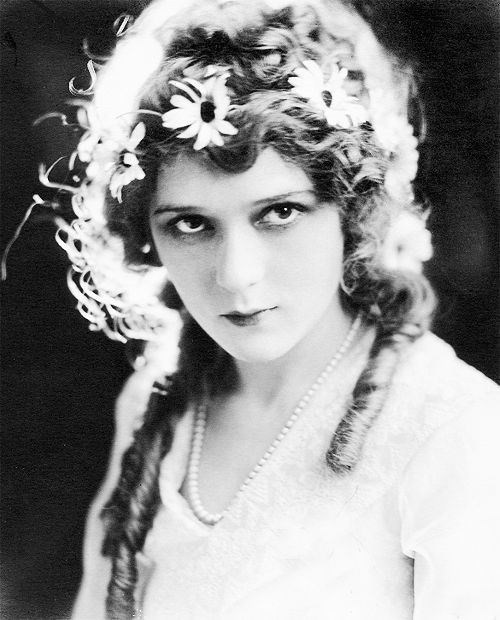
Mary Pickford was born on this date as Gladys Louise Smith in Toronto in 1892. When her father was killed in a workplace accident, her mother was compelled to take in boarders to make ends meet. One of these boarders was a theatrical producer who saw potential in 9-year-old Gladys and cast her in a stage part. Success followed upon success and soon the whole family was in the theatrical business, touring Canada and the States for several years. Along the way, Gladys was compelled by one producer to change her name to Mary Pickford and it stuck.
After completing a run on Broadway in 1909, teenaged Mary was given a screen-test by the great D.W. Griffith, who at this time was making his early Biograph shorts. Soon she became one of Griffith’s regular players, appearing in an average of a film per week.
In those days before the star system no performers were credited but Mary had made such an impression that exhibitors began advertising films starring “The Girl With The Curls” or simply “The Biograph Girl.” She had become a movie star without any publicity and other producers took notice.
After a return foray on Broadway, Pickford swore off stage acting for good and returned to Hollywood where she was signed by Adolph Zukor for the company that was later to become Paramount Pictures. She starred in many films there and with the release of 1914’s TESS OF THE STORM COUNTRY she was officially the biggest star in movies.
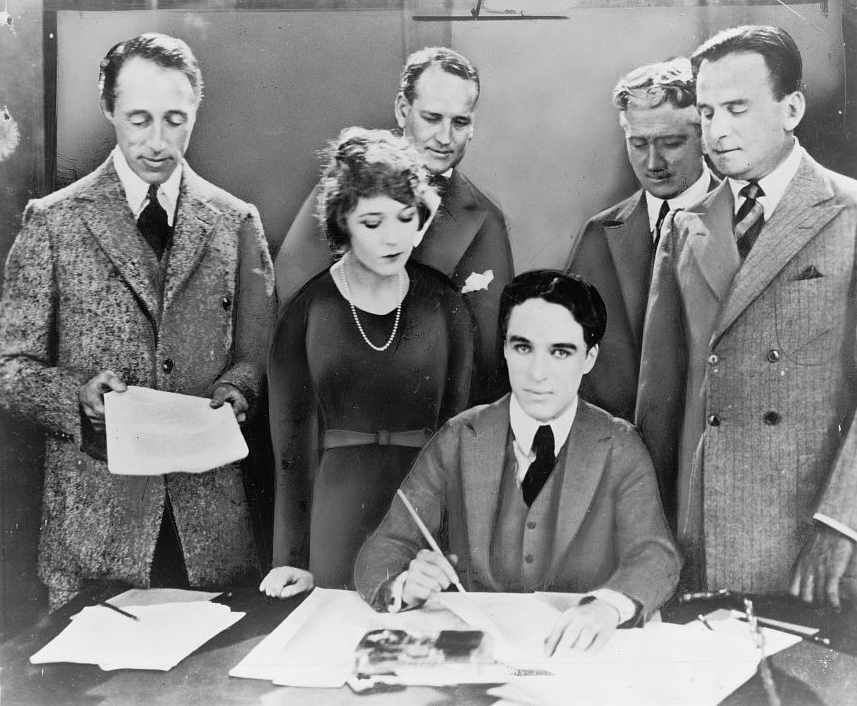
Academy Of Motion Picture Arts & Sciences Curator Robert Cushman has attempted to explain her immense appeal, saying, “The whole world wanted to put its arms around her, and in a way it did.” She appealed to people of all ages and both genders equally. She was also a fine performer. Director George Cukor said she invented screen acting – and Method acting. She understood the camera and took charge of her image as producer on all her own films. She was, in fact, one of the finest producers in the industry, even in her early ’20s. She also took charge of her finances. Unlike other performers, content to take what was offered, Pickford monitored her grosses and publicity and made subsequent demands for raises as her star rose to previously unimagined heights. By 1919, she decided to eliminate the middleman entirely and, with her partners, actor Douglas Fairbanks (also soon to become her husband), her mentor D.W. Griffith, and fellow star Charles Chaplin, she formed United Artists, a distributor that, for the first time, gave creatives access to theaters without interference from the studios. This was to prove a major step forward for the industry, allowing independent films to flourish and find markets.
By the ’20s Pickford wielded more power, as star, producer and United Artists principal, than any woman in film history ever had before – or since. Even with the coming of sound, which coincided with the end of Pickford’s youth, she remained active in Hollywood, producing films and administering United Artists and managing her many other business interests. She was given an Academy Award for Lifetime Achievement in 1976. She died in 1979.
There are whole chapters of film history yet to be written about corporate and industrial films. These are films made for training, sales or other purposes. Generally these were shot by production bureaus who specialized in them. Such well-known filmmakers as Robert Altman and George Romero got their starts in “industrials.”
There are even people, and I count myself among them, who are fans of these 16mm marvels. A good number of them can be found on archive.org, especially as part of the Prelinger Archive subcollection.
Here’s what may be the ultimate industrial film. It is, in itself a goof on the industrial genre, made by a leading producer of such, and made, appropriately enough, as a sales tool. As time has marched on around it, we now find some real bite in its satire of the science of persuasion. The authoritative voice of the narrator, the stock footage and staged historical re-enactments all make us question the veracity of the propaganda that inundates us. It’s also very funny.
Miguel Gomes as himself, buried in sand, in ARABIAN NIGHTS CHAPTER 1: THE RESTLESS ONE
Portuguese writer/director Miguel Gomes is no newcomer. He has been making films since 1999 and his 2012 film TABU was an international arthouse hit. His latest work, the three volume ARABIAN NIGHTS Trilogy, is something very different again. Each film consists of a series of loosely connected vignettes, tied together by the narrator of the fictional 1001 Nights, Scheherazade. In these stories we are presented a variety of stories about modern Europe in an age of enforced austerity, with detours into the past of the legendary story cycle. It’s a big, complex canvas and at times we may guess (correctly) that Gomes is pulling our leg a little. Some will find this work hilarious and many may find it hopelessly obtuse. It is a large, multitudinous work from a very interesting filmmaker.
Today is Warren Beatty’s 79th birthday. Beatty is one of those great stars who, by virtue of his exceptionally careful project selection, may today be much less prominent to younger people than others of his generation who have sought the spotlight more fervently but who nonetheless has left behind a body of work that anyone would be proud of.
Growing up, both he and older sister Shirley MacLaine had show-business aspirations. As her movie career took off, he studied acting with Stella Adler, worked on the stage and went to Hollywood where he became a busy television actor. Elia Kazan cast him in a star-making role in SPLENDOR IN THE GRASS and he became a sought after young lead in films. In particular the handsome actor seemed to have a natural chemistry with every actress he shared the screen with. Even at this early stage, Beatty was interested in more than just drawing a salary and smiling for the camera.
As he neared 30 years of age he decided to become a producer as well. He developed BONNIE & CLYDE with an eye towards casting it with his sister Shirley MacLaine and another male lead, but when that did not materialize he recast the film with himself as Clyde and Faye Dunaway as Bonnie. The studio saw BONNIE & CLYDE as a low-budget drive-in film that would make its money back and keep the restless Beatty happy. In fact Warner Brothers thought so little of the idea that they gave Beatty 40 gross percentage points in lieu of a producer’s salary. After the unexpected success of the film, Beatty found himself not only a major star but a very wealthy man.
No longer at the beck and call of anyone, Beatty became a mini-mogul, calling his own shots and making films he believed in. Other stars may have had a six or eight year run of prominence but Beatty was able to remain in the public eye even when the films were years apart by virtue of his excellent taste in selecting projects. SHAMPOO (1975) and HEAVEN CAN WAIT (1978) were major hits. REDS (1981) lost money but won Beatty the Best Director Oscar and was highly acclaimed critically, ISHTAR (1987) was a box office failure and roundly panned, though now we can see that its humor was just ahead of its time, DICK TRACY (1990) was a big hit and padded Beatty’s bank account even more, BUGSY (1991) netted Beatty even more awards and critical acclaim and 1998’s BULWORTH did the same.
As is the case with all great directors, we should take their own stories with a grain or two of salt, but from the official story, it may be possible that Emilio Fernández’ life-narrative trumps them all.
Born in 1904 to a revolutionary general father and a mother who was part Kickapoo Indian, Fernández first joined Mexican revolutionary forces as a teenager. When the uprising he was part of was quashed, Fernández went into exile in America. Finding a home in Hollywood, the handsome young man eked out a living as an extra and small part player in silent films. During this period he was introduced to art director Cedric Gibbons, who was designing the new statuette for the Academy Of Motion Picture Arts and Sciences yearly gala. The very fit young Fernández proved to be an excellent model for the gold statuette which now goes by the name Oscar.*
In 1934, he and his fellow revolutionaries were granted amnesty by the Mexican government and Fernández returned to his homeland, armed with a great deal of film knowledge gleaned from his years on set in Hollywood. He became a screenwriter and actor, whose imposing presence and Indian features made him a very busy star. Nicknamed “El Indio” he became one of the most well known screen figures in Mexico.
With his great knowledge and commanding manner Fernández was a natural to direct films and starting in 1941 he directed many of them, helping to create what is now known as the Golden Age of the Mexican Cinema. In the next two decades he directed 37 features and became one the most highly esteemed of all native Mexican filmmakers. When financing dried up he continued making films for lower budget producer, many of which are held now in lower esteem than his golden age output.
As an actor he stayed very busy as well, starring in scores of films during this period. Additionally he acted in many American films such as NIGHT OF THE IGUANA, THE WILD BUNCH, PAT GARRETT & BILLY THE KID and BRING ME THE HEAD OF ALFREDO GARCIA, in which he delivers the titular death sentence. The latter three films were made by his close friend and kindred spirit Sam Peckinpah.
In 1976 the always volatile Fernández killed a farm laborer in an argument and served six months in prison. It was one of many altercations in his life. In one, it is reported that he actually shot a film critic who disparaged his work. In his old age he lived on his farm and made a living by selling produce. He died in 1986, the proud progenitor of a major world cinema.
Currently at the Harry Ransom Center there is an exhibit called Shakespeare In Print & Performance. It includes a huge number of materials related to the bard, his work and the theatrical tradition accompanying his plays. There are multiple First Folios, historic costumes and stage designs and more. The exhibition runs through May 29. Needless to say, it’s highly recommended.
Shakespeare Our Contemporary: March 24-April 26, AFS @ The Marchesa
The title of our series comes from Jan Kott’s 1964 collection of essays of the same name. Kott was born to a Jewish family in Poland in 1914 and naturally absorbed the brunt of the twentieth century. He escaped the Nazis, fought in the Warsaw uprising, became a clear-eyed true believer of Stalin then renounced his Communist party membership and eventually became a professor of literature in the U.S.
In his Shakespearean essays Kott identified themes and characters in Shakespeare that will forever be contemporary, even to his own era, which has had few rivals for upheaval and cruelty. It’s no wonder Kott saw in Shakespeare the “nightmare of history.” We’ll visit some of this nightmare in week four, when Roman Polanski guides us into the murdered sleep of Macbeth.
It’s not necessarily the tortured, existential side of Kott’s reading that leads us to borrow his title for this series, but the sense that the Bard’s characters have a cross-generational plasticity of form that lead us to forever identify in them aspects of our selves and our times. The movies always have use for Shakespeare’s characters and situations as well. For all the bad rap he has gotten for a lack of original story ideas, no one quite knew how to twist and turn all the elements as he did with such satisfying results.
The movies have always used Shakespeare’s plays, both because of their readymade box-office draw and because of their superior properties as stories. Even the silents, which necessarily had to eschew Shakespeare’s greatest gift of language, used many of the Bard’s properties, beginning in 1900 with Sarah Bernhardt’s film of HAMLET. When we watch the many film adaptations of Shakespeare’s plays we see not only the plays themselves (with omissions and changes as the medium required), but also a great deal about the times they were produced.
A MIDSUMMER NIGHT’S DREAM – March 24, 7:30pm
DIRECTED BY WILLIAM DIETERLE AND MAX REINHARDT USA, 1935, 35mm, 133 min
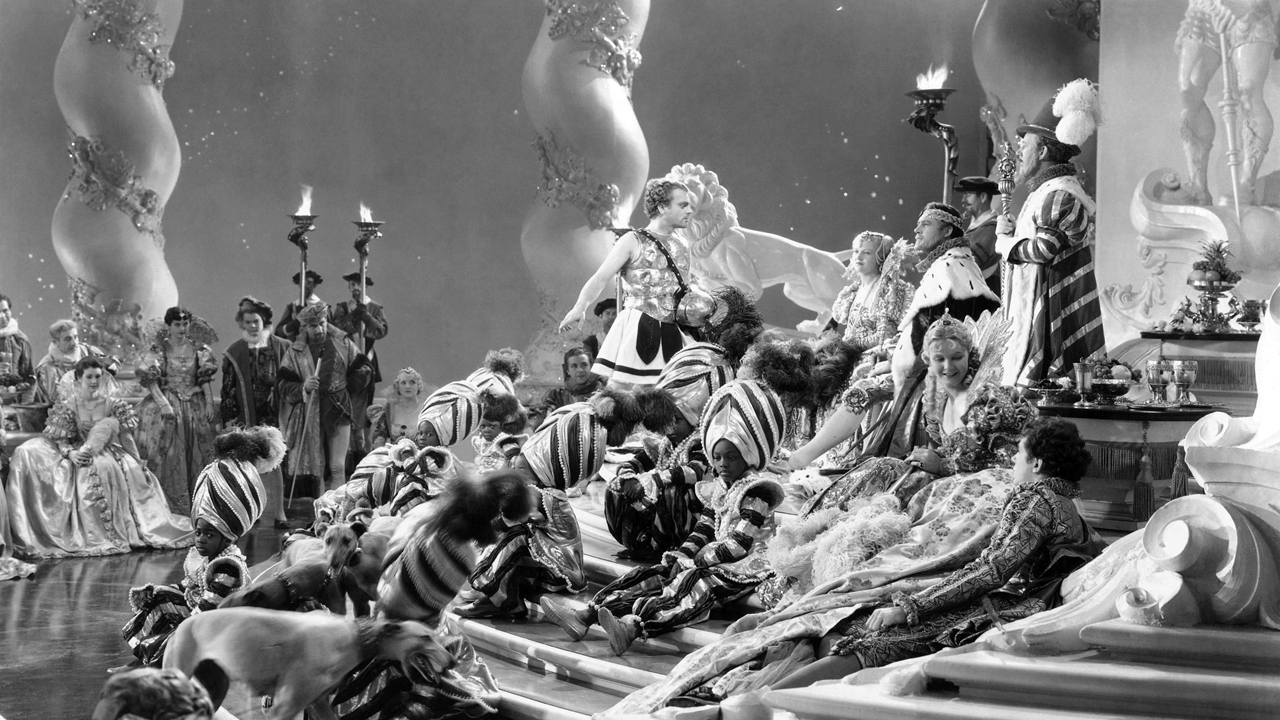
The Viennese impresario Max Reinhardt was one of the greatest figures of the German-language theater at the turn of the century and beyond. He was so well known that he was invited to stage his opulent production of A MIDSUMMER NIGHT’S DREAM in the States. The highly successful Hollywood Bowl engagement of the play caught the eye of Warner Brothers’ studio heads and they gave Reinhardt a chance to translate it to the screen with all the star power they could muster. Thus we have the unusual spectacle of a lavish, creatively mounted production of the Bard’s immeasurably intricate masque-play starring the likes of James Cagney, Mickey Rooney and hoofer Dick Powell, as well as the serenely beautiful Olivia de Havilland. It’s the ultimate old-Hollywood treatment of Shakespeare.
HENRY V – March 31, 7:30pm DIRECTED BY LAURENCE OLIVIER UK, 1944, 35mm, 137 min
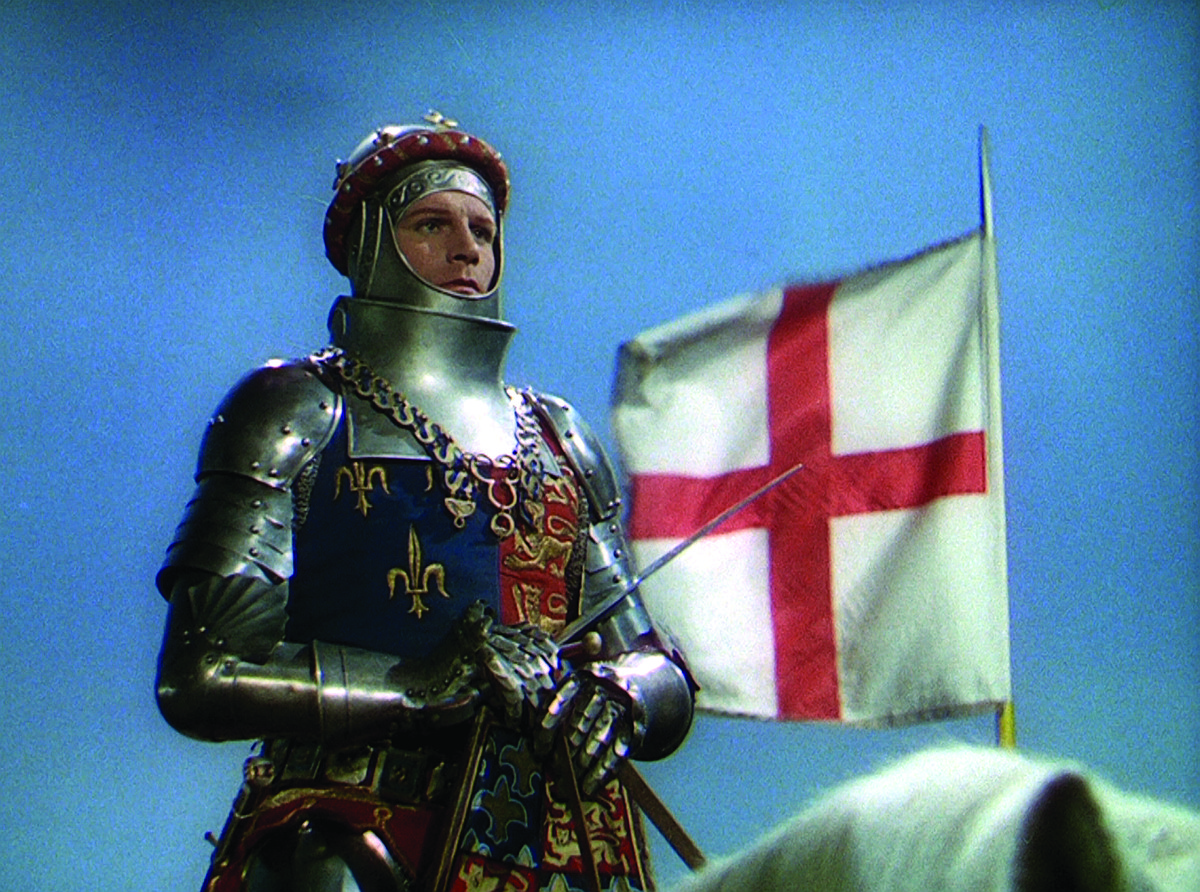
Given the assignment to make a film that would stiffen the morale of British troops during their final push to rid Europe of the Nazis, Laurence Olivier naturally turned to Shakespeare’s greatest war play, and the finished product is as entirely of its own time as of Shakespeare’s. Olivier begins his Technicolor epic in the Globe Theater, with an audience watching a performance of the play. As the drama unfolds, the theatrical setting dissolves until the trappings of the stage recede entirely and Olivier thrusts us into a thrilling Agincourt sequence that has been justly regarded by generations of film lovers as one of the greatest war scenes of all time. Olivier is brilliant here, both as director and star.
ROMEO AND JULIET – April 7, 7:30pm DIRECTED BY FRANCO ZEFFIRELLI UK and Italy, 1968, Digital, 138 min
In what Paramount Pictures trumpeted in its saturation ad campaign, “the most enduring love story of all time”, two young people from opposite sides of the social ladder are drawn together in a star crossed union that cannot last. It’s can’t-miss material and director Franco Zeffirelli hits the target squarely in his beautiful, fast moving adaptation. The actor and actress chosen for the roles were Leonard Whiting and Olivia Hussey, not exactly household names today but that may be largely due to the fact that the casting was so serendipitous that audiences did not care to watch them playing other parts. They play their parts well and, more importantly, have a heartbreaking chemistry together. This is the Shakespeare most favored by the love generation and the controversial inclusion of nudity did nothing to dampen its appeal at the box office.
MACBETH – April 14, 7:30pm DIRECTED BY ROMAN POLANSKI UK and USA, 1971, DCP, 140 min
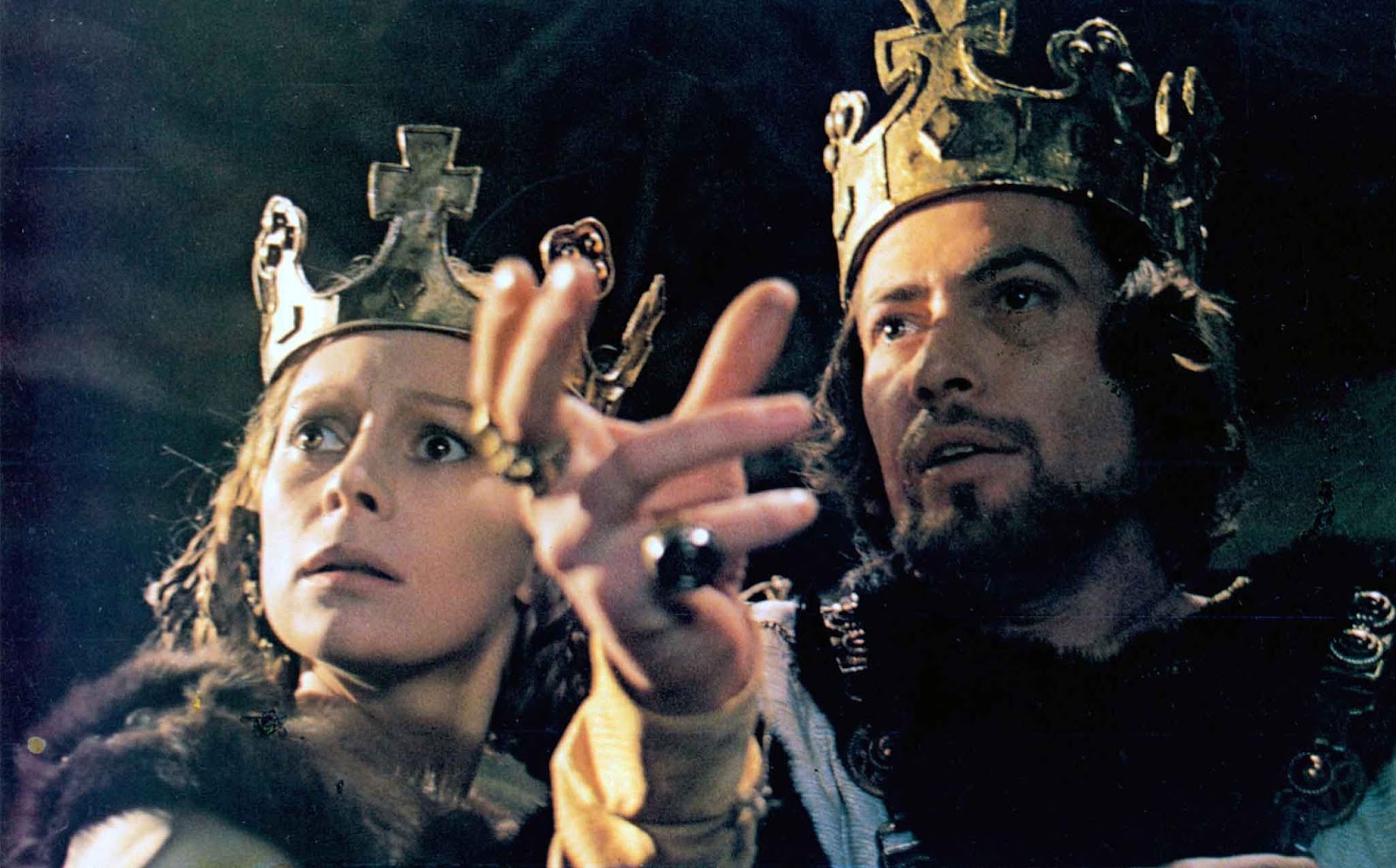
If Zeffirelli’s ROMEO AND JULIET was the Woodstock of Shakespeare movies, Roman Polanski’s MACBETH is the Altamont. There’s a lot of darkness, literally and figuratively, in this blood-curdling, originally X-rated version of the Scottish play. The story of young warlord Macbeth’s ascension to the throne on a tide of blood has been staged by Polanski with raging torrents of the stuff. There’s more gore here than in most horror films, and a copious amount of nudity and sexuality. Beyond all that is the combined power of Shakespeare and Polanski who, for all his demons, is one of the most talented and fearless practitioners of the art of cinema. You may be repelled by this film, and many will be, but you will not forget it.
HAMLET – April 21, 7:30pm DIRECTED BY MICHAEL ALMEREYDA USA, 2000, 35mm, 112 min
Michael Almereyda’s highly modern update of Shakespeare’s greatest tragedy stars Ethan Hawke as Hamlet, who is urgently summoned home from film school when he hears of the mysterious death of his father (Sam Shepard) and the subsequent engagement of his mother (Diane Venora) to Claudius (Kyle MacLachlan). Naturally with their betrothal, Claudius becomes head of the the multi-billion dollar Denmark Corporation. Hamlet’s deep suspicions of Claudius’ motives become strengthened when Hamlet intercepts a closed circuit broadcast of his father’s ghost (Sam Shepard) imploring him to action. As you can tell, Almereyda pulls out all the stops in fashioning this 21st century update of the Bard. Also featuring Liev Schreiber as Laertes and Bill Murray as Polonius.
THE TEMPEST – April 26, 7:30pm DIRECTED BY JULIE TAYMOR USA, 2010, Digital, 110 min
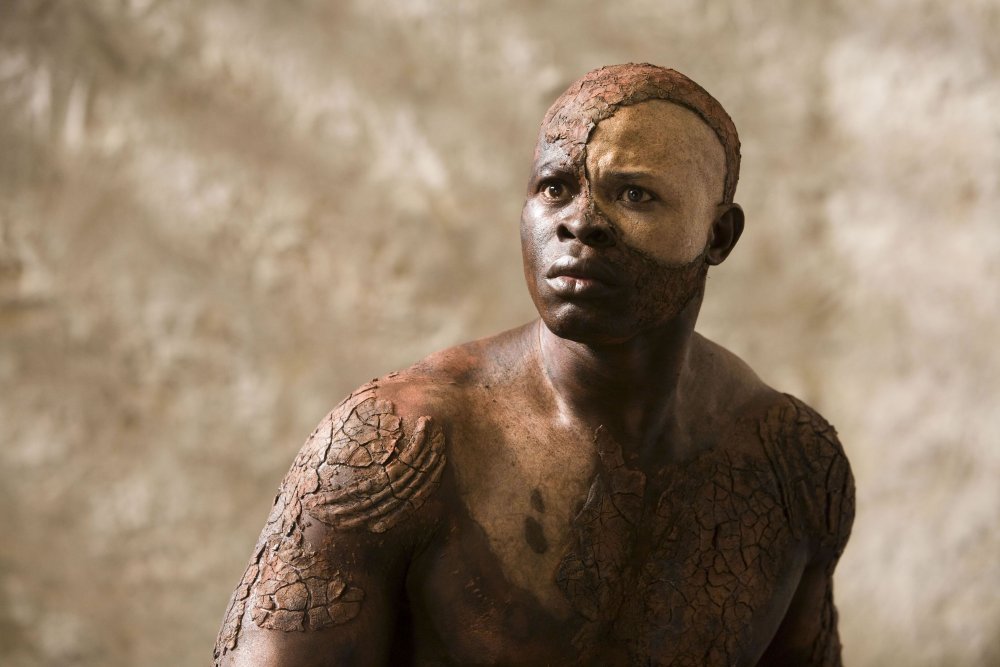
With a background that involves finding thrilling new ways to stage theatrical spectacles and with 1999’s impressive TITUS under her belt, Julie Taymor can be considered to be something of an ideal interpreter of the master’s work for our times. While exploring the idea of making a film based on Shakespeare’s final play, it struck her that, were it not for the matter of her gender, Helen Mirren would make an excellent Prospero. So Prospero becomes Prospera, who presides over her small island queendom with magic. With Felicity Jones as her daughter Miranda, Djimon Hounsou as the bestial Caliban, and Ben Whishaw as the spirit Ariel. Also starring Chris Cooper, Alan Cumming, David Strathairn and others.
The series continues at the Harry Ransom Center beginning Thursday May 5 with screenings of Olivier’s HAMLET, Taymor’s TITUS and more. Full schedule here.
Welles & O’Toole at a party some years later. Drinks may have been consumed.
The AFS Essential Cinema series Shakespeare Our Contemporary begins on Thursday March 24 with a screening of the 1935 version of A MIDSUMMER NIGHTS DREAM. The series is presented in conjunction with the Harry Ransom Center’s exhibition Shakespeare In Print & Performance.
From the BBC, this is one of the most interesting discussions about the various facets of perhaps the most complex character in all of literature, Hamlet.
On a television stage set, three actors sit together and talk. It’s a fascinating dynamic. The older man, actor Ernest Milton, represents what we might call the orthodoxy of Shakespeare staging. The middle aged man, Orson Welles, a former enfant terrible of the stage, has many brilliant observations about Shakespeare. The younger man, Peter O’Toole, an Irishman making a great career in films, is full of the pep and vigor of youth and thus reflects one of Hamlet’s most important traits, his callowness.
In 1962, the great writer, artist and filmmaker Jean Cocteau filmed this at times rambling, at times brilliant message to future viewers – well, technically the past now, since he addressed it to the year 2000. It’s like wise advice from a slightly crazy uncle.
“I don’t know what’s going on in your time but I suspect that the youth of your times isn’t, like ours, straddling contradictions… We remain apprentice robots. I certainly hope that you have not become robots.”
“I already told you that poetry is a kind of superior mathematics, a supreme language, but at the moment we are experiencing something very dangerous: collective genius. Science is made of collective genius… I hope wholeheartedly that by now genius hasn’t become something like a shameful and contagious disease against which you wish to be immunized.”
And so on, in this vein. By the way, look for the newly restored version of Cocteau’s 1946 BEAUTY & THE BEAST on our screen this summer.
Surely Cyd Charisse, born on this date in 1922 in Amarillo, was born to dance. Or maybe not. In fact, it was doctors who prescribed dance lessons for her as a way to build up her legs which were weakened by a childhood bout with polio. The treatment appears to have been successful (an understatement), and the world was given the gift of years and years of Cyd Charisse magic on screen and stage.
We were fortunate enough to induct Charisse into the Texas Film Hall Of Fame back in 2002. Peter Bogdanovich provided the induction speech and Charisse made such a glamorous impression that people still talk about her visit in tones of wonder. Cyd has been gone now for 8 years, but her memory lives on here.
Here is a nice clip of Cyd singing and dancing with the Del Ray Brothers and engaging in a bit of comic repartee with Tony Martin, her husband of 60 years.
Jimmy Stewart making the universal sign for “chill out!”
Here at AFS we are all climbing the walls putting the final touches on next week’s Texas Film Awards and the Texas Party. These are events that are fun for everyone and a hell of a lot of work for all AFS staffers, interns, volunteers and others.
By now we’re all walking around with hunched shoulders. I think we’re storing stress and you’re just not supposed to do that. So about an hour ago I put this video of a 1973 interview with actor James Stewart on, donned my headphones and started knocking out emails. I have to say, the quavering but warm voice of Jimmy Stewart goes a long way towards making those little irritations go away.
We’ll see some of you at the Awards and a whole lot more of you at the Texas Party (only $40 for AFS members).