Author Archives: Lars Nilsen

  1. BLOOD FEAST: THE GOOD THE BAD & THE BLOODY

    Leave a Comment
    Written by Andy Corrales, AFS Creative Careers Intern
    “An idea based in bloodlust could spread quickly in a civilization based on superstition.” — Detective Pete Thornton, BLOOD FEAST

    This December, AFS Cinema is wrapping up its series Essential Cinema: The Original Indies with a pair of screenings of Herschell Gordon Lewis’s BLOOD FEAST on December 19 and 23; a film that Stephen King called the “worst horror movie” he’s ever seen that’s also in Time Magazine’s “Top Horror Movies of All Time.” While it might be unorthodox to include this divisive film in a line-up of films that birthed American Independent Cinema, its creation did signal a pivot in American cinema.


    Herschell Gordon Lewis (1926-2016) was, if nothing else, a salesman. He had a PhD in English and a long career in advertising and marketing.

    BLOOD FEAST clearly takes little interest in being confined to the binary labels of “good” or “bad” — its creation is simply a move of calculated marketing. While Lewis claims that the success of the film is “an accident of history,” remember that 1960s American cinema was experiencing the decline of Hays Code Hollywood. In 1960, the eyes of American audiences began to widen with violence and shock in Hitchcock’s PSYCHO, an inspiration for Lewis. While PSYCHO birthed the slasher genre, Lewis took it to a previously unforeseen gory end and birthed the “splatter” or “gore” film.

    Lewis made BLOOD FEAST for $24,000 and made millions in the box office by circumventing the major studio system. It has no big names and stars Connie Mason, a Playboy’s Playmate for June 1963, who gives a performance some say “makes acting look incredibly difficult.” It features nudity, women having their tongues pulled out, brains being chopped, limbs being eaten, and buckets of blood. The depravity, lewdness, and gore was everything American audiences had hidden from them by the major studio system in the 60s.

    BLOOD FEAST lies at the intersection of schlocky filmmaking and clever marketing. Barf bags were distributed at the premiere, profits were returned exponentially, and Lewis went on to produce over 20 films in just a 10 year span. Lewis has a sense of humor that’s reflected in his over-the-top movies. He referred to American audiences as rats he’s guiding through a maze, and it’s abundantly clear Lewis understands exactly what general audiences want to see: blood and lust.

    In an interview with Sean Baker in 2006, Lewis states: “I will tell you very flatly that my opinion is that the reason I’ve had good luck, both in the film business and the marketing business, is a total adherence to trying to figure out not what I want to say but what they want to see or hear. Couldn’t be simpler.”

    The appeal of BLOOD FEAST couldn’t be simpler either. Lewis’ style of crude but energetic filmmaking and humor was a laugh in 1963, and it still works today.
  2. Sternberg and Dietrich, Exiles on Santa Monica Boulevard

    Leave a Comment
    Written by Lars Nilsen, AFS Lead Programmer

    Many film directors become closely identified with an actor — we might think of Scorsese and De Niro, or Hitchcock and James Stewart — these stars are their director’s avatars. Such connections just feel right and bring out the best in front of and behind the camera. It’s hard to imagine a more sublime partnership in this regard than the one shared by director Josef von Sternberg and star Marlene Dietrich.

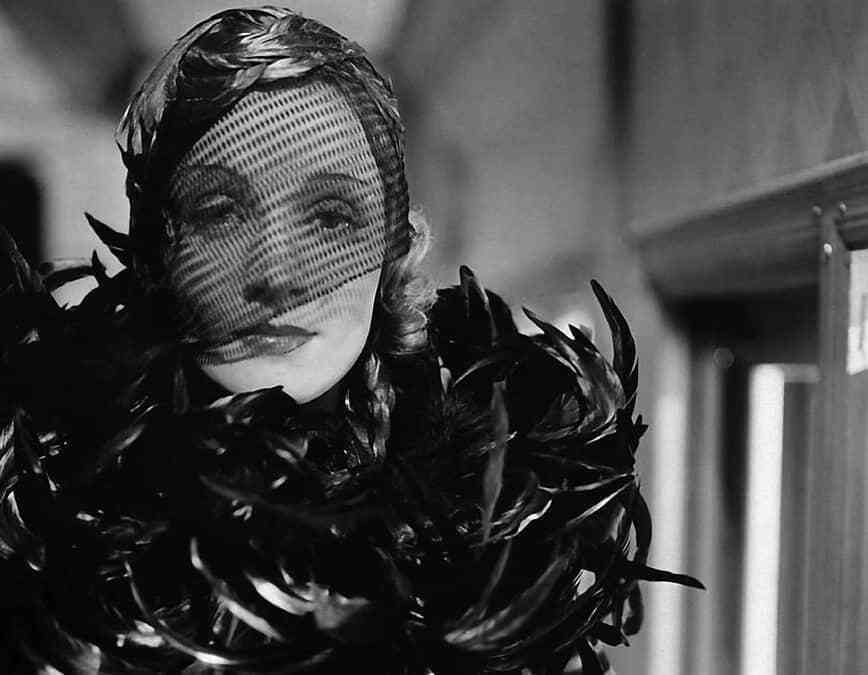
    The exhilaration that Sternberg clearly felt for Dietrich as a photographic subject is apparent in every ornately cluttered, multi-dimensional, half-occluded, veiled, and key-lit closeup. And its absence is sometimes just as keenly felt in scenes with her male co-stars, who tend to be as stolid and bloodless as Dietrich is alive with pent-up passion.

    It may seem to us today, watching these shockingly modern conceptions of character cavort with (usually) cardboard leading men, that the electricity in this pairing must have been clearly apparent to all who saw it, but that is not at all true. When Sternberg — having been lent to UFA, Paramount’s partner studio in Germany, for a prestige film starring the eminent actor Emil Jannings — attempted to cast the then-unknown Dietrich, he was met with almost unanimous resistance. In order to prove his point, he had a screen test made. Dietrich had no fight in her; she was resigned to losing the role, so she barely put any effort into the test. But this test, which so outraged his producers and his star, made Sternberg even more resolute. You can see why in the footage from that day (click here or on the image below to watch).

    The film was made with Dietrich, Sternberg overruled all the objectors, and, after it was released to much acclaim, all was forgiven. Sternberg returned to Hollywood a conquering hero with Dietrich in tow. Many felt their relationship was troubling. Sternberg’s rash personal style and Dietrich’s imperfect command of the language caused them to be seen in a Svengali/Trilby light by many, but the alchemy of director and star, while not always box office candy, was to prove irresistible for lovers of sneakily poetic Hollywood cinema.

    When Sternberg photographed Dietrich, everything within the frame was a jewel setting for Dietrich’s arch and challenging luminosity. She smolders under acres of lace and pounds of feathers; her costumes sometimes required her to be driven to the set in the back of a truck to prevent any damage to the extravagant outfits. All of this is in the service of stories that are — if we’re being honest here — often less than compelling in and of themselves. In fact, it may be said that instead of the images serving the story, in these cases, the story serves the images — a conception that seems to us now very modern but at the time may have seemed merely bizarre. That is, if the audiences had not been sufficiently stunned by Dietrich’s closeups and fascinatingly insolent, frequently androgynous, manner. They were, and, by all evidence, they still are.

    This divine pairing lasted for only six films and was, in fact, broken up by the studio; Dietrich famously bemoaned while being lit on her first non-Sternberg set, “Jo, why have you forsaken me?” From this very late vantage point, the penultimate film in the series, THE SCARLET EMPRESS, may be the most representative. It is certainly the most perverse. It is like the final salvo of the pre-code impulse, hurled at the censors and the Babbitts who would have seen the Hollywood dream factory converted to an efficiently running assembly line producing mediocre films for a mediocre people.

    Andrew Sarris nails the appeal, and the historical importance, of THE SCARLET EMPRESS in his monograph for MOMA on Sternberg’s work:

    THE SCARLET EMPRESS is Sternberg’s most sumptuous exercise in style, a tapestry of tyranny so intricately woven and luminously lit that audiences and critics of the time were stupefied. It shatters the decorum which was spreading over the American cinema like a shroud. Its very outrageousness is an index of the repressive reasonableness of most movie-making of its time.

    From a contemporaneous vantage point, Bosley Crowther of The New York Times expressed similar sentiments in a less impressed light:

    Scorning to employ the humdrum laws of dramatic development, Sternberg has created a bizarre and fantastical historical carnival … A ponderous, strangely beautiful, lengthy, and frequently wearying production, his new work is strictly not a dramatic photoplay at all, but a succession of overelaborated scenes, dramatized emotional moods, and gaudily plotted visual excitements … The players … seem to lose their hold on humanity under Sternberg’s narcotic influence and become like people struggling helplessly in a dream.

    Hollywood is always dying and always being born. Today is no different than 1934 in that regard. Cinema’s revolutionary impulse is often clothed in feathers, androgyny, and frank horniness. Audiences are always stupefied, to use Sarris’ perfect adjective. In the Sternberg/Dietrich Hollywood pageants, we experience a perfect crystallization of what this meant in an earlier era.

    ESSENTIAL CINEMA: DIETRICH/STERNBERG IN HOLLYWOOD

    SHANGHAI EXPRESS (1932)
    May 9 & 13

    BLONDE VENUS (1932)
    May 16 & 20

    THE SCARLET EMPRESS (1934)
    May 23 & 29

    THE DEVIL IS A WOMAN (1935)
    May 30 and June 3

  3. AFS Lead Programmer Lars Nilsen’s Sundance 2022 Favorites

    Leave a Comment

    Hello everyone, Lars Nilsen here. Last month I “attended” Sundance for the eighth time, and, unfortunately, for the second year running I was on my couch when I did it. On the plus side, it meant I could experience the whole thing under climate controlled circumstances, with the convenience of my refrigerator and pantry nearby, but naturally one loses something when deprived of the true big screen experience, and there are no opportunities to meet, greet and deal. Grousing aside, here are a few of my favorites from this year’s fest. I should note that I was primarily evaluating films in my role as Cinema Programmer, so I skipped some of the buzzier but – alas – destined for streaming titles. And, as always, I watch a lot of documentaries. Here goes:

    AFTER YANG:

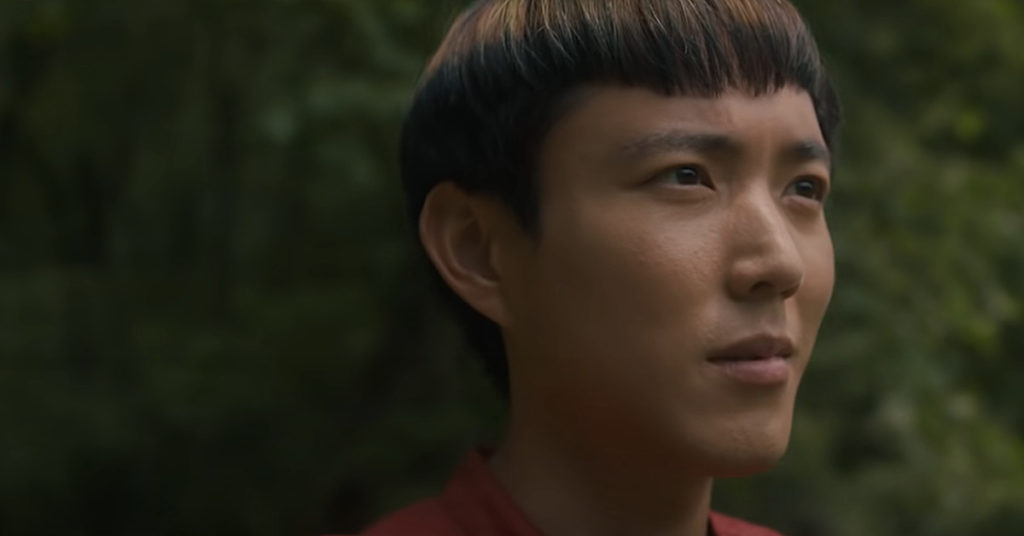
    The newest film from Kogonada (COLUMBUS) is a highly engaging, thoughtful work of speculative science fiction about a family who buy a cybernetic android assistant (the Yang of the title) to help with the raising of their daughter, and the difficulties that arise when the unit goes on the blink. Kogonada, who has an able touch with the smallest interactions, finds drama and import in the tiniest details. A satisfying and provocative work from a director who got his start making video essays about his auteur heroes and now seems poised to join them.

    BRAINWASHED: SEX-CAMERA-POWER:

    When Nina Menkes joined us virtually a while back for a screening of her newly restored film QUEEN OF DIAMONDS, she talked a bit about this project, a filmed version of a stage monologue and presentation she has done many times. In it she ties together the recent #metoo movement the outrages that provoked it with the tendencies of some Cinema, even Great Cinema, to objectify women through a lens of power and domination. It’s an extraordinarily lucid presentation – she uses clips from some of the masters to make her points. Notably, Menkes does not call for these films to be discarded, just to be read and understood more closely as symptomatic of the culture that gave rise to them.

    DESCENDANT:

    Filmmaker Margaret Brown has been well known to many of us here in Austin from as far back as her Townes Van Zandt doc BE HERE TO LOVE ME in 2004 and she’s been very busy since, making some of the best documentaries out there. She has always been especially interested in the Gulf Coast, particularly her hometown of Mobile, Alabama. In her new doc, DESCENDANT she has found particularly rich subject matter – the search for the last slave ship, the Clotilda, which was sunk by its owners after its final, illegal voyage. As Faulkner said, the past is never dead, it’s not even past. And this proves to be true as the residents of the Africatown section of Mobile, many of them descendants of those same enslaved people, spearhead the search for the sunken vessel. Most fascinating is the struggle to define past history, seen here in microcosm as the entire city – in which the former slaveowner families still wield enormous and political power – and the descendants face off over telling the truth to future generations.

    DOS ESTACIONES:

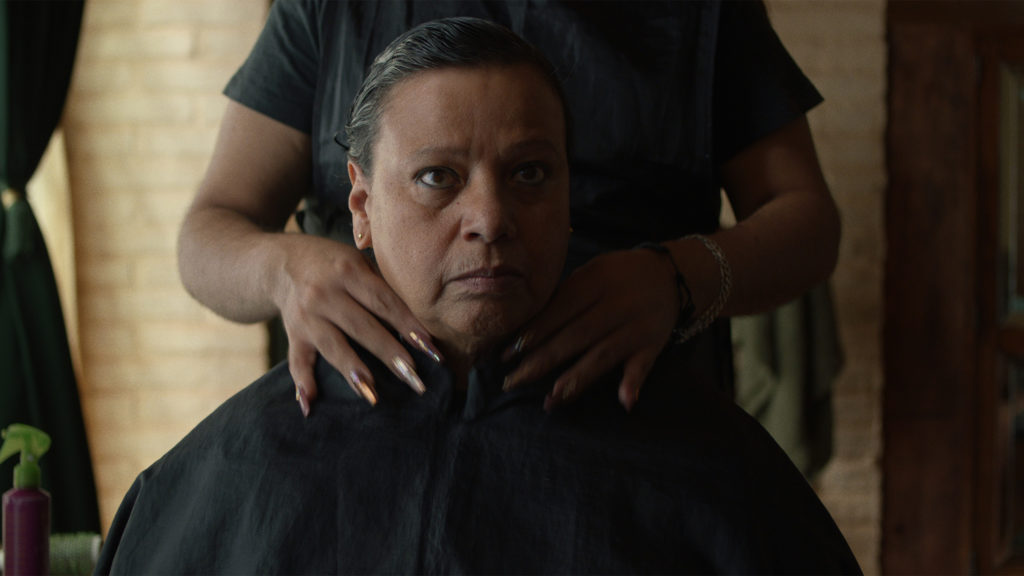
    Like Margaret Brown, Juan Pablo González is a filmmaker who has been supported in his endeavors in the past by AFS Grants. In this, his latest film, he moves from documentaries to a drama so full of authentic detail that it could almost pass as non-fiction. It is the story of a family-owned tequila distillery in Jalisco overseen by a very hands-on chief, Señora María, played with powerful restraint by Teresa Sánchez. For much of the running time we watch the ins and outs of tequila distillation – a fascinating and photogenic process – even as we are made aware of certain existential challenges facing the business. At the same time, a younger woman with more modern ideas (Rafaela Fuentes) enters the picture, and I’ll just shut up, because you need to see this film. Some movies are digested entirely by the time the end credits roll. This is not one of them. The images and characters tend to stick with you long afterwards. A good thing.

    FREE CHOL SOO LEE:

    Eugene Yi and Julie Ha’s documentary depicts an injustice and its fascinating aftermath. In 1973 a gangland murder occurred in San Francisco’s Chinatown. A group of white tourists identified the killer as 20-year old Korean immigrant Chol Soo Lee, and he was convicted for the crime but after serious procedural questions were raised, he was granted a new trial. A couple of details make this story so compelling: first is the nature of the community coalition that arose to defend Lee – a mix of Berkeley radicals and conservative Asian-American businesspeople; second is the later life of Lee himself, formerly a hero and martyr he found himself again on the outside. In many ways this is an American tragedy. It often happens that documentaries with especially resonant characters are remade into narrative films. Though I am a bit ambivalent about this trend, this is a prime candidate for such treatment.

    MY OLD SCHOOL:

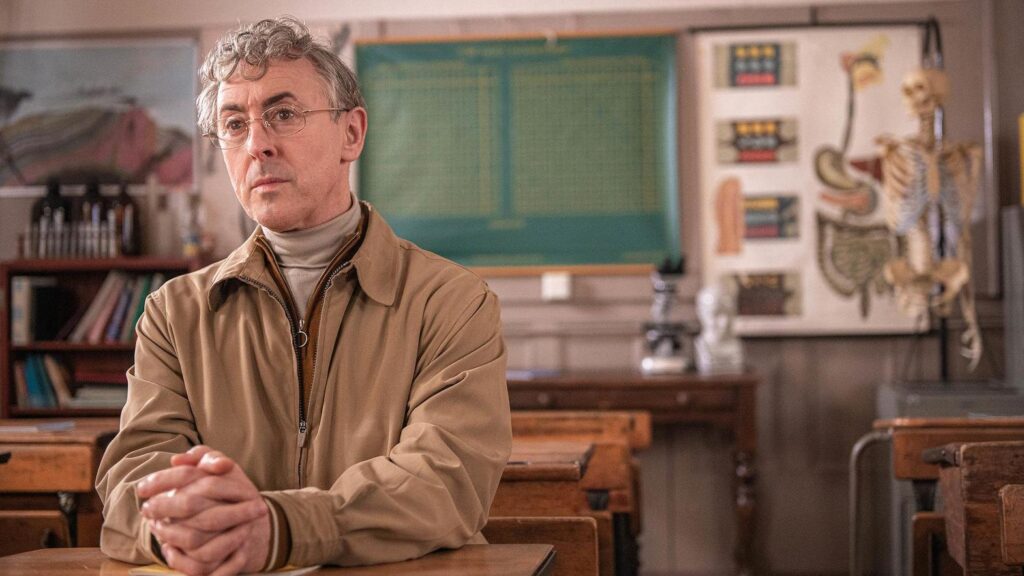
    It’s very difficult to write about this film without spoiling any details about the case it describes, but I’ll try. Back in the early ’90s, a new student named Brandon Lee appeared at the private high school Bearsden Academy in Glasgow. He said he was from Canada and was both more awkward and more sophisticated than his fellow students. That may be as much as I can say. Suffice to say, it’s one of those “truth is stranger than fiction” kinds of things. Though the film is a documentary – featuring clever and numerous animated re-enactments as well as interviews with the former students – Alan Cumming appears as “Lee” here, lip-synching the audio interviews provided by the real “Brandon Lee.” Very funny and mostly pretty light, this one really hit the spot after a lot of heavy stuff at the fest.

  4. AFS’ History Of Television’s Aaron Spelling Miniseries Starts 1/31, Here’s How To Tune In

    Leave a Comment


    For many years we have been offering a bimonthly History Of Television screening series at AFS. There we have screened television episodes and provided historical and critical insight into the filmmaking and cultural aspects of the work.

    At first, the History Of Television series took place in our on-site screening room, then we moved it to an actual television studio, now, as it returns for the first time since the initial COVID-19 shutdown, we will begin offering the programs as actual television shows.

    The first event happens Monday 1/31 at 7pm Central. Join us one of three ways.

    1. Tune in to Austin Public Channel 10, either on your Time Warner-equipped cable television or on Austin Public’s web stream here.
    2. Tune into AFS’ YouTube channel for the live stream.
    3. Watch on Twitch here.

    Now the cool part. Over the course of the next six months we will be joined by author and television historian Amanda Reyes to celebrate the work of native Texan film producer Aaron Spelling, who changed the way television operated beginning in the 1960s. We will showcase original Spelling programs in each episode with critical and historical commentary.

    The first installment of the Spelling series will focus on his early career. We will play two episodes of Spelling-created and produced series with introductions and interstitial commentary about Spelling, his collaborators and the television production environment at the time these were made.

    First up: BURKE’S LAW: “Who Killed Purity Mather?” (original airing 12/6/63). In this episode, scripted by Harlan Ellison, our hero, independently wealthy District Attorney Amos Burke, tries to unravel the apparent murder of bohemian witch Purity Mather by hunting down the fellow members of her coven. The guest stars are typically Spelling: Telly Savalas, Wally Cox, Charlie Ruggles, Janet Blair, and Gloria Swanson, as a particularly eccentric black-arts practitioner.

    Also: HONEY WEST: “The Gray Lady” (original airing 12/10/65). This short-lived and rather silly BURKE’S LAW spinoff starred Anne Francis as a sexy private-eye who was an expert shot and a master of the martial arts. This episode, written by future COLUMBO creators Richard Levinson and William Link, is a Hollywood-set jewelry caper with guest stars Cesar Danova, Nancy Kovack and Kevin McCarthy.

    About Amanda Reyes: Classic TV lover, slasher fanatic, soap opera addict, podcaster, and stuffed animal collector. Editor of Are You in the House Alone? A TV Movie Compendium: 1964-1999. Listen to Amanda’s podcast Made For TV Mayhem wherever you find your podcasts or click here.

    Here’s a look ahead to February’s installment, focusing on Spellings Made For Television movie work. Tune in!

  5. Watch This Before You See THE SOUVENIR Part II: Joanna Hogg’s CAPRICE

    Leave a Comment

    Certainly many of you reading this have seen Joanna Hogg’s remarkable coming of age film THE SOUVENIR: Part I (2019) and you are no doubt planning to join us at the AFS Cinema for the release of THE SOUVENIR: Part II when it opens on 11/19.

    If you have seen the trailer for Part II you probably know that in the course of that movie the young filmmaker played by Honor Swinton Byrne makes her thesis film as her 80’s London social life swirls around her. It won’t surprise anyone that the events of these features hew closely to the events of Hogg’s own life.

    Here, for your perusal through Thursday 11/11, thanks to Le Cinema Club, is Hogg’s own thesis film CAPRICE, starring none other that THE SOUVENIR co-star – and mother of Honor Swinton Byrne, Tilda Swinton – or, as she was known then, Matilda Swinton.

    Enjoy it, and if you’re new to THE SOUVENIR, have no fear, we are showing PART I – with special AFS signature pricing for members. These films have a richness of experience and a sense of place like few others in recent memory. You will leave the theater with that full feeling you have after reading a great memoir. This is a highly recommended experience. Trust us on this one.


  6. Watch This: Queering the Biblical Text with 1933’s LOT IN SODOM

    Leave a Comment

    There aren’t many films from 1933 that get the YouTube “This Video May Be Inappropriate For Some Users” gate, but LOT IN SODOM is no ordinary film. Made by the wealthy dilettante – and heir to large sums of the Western Union fortune, James Sibley Watson, who became interested in avant-garde literature while at Harvard and later expanded his interests to film.

    1933’s LOT IN SODOM follows the story of the righteous Lot who escapes from the sinful city of Sodom with his wife and daughters. The parable is reproduced here with the same Biblical result for Lot’s wife. The major difference here is that there is no doubt that Watson and his collaborators find the moral abandon of Sodom, with its writhing orgies of shirtless young men, much more compelling than the righteousness of the long-suffering Lot. The influence of Jean Cocteau’s BLOOD OF A POET (1932) seems apparent here, though as Sam Staggs noted in an article for the Gay and Lesbian Review, it is, if anything, more homoerotic than Cocteau’s film.

    We’ll let you judge for yourself. Just tell YouTube that you understand and wish to proceed. No turning back.

  7. Watch This: Tommy Lee Jones’ Japanese TV Commercials are Nuts

    Leave a Comment

    There’s an old tradition of American stars appearing in Japanese television commercials, often in wacky scenarios that play up some aspect of their public personalities or best known roles. Here are a few classic examples of those.

    One of our favorite actors, and we’re guessing one of yours too, is Texas’ own Tommy Lee Jones. He is an Oscar winner and a member of the Texas Film Hall Of Fame, just to scratch the surface of the many shelf-crowding accolades he has received over the course of his long career. And, as the following Japanese commercials make clear, the admiration for – and intimidation power of – Tommy Lee Jones travels effortlessly to the Eastern Hemisphere.

    In these commercials, which seem to take place in a MEN IN BLACK – inspired alternate reality, Jones plays a sort of grumpy, shape-shifting Stranger In A Strange Land, observing Earth (specifically Japanese) customs and wryly commenting on them from an outsider’s perspective, before downing what appears to be about a four ounce can of Suntory Iced Rainbow Blend coffee.

    These commercials have been kicking around on YouTube for a while but now you can watch them with English subtitles by clicking on the little “CC” button. Not all the gags work. Some are just dumb, some may require more Japanese pop-culture context, but the collection is fast paced and it is a joy to watch Tommy Lee Jones having fun behind his stone-faced exterior. Enjoy.

  8. Watch This: Maya Deren’s Surreal Ode to Medieval Witchcraft

    Leave a Comment

    When we look back at the work of Maya Deren (born April 29, 1917, died October 13, 1961) the breadth of expression is just breathtaking. She seemed to reinvent Cinema by rearranging its component parts of drama, music, ritual and visual arts along new bold lines that were absolutely personal, completely idiosyncratic, and unmistakably direct. AFS has shown her films often, and will show them many more times as they forever point the way to the future of artistic expression.

    By the time the 27-year old Deren made the film you see here she had already emigrated with her parents from Ukraine to escape the brutal Soviet Bolshevik pogroms, become a revolutionary Socialist leader in New York, received a masters degree in English literature, become a professional journalist (and later a photojournalist), and then signed on with the pioneering African American dancer and choreographer Katherine Dunham as an assistant and collaborator. All of that was before she began making and exhibiting films, a field that she revolutionized, changing the way that avant-garde films were received and appreciated.

    She may rightly be called the Godmother of Avant Garde film. Her efforts in popularizing the form changed the landscape of the medium forever.

    WITCH’S CRADLE, the unfinished, silent, deliberately unscored film you see below, was made in 1944. That was the same year as DOUBLE INDEMNITY, just to set your frame of reference for how unusual and ahead of its time the film is. It stars the mysterious Pajorita Matta and Dada artist Marcel Duchamp. Keep in mind that this is not the finished product, only a pass at editing some of the footage that was shot before she was presumably swept away into some other creative endeavor. Still, the vision is crystal-clear, the sense of ritual, dance and painterly visual composition. It’s remarkable in any context, let alone 1944.


  9. “And the Winner is… ” A Few Favorite Oscar Acceptance Speeches

    Leave a Comment

    The 93rd Academy Awards ceremony takes place this weekend and while the event this year will certainly be different from previous, non-pandemic-plagued years, there is always a certain amount of magic in the air. This magic has been well-earned over the years. Starting in 1929 as a rather insular industry banquet, it has blossomed into the spectacle it is now. An Oscar is worth a good deal more now than it was then. It is a virtual guarantor of profitability for the film that wins Best Picture and an acting award can more or less ensure a lifetime of work for the lucky recipient.

    With so many years of history, there are bound to be some moments that stand out above others. Here are a few favorites. It would be impossible to present any kind of comprehensive list, and many others have taken stabs at it, but we hope you enjoy our selection.

    Here is Jane Fonda accepting the award in 1979 for her work in Hal Ashby’s COMING HOME. She developed a much greater awareness for disabled people while preparing for the film and it certainly comes across powerfully in her speech.

    Next, a couple of groundbreaking moments. Hattie McDaniel accepts the Best Supporting Actress award for GONE WITH THE WIND. McDaniel was the first Black actor nominated for an Academy Award and the first winner. You may notice that the close-up of the speech was done after the fact in a retake, as the camera placement at the time would not permit close angle shots.

    Sixty-two years later, Halle Berry was the first Black performer to win the award for Best Actress, for MONSTER’S BALL. You can see how very aware she is of the historic nature of the moment and it adds to her own deeply emotional response.

    Here’s another special one. Charles Chaplin’s role in the refinement and perfection of the art of Cinema is well known. What may be less well known today is that he was effectively exiled from the his adopted home in the U.S. for decades thanks to an anti-communist witch hunt spearheaded by FBI Director J. Edgar Hoover, and aided in the sensationalist press by charges of loose sexual morals. Hollywood did not forget, and you can see some of the response here – in fact the video is considerably shortened. The actual ovation that Chaplin received by the industry’s best and brightest was twelve minutes long, a record that seems destined to stand.

    Here are two old friends who captured the hearts of the public like few others before them, having fun on stage together for the last time as Cary Grant presents the honorary Oscar to James Stewart in 1985. There’s a lot of love in this room.

    This is a two-parter. First, as William Holden and Barbara Stanwyck presented an award at the 1978 Oscars, Holden was seized by a moment of gratitude for his longtime friend and former co-star Stanwyck. Back in 1939, Holden’s film career nearly ended before it began, but Stanwyck, his GOLDEN BOY co-star, took him under her wing. Holden can tell the rest of the story better than we can. It’s hard to see it in the blurry video, but Stanwyck has tears streaming down her face.

    Late in 1981, William Holden died unexpectedly. At the next year’s Oscar ceremony, Stanwyck received an honorary lifetime Oscar, her first. In the speech, she remembered her old friend.

    Finally, this may be the most iconic Oscar speech. It is certainly the most parodied. But, there’s something so primal and real about Sally Field’s refrain of “You like me” that transcends the glitz and the polish of the show. This is what it is all about for most of us, most certainly for actors, and she comes right out and says it.

  10. Days of Future Past: Remembering the Cinerama Dome

    Leave a Comment

    You have probably seen the news by now that Pacific Theatres, the cinema chain that operates the famous Arclight Theaters, is closing up shop due to the financial strains caused by the pandemic. For now, that means that its most famous and most visible outlet, the historic Cinerama Dome, is shuttering. The shock and outrage caused by this announcement, and the close proximity of some singularly deep pockets belonging to film lovers, may help to save the dome. We hope so, but it seems like a good time to look back at the theater that was originally intended to serve as a pilot program that would change film exhibition for good.

    Cinerama Dome Under Construction 1963


    To understand the impetus for the project in the first place, let’s look at its time period. In 1963 movie theaters were locked in an existential struggle with television. How could the big screen set itself apart from the small screen? 3D was one way, another way was to make the big screen a huge screen. That gave rise to the Cinemascope boom of the ’50s and, by 1952, to Cinerama, a process that used an enormous, curved screen that actually enveloped an audience in its picture, provided by three synchronized projectors. You could definitely never experience that at home.

    The curved Cinerama screen


    Speaking of which, the very idea of home was changing too. People were moving farther away from city centers into suburbs, which were being built as fast as the lumber could be unloaded from trucks and the concrete for the streets poured. This is where the radical idea for the geodesic dome came in. The dome, first conceived by the visionary architect and futurist R. Buckminster Fuller, was cheap to produce and quick to assemble. The idea was that the Cinerama company could build dozens of these around the country with a reasonably low investment and put them where the people were, whether in the city centers or the suburbs. The unusual, futuristic design was also sure to be an attention grabber, always a commercial asset.

    The IT’S A MAD, MAD, MAD, MAD WORLD Premiere


    By the time the pilot Cinerama Dome was built in Hollywood, there were only eleven Cinerama films commercially available to show. This may give the reader an idea as to why the project was in hot water already even as it hosted the premiere of the twelfth, Stanley Kramer’s knockabout comedy IT’S A MAD, MAD, MAD, MAD WORLD. Cinerama was extremely expensive to film, to print, to produce and even to ship to venues. Furthermore the unusual physical dimensions of the features made them difficult to convert for exhibition in non-Cinerama theaters and, you guessed it, for television, at a time when TV licensing was just becoming a major building block in film budgeting.

    Cinerama did not peter out immediately, it had its run, peaking in 1965 with seven Cinerama productions being released. Only three of these were truly prestige productions however, and the rate of return was not sufficiently remunerative to continue at this pace. And so the great dream of a Dome in every city did not come true, though an unused aluminum prototype was built in Las Vegas where it stood until 1985.

    In 1987, showing THE UNTOUCHABLES in 70mm


    In many ways that made the first Cinerama Dome in Hollywood a great monument to a future that never came to pass. As of now, the Dome will no longer offer film exhibition, but the future is as hard to predict today as it was in 1963, and there very well may be plans to keep the Dome extant in one form or another. We hope so.

    The facade of the Cinerama Dome restored to its period glory for ONCE UPON A TIME IN HOLLYWOOD (2019)


  11. Listen Here: Pauline Kael’s Legendary Sick Burn Radio Broadcast

    Leave a Comment

    This is a reprint of an AFS Viewfinders post from 2015.

    Nearly 20 years after her death, film critic Pauline Kael still inspires controversy. During her lifetime she was loved by many, hated by some and feared by studios and publicists (much of Hollywood felt, with some justification, that she could make or break a movie with her New Yorker reviews).

    One matter that nearly everyone agrees on is that she was an exceptionally good and forceful writer. Her collections fall in and out of print, but just as every generation of theater people discovers Shakespeare anew, so does every new cycle of film people find its way to Kael. And if those copies of “I Lost It At The Movies” or “Kiss Kiss Bang Bang” are a little dog-eared and foxed, then so be it, the contents are immortal.

    Kael began writing about film professionally when she managed and programmed a small two-screen theater for the Berkeley Cinema Guild from 1955 to 1960. She wrote beautiful, insightful and persuasive capsule notes for the films she chose. At around the same time she became the on-air film critic for Berkeley’s community radio station KPFA. A number of the reviews Kael read on-air are collected in her first books and her capsule reviews can be found in the invaluable collection “1001 Nights At The Movies,” revised as “5001 Nights At The Movies.”

    She had an 8-year run as unpaid film reviewer for KPFA before quitting in 1963. Some of the frustrations that led to her resigning the post are apparent in this broadcast, recorded just before she quit. Kael’s legendary wit, incisiveness and truculence are here, in a giant-sized portion. All of us who replay an argument in our heads afterwards, thinking, “I should have said that!” will appreciate the precision and sickness of the burn she administers here.


    This recording is incomplete, though you certainly get the flavor of it. Her full broadcast script (including the portion not available on tape) is reprinted here:

    Replying to Listeners
    by PAULINE KAEL
    I am resolved to start the New Year right; I don’t want to carry over any unnecessary rancor from 1962. So let me discharge a few debts. I want to say a few words about a communication from a woman listener. She begins with, “Miss Kael, I assume you aren’t married — one loses that nasty, sharp bite in one’s voice when one learns to care about others.”
    Isn’t it remarkable that women, who used to pride themselves on their chastity, are now just as complacently proud of their married status? They’ve read Freud and they’ve not only got the illusion that being married is healthier, more “mature,” they’ve also got the illusion that it improves their character. This lady is so concerned that I won’t appreciate her full acceptance of femininity that she signs herself with her husband’s name preceded by a Mrs. Why, if this Mrs. John Doe just signed herself Jane Doe, I might confuse her with one of those nasty virgins, I might not understand the warmth and depth of connubial experience out of which she writes.
    I wonder, Mrs. John Doe, in your reassuring, protected marital state, if you have considered that perhaps caring about others may bring a bite to the voice? And I wonder if you have considered how difficult it is for a woman in this Freudianized age, which turns out to be a new Victorian age in its attitude to women who do anything, to show any intelligence without being accused of unnatural aggressivity, hateful vindictiveness, or lesbianism. The latter accusation is generally made by men who have had a rough time in an argument; they like to console themselves with the notions that the woman is semi-masculine. The new Freudianism goes beyond Victorianism in its placid assumption that a woman who uses her mind is trying to compete with men. It was bad enough for women who had brains to be considered freaks like talking dogs; now it’s leeringly assumed that they’re trying to grow a penis — which any man will tell you is an accomplishment that puts canine conversation in the shadows.
    Mrs. John Doe and her sisters who write to me seem to interpret Freud to mean that intelligence, like a penis, is a male attribute. The true woman is supposed to be sweet and passive — she shouldn’t argue or emphasize and opinion or get excited about a judgment. Sex — or at least regulated marital sex — is supposed to act as a tranquilizer. In other words, the Freudianized female accepts that whole complex of passivity that the feminists battled against.
    Mrs. Doe, you know something, I don’t mind sounding sharp — and I’ll take my stand with those pre-Freudian feminists; and you know something else, I think you’re probably so worried about competing with male egos and those brilliant masculine intellects that you probably bore men to death.
    This lady who attacks me for being nasty and sharp goes on to write, “I was extremely disappointed to hear your costic speech on and about the radio station, KPFA. It is unfortunate you were unable to get a liberal education, because that would have enabled you to know that a great many people have many fields of interest, and would have saved you from displaying your ignorance on the matter.” She, incidentally, displays her liberal education by spelling caustic c-o-s-t-i-c, and it is with some expense of spirit that I read this kind of communication. Should I try to counter my education — liberal and sexual—against hers, should I explain that Pauline Kael is the name I was given at birth, and that it does not reflect my marital vicissitudes which might over-complicate nomenclature?
    It is not really that I prefer to call myself by my own name and hence Miss that bothers her or the other Mrs. Does, it is that I express ideas she doesn’t like. If I called myself by three names like those poetesses in the Saturday Review of Literature, Mrs. Doe would still hate my guts. But significantly she attacks me for being a Miss. Having become a Mrs., she has gained moral superiority: for the modern woman, officially losing her virginity is a victory comparable to the Victorian woman’s officially keeping hers. I’m happy for Mrs. Doe that she’s got a husband, but in her defense of KPFA she writes like a virgin mind. And is that really something to be happy about?
    Mrs. Doe, the happily, emotionally-secure-mature-liberally-educated-womanly-woman has her opposite number in the mailbag. Here is a letter from a manly man. This is the letter in its entirety:
    Dear Miss Kael,
    Since you know so much about the art of the film, why don’t you spend your time making it? But first, you will need a pair of balls.
    Mr. Dodo (I use the repetition in honor of your two attributes), movies are made and criticism is written by the use of intelligence, talent, taste, emotion, education, imagination, and discrimination. I suggest it is time you and your cohorts stop thinking with your genital jewels. There is a standard answer to this old idiocy of if-you-know-so-much-about-the-art-of-the-film-why-don’t-you-make-movies. You don’t have to lay an egg to know if it tastes good. If it makes you feel better, I have worked making movies, and I wasn’t hampered by any biological deficiencies.
    Others may wonder why I take the time to answer letters of this sort: the reason is that these two examples, although cruder than most of the mail, simply carry to extremes the kind of thing so many of you write. There are, of course, some letter writers who take a more “constructive” approach. I’d you to read you part of a long letter I received yesterday:
    I haven’t been listening to your programs for very long and haven’t heard all of them since I began listening … But I must say that while I have been listening, I have not heard one favorable statement made of any “name” movie made in the last several years…. I have heard no movie which received any kind of favorable mention which was not hard to find playing, either because of its lack of popularity or because of its age. In your remarks the other evening about De Sica’s earlier movies you praised them all without reservation until you mentioned his “most famous film — The Bicycle Thief, a great work, no doubt, though I personally find it too carefully and classically structured.” You make me think that the charge that the favorability of your comments on any given movie varies inversely with its popularity, is indeed true even down to the last nuance.
    But even as I write this, I can almost feel you begin to tighten up, to start thinking of something to say to show that I am wrong. I really wish you wouldn’t feel that way. I would much rather you leaned back in your chair, looked up at the ceiling and asked yourself, “Well, how about it? Is it true or not? Am I really biased against movies other people like, because they liked them? When I see a popular movie, do I see it as it is or do I really just try to pick it apart?” You see, I’m not like those other people that have been haranguing you. I may be presumptuous, but I am trying sincerely to be of help to you. I think you have a great deal of potential as a reviewer…. But I am convinced that great a potential as you have, you will never realize any more of that potential than you have now until you face those questions mentioned before, honestly, seriously, and courageously, no matter how painful it may be. I want you to think of these questions, I don’t want you to think of how to convince me of their answers. I don’t want you to look around to find some popular movie to which you can give a good review and thus “prove me wrong.” That would be evading the issue of whether the questions were really true or not. Furthermore, I am not “attacking” you and you have no need to defend yourself to me.
    May I interrupt? Please, attack me instead — it’s this kind of “constructive criticism” that misses the point of everything I’m trying to say that drives me mad. It’s enough to make one howl with despair, this concern for my potential — as if I were a cow giving thin milk. But back to the letter—
    In fact, I would prefer that you make no reply to me at all about the answers to these questions, since I have no need of the answers and because almost any answer given now, without long and thoughtful consideration, would almost surely be an attempt to justify yourself, and that’s just what you don’t have to do, and shouldn’t do. No one needs to know the answers to these questions except you, and you are the only person who must answer. In short, I would not for the world have you silence any voices in you … and most certainly not a concerned little voice saying, “Am I really being fair? Do I see the whole movie or just the part I like—or just the part I don’t like?”
    And so on he goes for another few paragraphs. Halfway through, I thought this man was pulling my leg; as I got further and read “how you missed the child-like charm and innocence of The Parent Trap … is quite beyond me,” I decided it’s mass culture that’s pulling both legs out from under us all. Dear man, the only real question you letter made me ask myself is, “What’s the use?” and I didn’t lean back in my chair and look up at the ceiling, I went to the liquor cabinet and poured myself a good stiff drink
    How completely has mass culture subverted even the role of the critic when listeners suggest that because the movies a critic reviews favorably are unpopular and hard to find, that the critic must be playing some snobbish game with himself and the public? Why are you listening to a minority radio station like KPFA? Isn’t it because you want something you don’t get on commercial radio? I try to direct you to films that, if you search them out, will give you something you won’t get from The Parent Trap.
    You consider it rather “suspect” that I don’t raise more “name” movies. Well, what makes a “name” movie is simply a saturation advertising campaign, the same kind of campaign that puts samples of liquid detergents at your door. The “name” pictures of Hollywood are made the same way they are sold: by pretesting the various ingredients, removing all possible elements that might affront the mass audience, adding all possible elements that will titillate the largest number of people. As the CBS television advertising slogan put it—“Titillate—and dominate.” South Pacific is seventh in Variety’s list of all-time top grossers. Do you know anybody who thought it was a good movie? Was it popular in any meaningful sense or do we just call it popular because it was sold? The tie-in campaign for Doris Day in Lover Come Back included a Doris Day album to be sold for a dollar with a purchase of Imperial margarine. With a schedule of 23 million direct mail pieces, newspaper, radio, TV and store ads, Lover Come Back became a “name” picture.
    I try not to waste air time discussing obviously bad movies — popular though they may be; and I don’t discuss unpopular bad movies because you’re not going to see them anyway; and there wouldn’t be much point or sport in hitting people who are already down. I do think it’s important to take time on movies which are inflated by critical acclaim and which some of you might assume to be the films to see.
    There were some extraordinarily unpleasant anonymous letters after the last broadcast on The New American Cinema. Some were obscene; the wittiest called me a snail eating the tender leaves off young artists. I recognize your assumptions: the critic is supposed to be rational, clever, heartless and empty, envious of the creative fire of the artists, and if the critic is a woman, she is supposed to be cold and castrating. The artist is supposed to be delicate and sensitive and in need of tender care and nourishment. Well, this nineteenth-century romanticism is pretty silly in twentieth-century Bohemia.
    I regard criticism as an art, and if in this country and in this age it is practiced with honesty, it is no more remunerative than the work of an avant-garde film artist. My dear anonymous letter writers, if you think it is so easy to be a critic, so difficult to be a poet or a painter or film experimenter, may I suggest you try both? You may discover why there are so few critics, so many poets.
    Some of you write me flattering letters and I’m grateful, but one last request: if you write me, please don’t say, “This is the first time I’ve ever written a fan letter.” Don’t say it, even if it’s true. You make me feel as if I were taking your virginity — and it’s just too sordid.
  12. The Cinema of Rob Schneider: A Reappraisal

    Leave a Comment

    The course of Cinema’s history has been a long and arduous one. Today’s master is tomorrow’s forgotten auteur. As the tastes of the multitudes and the critical fashions of the day converge in the manner of a mighty river… are you still reading?

    Good, because this is an April Fools joke. We’re not really doing a reappraisal of Rob Schneider’s art, though, if we’re being honest, there are some pretty funny Rob Schneider movies, particularly the underrated Deuce Bigalow cycle. Hey, funny is funny.

    While we’ve got you laughing – we hope – we want to share a list that AFS Lead Programmer Lars Nilsen has created of some very funny oddball comedies that you can stream today on the most popular services.

    You can see the list here and if you click on the “Read Notes” button it will show you the streaming services that the films can be viewed on.

    Some of the films are recent: Onur Tukel’s bizarre go-for-broke gonzo revenge comedy CATFIGHT (2016) and Jocelyn DeBoer and Dawn Luebbe’s 2019 GREENER GRASS which takes a completely surreal look at suburban conformity.

    A few of the films are reasonably well known – like the hysterically funny 1994 CLIFFORD which stars Martin Short (sans any special effects) as a 10 year old boy making life hell for his uncle, played by the great Charles Grodin. The 1966 film LORD LOVE A DUCK has also gained some notoriety as a critical favorite in recent years, largely due to the wonderful lead performances by Tuesday Weld and Roddy McDowell. And COTTON COMES TO HARLEM, an energetic, fast paced adaptation of the Chester Himes novel has also been spotlighted more recently, but is still woefully underappreciated.

    Naturally there are some total unknowns, like THE MANCHU EAGLE MURDER CASE which uses a parade of stars to tear the roof off the depraved poultry industry of central California. And the Chicago-made TOWING which seems to be a bilious reaction to a bad experience with a tow truck driver. Both are very funny.

    Lastly, there are a pair of wild cards on this list. Michael Reeves’ THE SHE BEAST is rarely discussed as a comedy, maybe because it is also a very effective horror film, but the humor is weird and pervasive in the story of a pair of tourists (Ian Oglivy and Barbara Steele) who get tangled up with a witch’s ghost on a road trip in Eastern Europe. And Sacha Guitry’s THE STORY OF A CHEAT uses the old “unreliable narrator” gambit to create comic tension in its memoir of a fictional ne’er do well.


THANK YOU TO OUR SPONSORS