The new episode of the (very irregular) AFS Viewfinders Podcast is here. Alamo Drafthouse Programmer Tommy Swenson joins us to talk about the art of film programming as well as upcoming series, the social responsibility of programmers, and the mysterious but compelling “pulp imagination” embodied in both pulp fiction and other forms of expression. It’s a long, discursive podcast with some very provocative ideas.
This month’s doc night presentation is HERE COME THE VIDEOFREEX, screening on June 22, a new film by Jon Nealon and Jenny Raskin that tells the fascinating story of a collective of early video users who helped to pave the way for a more democratic approach to media. There are interviews with the surviving Videofreex and their cohorts and, most importantly, footage of astonishing historical import, such as a passionate and inspirational interview with Black Panther leader Fred Hampton, who was assassinated by police soon after. It’s a really interesting film, particularly for those who are concerned with the history of the era, and the history of ideas.
Founded in 1969 by a group of friends who met at Woodstock, the Videofreex used the new Sony Portapak video camera to document their times. They applied for a grant from the New York State Council of the Arts and added a high-tech bus to their arsenal. At this point they were basically a standalone television network. After a brief flirtation with CBS news, who wanted a youth-appeal program but couldn’t abide the group’s leftist politics, they went on the road, making programs of their work along the way, and, eventually, founded the first pirate television station in 1972.
It’s intriguing stuff. Below are a few samples of the Videofreex work. Hopefully much more of it will be made available in the years to come. Currently the digitized files reside with the Video Data Bank, where they can be licensed.
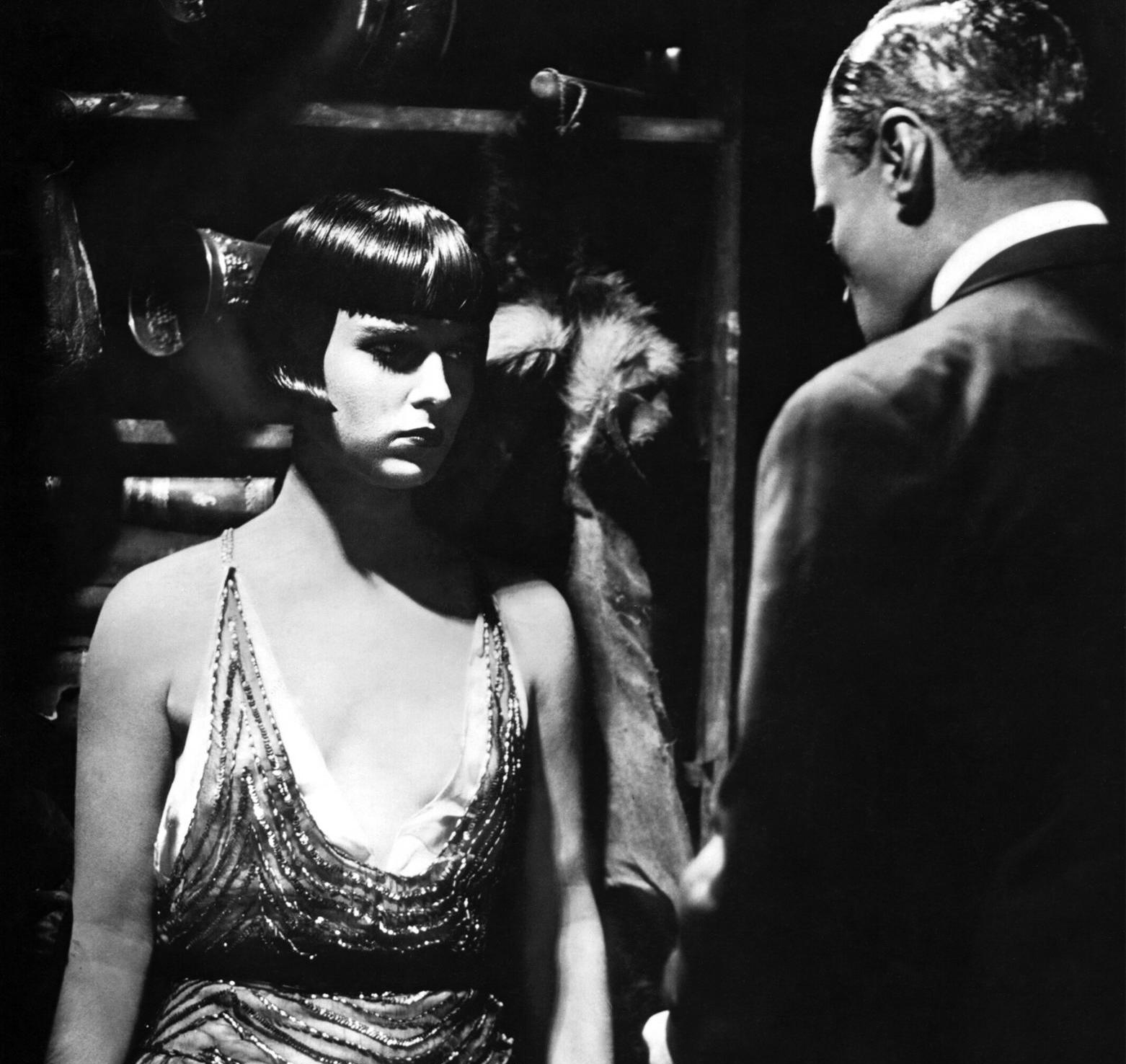
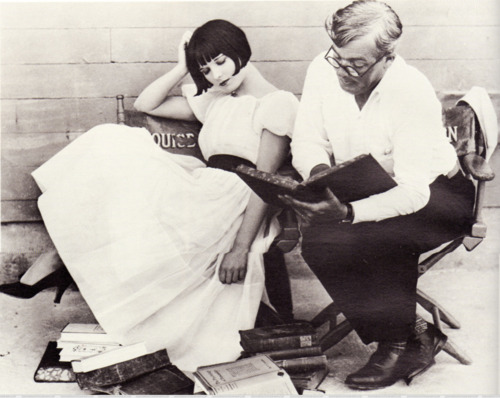
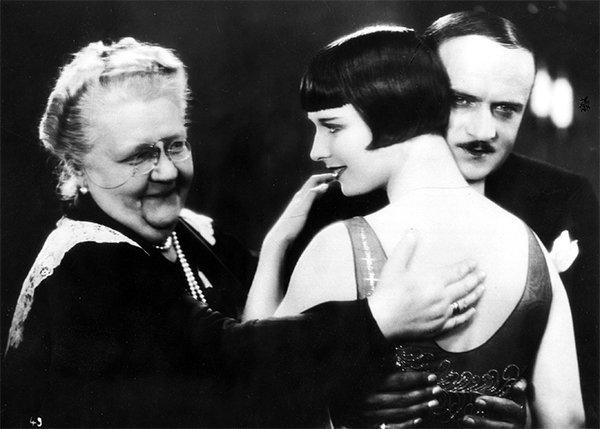
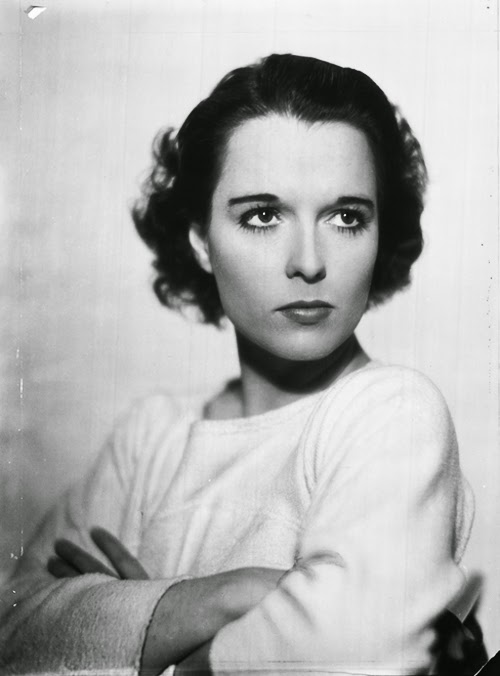
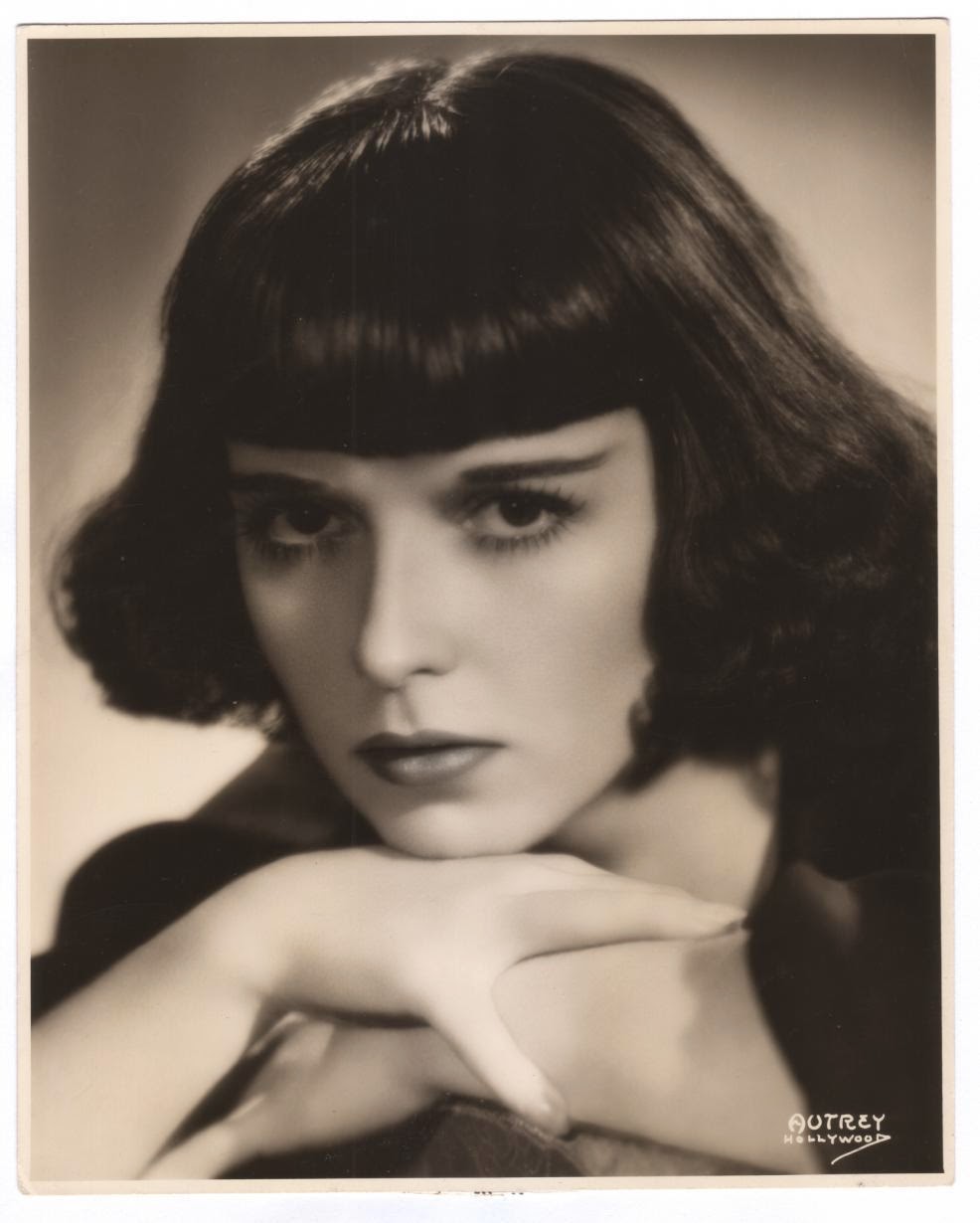
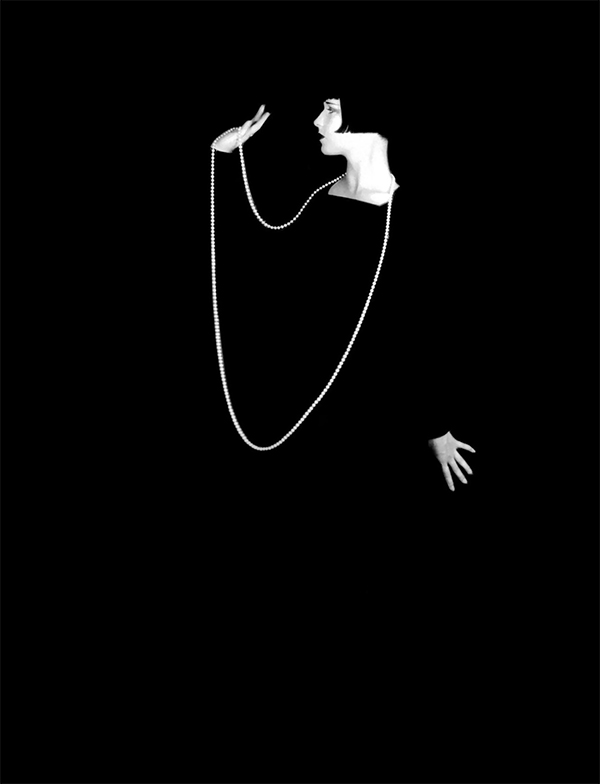
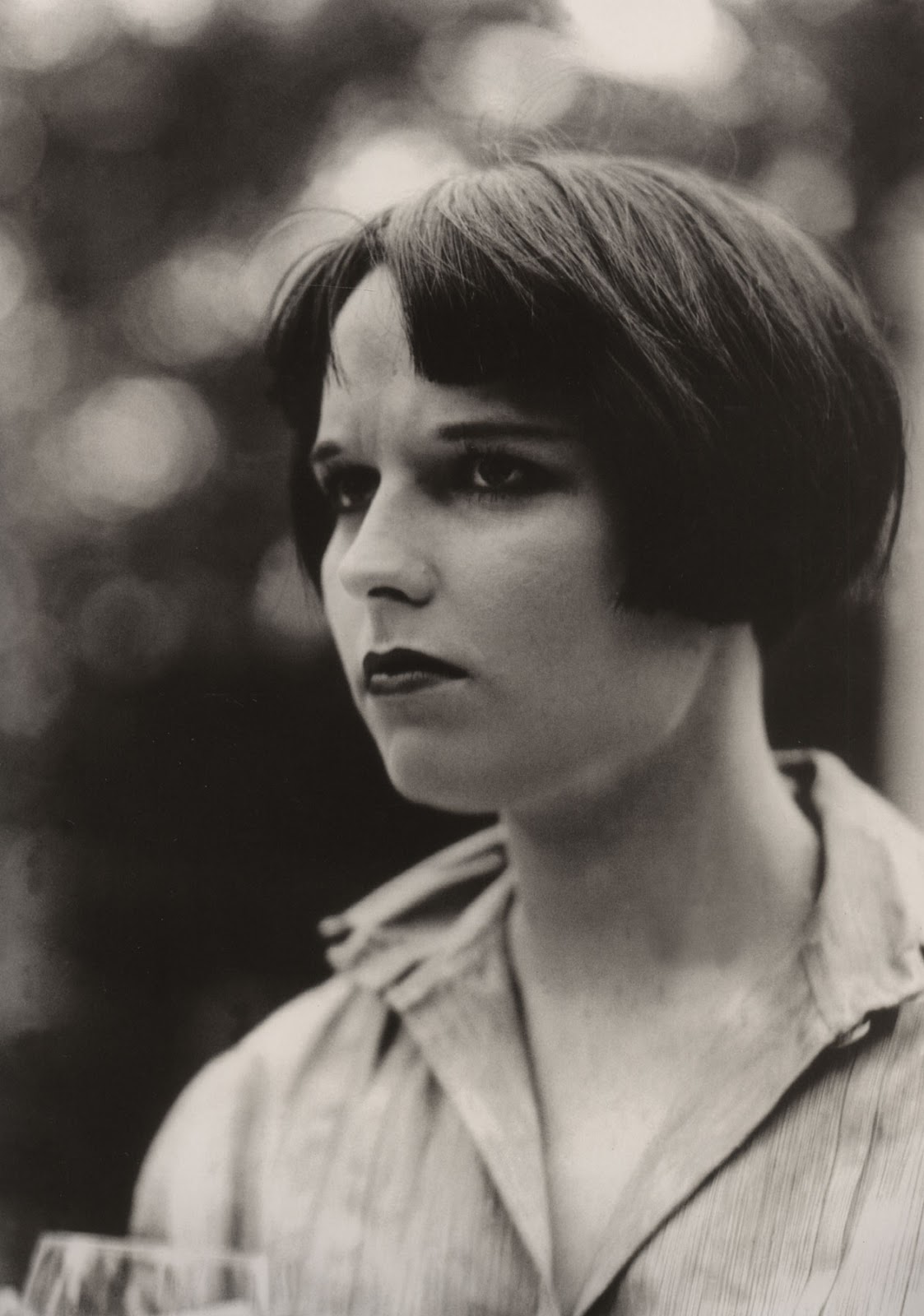
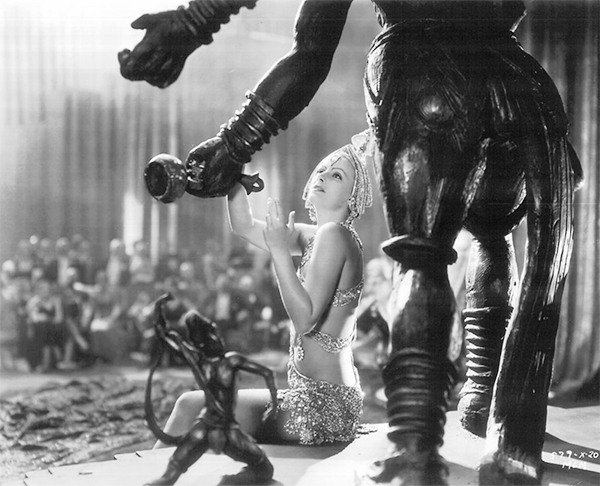
The AFS Surrealist Love Goddesses Essential Cinema series begins this Thursday, June 9. Here are some quotes about, and photos of, the woman writer Angela Carter called ““greatest of all the surrealist love goddesses.
“Those who have seen her can never forget her. She is the modern actress par excellence because, like the statues of antiquity, she is outside of time…she has the naturalness that only primitives retain before the lens…she is the intelligence of the cinematographic process, she is the most perfect incarnation of photogenie; she embodies in herself all that the cinema rediscovered in its last years of silence: complete naturalness and complete simplicity.” – Henri Langlois, Cinematheque Francaise
“Louise Brooks is the only woman who had the ability to transfigure no matter what film into a masterpiece. . . . Louise is the perfect apparition, the dream woman, the being without whom the cinema would be a poor thing. She is much more than a myth, she is a magical presence, a real phantom, the magnetism of the cinema.” – Ado Kyrou, “Amour-Eroticisme et Cinema”
“The great art of films does not consist of descriptive movement of face and body, but in the movements of thought and soul transmitted in a kind of intense isolation.” – Louise Brooks, “Lulu In Hollywood”
“During the 1920’s, when Europeans were flocking to Hollywood, Louise Brooks went from California to Germany… Brooks started out as a dancer, working as a showgirl on Broadway… before becoming a film actress in the late ‘20s. With her classic bob, Brooks was one of the most beautiful actresses of the decade. She also lived by her own rules and turned her back on Hollywood to star in two extraordinary films by German director G.W. Pabst, PANDORA’S BOX and DIARY OF A LOST GIRL (both 1929) – on which her reputation rests today.” – Kevin Brownlow, “Silent Movies: The Birth Of Film & The Triumph of Movie Culture”
“One morning (in 1929), I went to watch G. W. Pabst making DIARY OF A LOST GIRL in a studio on the outskirts of Berlin. I arrived at a moment when they were adjusting the lights, and, with evident pride, Pabst introduced me to the actress playing the heroine of his film, a young American woman of fascinating beauty who was sitting there reading. Incredibly, what this beautiful young woman was reading was a translation of Schopenhauer’s Essays. Of course, I assumed that this was a publicity stunt of Pabst’s; he knew perfectly well that I was a university graduate. However, I grew increasingly aware of an almost magical power emanating from this strange young woman, who spoke very little, even though I addressed myself to her in English. It was Louise Brooks. I stayed on, to watch Pabst work. And this Louise Brooks, whom I scarcely heard speak, fascinated me constantly through a curious mixture of passivity and presence which she projected throughout the shooting.” – Lotte Eisner, Afterword, “A Witness Speaks”
“Today we know that Louise Brooks is not just a ravishing creature but an amazing actress gifted with an unprecedented intelligence.” – Eisner, “L’Écran démoniaque, 2nd edition”
“… even in the Jazz Age, America didn’t know what to do with such a free spirit. Returning to Hollywood, she found herself ostracized. Brooks even made a two-realer with the forlorn Fatty Arbuckle and, subsequently, managed only a handful of supporting roles… Brooks was rediscovered in the ‘50s, and film writers journeyed to Rochester, New York, where she lived in seclusion, to hear the extravagant, highly intelligent actress offering the unvarnished truth about Hollywood’s golden years. Indeed she became a film writer herself, contributing articles to “Sight & Sound” and “Film Culture.” – Brownlow, ibid.
“I’m sure that Louise Brooks could have been, had she wished, had she even so much as lifted her little finger, as big and as durable a star as her contemporary, Joan Crawford. But she was presented, without either her knowledge or consent, a choice between Art and Fame, as straightforwardly as it might have been offered in a Renaissance allegory, and, without even being aware of it, she plumped, as it were, for the eternity promised by the poet. I do believe that, in her heart, she knew just what it was she wanted. She wanted “to rise high in the ranks”. It was the reverse of a Faustian bargain. She bartered her future in exchange for her soul.” – Angela Carter
“… from the day the preservation of great films began, the petty plotting of small and selfish men to wipe out the record of beauty and truth that has sometimes been achieved in spite of them, was forever frustrated. The return of Louise Brooks to the screens of the world is a portent: the art of film has its own immortality.” – James Card, 1958, curator, George Eastman House
Alain Resnais (born on this date in 1922) was one of the world’s most important and influential filmmakers. Among his other great works, he made the short film TOUTE LA MÉMOIRE DU MONDE (ALL THE MEMORY IN THE WORLD) in 1956.
It is a beautiful document of Paris’ Bibliothèque nationale de France, taking the viewer through the hallowed halls of this truly remarkable repository of French, and world, culture. We see the day-to-day workings of the library, some of its greatest treasures, and learn some of the history of the place. The awe we feel at the scale and beauty of the place is given a somewhat subversive coloring by the wry narration and Resnais deliberately distant perspective, as if he were making a film about the underground caverns of another planet.
The film is also a testament to the importance of memories and our preservation of them, in fact our duty to memories and our antecedents. In this era, when our memories may be limited to the shelf life of our data formats, and when our national affairs seem to play out in an amnesiac haze, this duty is as great as ever.
In one scene, the camera tracks up an enormous stack of paper periodicals as we hear the narration of Jacques Dumesnil:
“Among these collections, Rimbaud’s first writings were found, published in an obscure journal in the Ardennes. Who knows what other illuminating works these pages may hold? Who knows what will testify most cogently to our civilization tomorrow?”
And when the camera finally reaches the top of the huge pile we see that it is a stack of comic books.
Our next Essential Cinema series, Surrealist Love Goddesses, begins June 9. Over the course of four weeks we will examine the bold, daring lives and careers of four of the most magnetic personalities ever to grace the screen. All screenings are 35mm. Watch the trailer! First, on June 9, is G.W. Pabst’s bizarre, silent melodrama DIARY OF A LOST GIRL (1929), starring the luminous, non-conformist expat American actress Louise Brooks as a young woman who rejects the hypocritical double standards of the middle class.
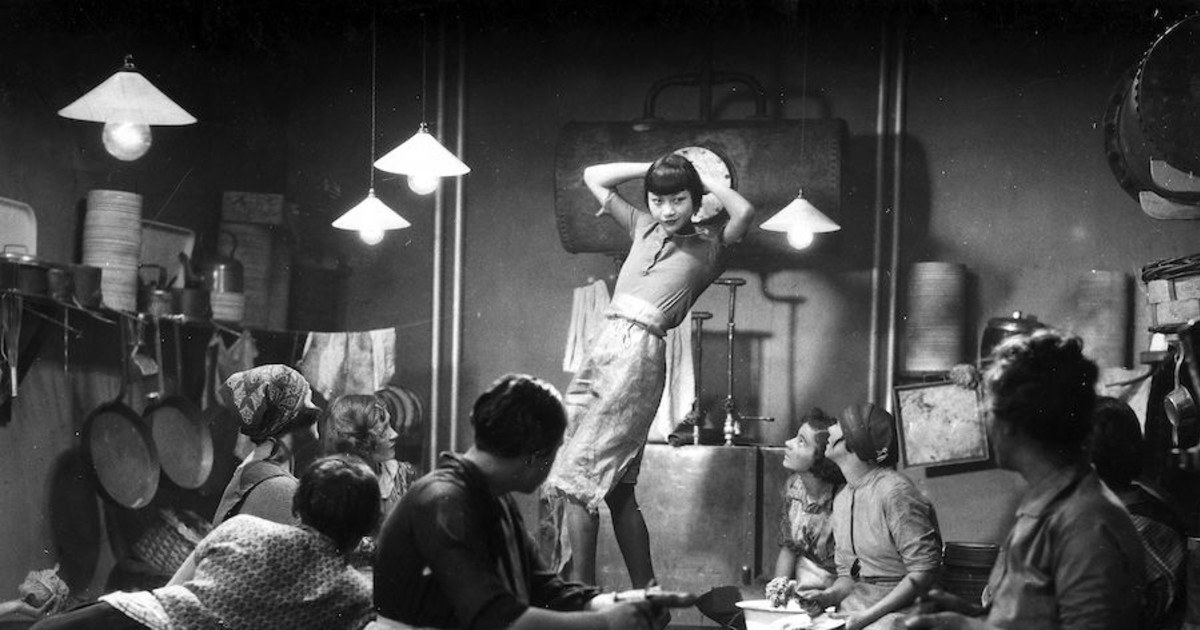
The next week, June 16, Chinese-American actress Anna May Wong seizes the screen as a nightclub dishwasher who becomes the toast of London’s Soho district when she becomes a headlining entertainer in PICCADILLY (1929). This silent screening features live vinyl accompaniment by DJ Ms. 45s.
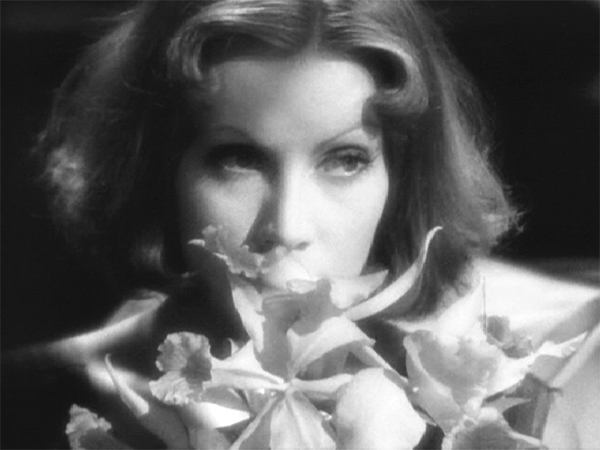
Then, on June 23, the iconic Greta Garbo stars as MATA HARI (1931), one of her most popular roles, and one that showcases her glamorous languor and idiosyncratic acting style to excellent effect.
Heads up for a really special event this weekend, Friday, June 3 through Sunday, June 5.
For the second year, AFS is partnering with Premiers Plans, a film festival and organization located in the Loire Valley capital of Angers France, to create a cross-cultural dialogue about independent film. Four new award-winning French language films, all first features, by emerging European filmmakers, as well as a shorts program and Moviemaker Dialogue that brings Austin filmmakers and audiences together with their counterparts from across La Mer.
Schedule is as follows, click on the links to find out more:
Friday, June 3:
6:00 pm Member Mixer: Enjoy our complimentary happy hour to kick off our New French Cinema Weekend and welcome our visiting French filmmakers to Austin! Freestyle Learning Center will be there as well, hosting a French language huddle, and offering discounts to AFS members for classes.
Robert Greene is one of the most exciting filmmakers working today. His work frequently mines the area of life where “performance” and “real life” intersect. His 2011 doc FAKE IT SO REAL takes us into the real/fake world of backyard wrestlers as they live through their personas. More recently, his film ACTRESS shows us how the “real” life of his subject is inextricably tied into her life as a performer. His newest film KATE PLAYS CHRISTINE takes us into the process as actress Kate Lyn Sheil prepares to play a tragic real life figure.
It should therefore come as no surprise that his main interest in Donald Trump, candidate, is in the performance aspect. Trump’s spokespeople have admitted that much of his bluster is a theatrical gambit, and in a new article for the British Film Institute’s website, Greene goes much more deeply into the nature of Trump’s persona. He opines that Trump may be an example of “a kind of documentary performance run amok.”
Here’s an excerpt:
“The idea that where there’s a camera, there’s a performance might be second nature to filmmakers, critics and media professionals, but ask any documentarian who’s been challenged on the authenticity of his or her material just how stubbornly this lack of awareness persists. As a filmmaker and editor I’d say the dialectical relationship between the authentic and the manufactured in a documentary goes to the heart of the art form itself, that documentary performance – the process by which everyday performances of identity are captured and magnified by the camera and in editing – is a key part of the deeply contradictory tension at the heart of all reality-based media. Yet general audiences understandably cling to the idea that when we tell them something is ‘real’, that means it’s real.
“Perhaps it’s no surprise, then, that in the similarly contradictory world of politics, a instinctual documentary performer like Trump could manipulate his way to the top. The fact that his polls seem to rise with every awful utterance surely epitomises some of the most racist, sexist, machismo-fetishising, Islamophobic aspects of the Republican Party, but it also might represent a grotesque inflation – and perhaps collapse – of the idea of political performance that have long dominated presidential politics. Trump might essentially be ‘Trump-proof’ with his supporters because they recognise, at some level, that he’s just playing a part, putting on a show, doing what every presidential candidate has done since JFK learned to manipulate television images – just to a louder and trashier/less snobby degree (more Real Housewives than Primary). There are issues that Trump really believes in, one must assume, but you’d be hard-pressed to make any coherent assessment of his platform based on his public persona. He barely talks about political issues at all, preferring instead to lob jabs in a manner he likely learned in the rough and tumble of New York real estate, and perfected while working with Vince McMahon in the WWE.”
It’s a funny thing. The camera just loves some people more than others. Sometimes it’s a matter of bone structure and light. Often it’s in the eyes. In many cases, it’s just a person’s authenticity coming across – we just like that person. Actress Pam Grier, who, it should be noted, also has a fantastic voice, scores off the charts in all these categories. She’s a star, and, like the great stars of the ’30s and ’40s, she was chosen by the public as their own.
It has become commonplace to call movies like FOXY BROWN and COFFY bad movies. They’re not. They are cheap movies, but it’s not the same thing. No movie starring Pam Grier can be a bad movie. It’s just not possible. If she’s in it, that movie shines for that time. We love her and we love hearing her talk about her life and career. If you haven’t read her book “Foxy: A Life In Three Acts,” you should. You’ll gain a lot of insight about her seriousness and her approach to the craft of acting as well.
Today, wish her a happy birthday and enjoy these interview clips of Pam in conversation at the Film Society of Lincoln Center. Warning: there is some strong language.
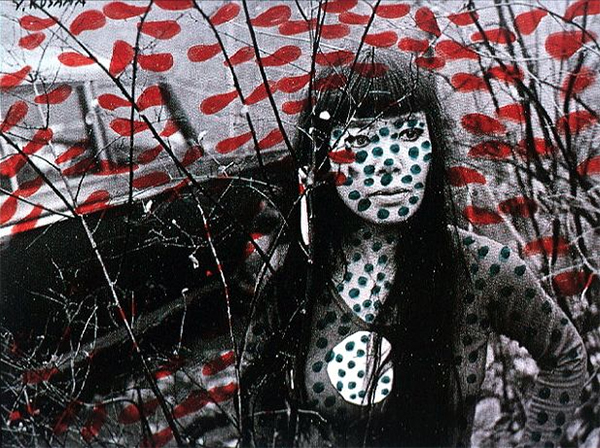
One of the big, exciting cultural events of the year is happening in a city a few hours to our east, the city is called Houston and the event is an exhibition of Yayoi Kusama’s dazzling, colorful “infinity rooms.” You can read the description here on MFAH’s page. You need a damn good reason to visit Houston in the summer and this is it. The exhibition begins on June 12 and runs through September 18.
In the meantime, watch this 1967 film by New York Avant-gardist Jud Yalkut which documents, in a frenetic way, Kusama’s early art techniques. It’s a happening thing, as they used to say.
Nora Ephron (born on this date in 1941) wrote a piece shortly before she died about her favorite romantic comedies. The novelist, journalist and filmmaker knew quite a lot about the subject, having herself written and produced WHEN HARRY MET SALLY(1989) and having written and directed SLEEPLESS IN SEATTLE (1993).
“In addition to everything else he did, Hitchcock made great romantic movies.”
IT HAPPENED ONE NIGHT (1934)
“Starring Claudette Colbert and Clark Gable, it was made in those long-ago days when women looked like women and men looked like men.”
HIS GIRL FRIDAY (1940)
“If there’s a better movie about journalism, I don’t know what it is.”
THE PALM BEACH STORY (1942) (pictured above)
“I tell everyone I know who wants to be a screenwriter to watch the scene at the beginning of the movie, where Colbert is stuck in the bathroom with the Wienie King. It’s a lesson in specificity.”
THE THIN MAN (1934)
“One of the only movies about marriage. Of course it’s also about drinking.”
THE APARTMENT (1960)
“This movie is (I think) the first to use what’s now become a staple of romantic-comedy endings, the “R” scene. “R” stands for running, of course.”
CHARADE (1963)
“Once again, there’s a plot, which always helps: This is a mystery and a love story.”
SPLASH (1984)
“Among the movie’s long-lasting effects: the popularity of the name Madison.”
HANNAH & HER SISTERS (1986)
“It’s not strictly a romantic movie, but the scene at the end in Tower Records between Dianne Wiest and Allen is one of the greatest falling-in-love scenes ever filmed.”
CASABLANCA (1942)
“How many times can you see it? Never enough.”
SENSE & SENSIBILITY (1995)
“A lot of Jane Austen movies founder on the fact that the plot almost always includes a letter that changes everything. It’s hard to do letters in movies. But in this one, everything works.”
Jean Gabin, born Jean-Alexis Moncorgé on this date in 1904, was a great actor. That much is clear from his screen work for Jean Renoir, Marcel Carné, Julien Duvivier, Max Ophuls and many other masters. He was also the kind of actor whom audiences take to heart for reasons we can’t necessarily explain but that we understand.
A big, gruff, broad-shouldered man with a face that seems to be constructed of boulders, Gabin exemplified attitudes and aptitudes that were peculiarly French. Just as we Americans see something of our own idealized masculinity in John Wayne’s mix of sardonic swagger and moral forthrightness, the French see Gabin as the strong, silent centurion of French values. And like John Wayne , who nearly became a society-wide joke after the youth quake of the ’60s, Gabin briefly seemed to be an icon of the Gaullist silent majority in France, but like Wayne, he overcame it.
In 1974, Gabin, seventy years old and as beloved as ever, a symbol of the France that overcame the wars and never lost its essential qualities as a nation, recorded “Maintenant Je Sais.” In his off-hand way he talk-croons his way through the sentimental song, as lugubrious strings saw away in the background. There’s a lot of vulgarity to overcome here, but Gabin, as he always seemed to do, made it look effortless. The song was a major, iconic hit in the French speaking world, and now generations who may never see a Jean Gabin film know his name because of this song.
The lyrics in translation:
When I was a child, knee high to a grasshopper
I used to speak very loudly to be a man
I used to say, I KNOW, I KNOW, I KNOW, I KNOW
It was the beginning, it was spring
But when I turned 18
I said, I KNOW, here I go – this time I KNOW
And now, every time I turn around
I look at the earth, a place I paced up and down though
And I still don’t know how it turns
When I was about 25, I knew everything
Love, roses, life, money
Oh yeah, love! I knew it thoroughly!
And luckily, like my mates
I hadn’t eaten up all my bread
Halfway through my life, I learned new things again
What I’ve learned takes up only four, five words:
On the day when someone loves you, the weather is very fine
I can’t say it better – the weather is very fine
That’s the last thing to amaze me about life
I who am in the autumn of my life
You can forget so many evenings of sadness
But never a morning of tenderness
All the time when I was young, I wanted to say I KNOW
However, the more I searched, the less I knew then
The clock has stricken 60
I’m still standing at my window, looking out and wondering
Now I KNOW, I KNOW THAT YOU NEVER KNOW!
Life, love, money, friends and roses
You never know the noise nor the color of things
That’s all I know! But I KNOW that..
“She was the most seductive, sensual image of woman ever committed to celluloid. When Hollywood bored her she walked out on Hollywood. When men bored her she walked out on them. She’s the only unrepentant hedonist, the only pure pleasure seeker I think I’ve ever known.” – Kenneth Tynan
Here is a very interesting documentary from British TV about actress & author Louise Brooks. She was truly a figure of her times, and one continually ahead of them. The historical material is very interesting, but by far the most gripping parts of the doc are the long interviews with Brooks herself.
This June, AFS presents Surrealist Love Goddesses, an Essential Cinema series spotlighting Louise Brooks, Anna May Wong, Greta Garbo and Marlene Dietrich.