Category Archive: Uncategorized

  1. January’s Essential Cinema: Blake Edwards & Julie Andrews – Read All About It

    Leave a Comment
    Hot off the presses, here are the programming notes for this January’s much-anticipated Essential Cinema screening series. Screenings are open to the public. Click on links below for more information.


    Blake Edwards’ name is synonymous with the kind of sophisticated yet physical comedy he mastered as a writer and director. The urbane and the profane coexist in the Edwards universe, and frequently prove to be opposite sides of the same coin.


    Born in Tulsa but raised in Hollywood, young Blake Edwards knew the studio back lots like the palm of his hand. As soon as he was old enough to work he became a messenger, delivering script pages and dailies to the various studio offices. Soon he became a bit part actor, then a writer and director of B-movies, radio and television. The success of his television series PETER GUNN and subsequent early films like OPERATION PETTICOAT and BREAKFAST AT TIFFANY’S made him a sought-after comedy director, and then the first two installments of his PINK PANTHER series, featuring Peter Sellers as the bumbling Inspector Clouseau, carried him to the top of the heap.


    THE GREAT RACE followed, a (for its time) massively budgeted comedy. It turned a profit but was critically unpopular. His next few films did not satisfy critics or audiences much. Edwards had come to a turning point by the end of the sixties. His next film, DARLING LILI, encountered a number of costly shooting delays and, making matters worse, studio management changed before the release and the new brass did not much care about making DARLING LILI a success. The movie was released, with cuts made by the studio, and underperformed at the box office. Seen today in Edwards’ preferred cut, it’s a minor masterpiece. Julie Andrews, making her first appearance in one of her husband’s films, is remarkable, demonstrating her acting, singing and even sex appeal. This last attribute was very controversial at the time, and the studio management’s discomfort with Andrews’ sexual side will come up again in S.O.B.


    Subsequent Clouseau-free projects proved unsuccessful as well and Edwards found himself at the cusp of the ‘80s without a studio and without many prospects. Outside of the dependable PANTHER films, which were becoming a little worn at the edges, Edwards had presided over a string of flops, and his latest script, about a man having a midlife crisis, seemed like another box-office depth charge. The small production unit Orion Pictures took a gamble on Edwards’ talent (and his not inconsiderable anchor star and wife Andrews). 10 became a massive box office sensation, raking in $75 million dollars, the equivalent of a quarter of a billion dollars today. New discovery Bo Derek became ubiquitous in the national media after this film’s success and Ravel’s Bolero became one of the best selling classical compositions of all time.


    Thursday, January 7, 7:30pm
    Directed by Blake Edwards, USA, 1979, 122 min
    Written by Edwards. Starring Dudley Moore, Julie Andrews, Bo Derek, Robert Webber, Dee Wallace, Brian Dennehy


    Dudley Moore plays a successful songwriter, blessed with a loving partner (Julie Andrews), who spies beautiful young bride Bo Derek at a wedding and loses his mind. Unbeknownst to her, he follows her and her husband on their Mexican honeymoon trip. Between awkward encounters and many, many strong drinks he finds where his true happiness lies.


    Rather than rest on his laurels or begin a new, profitable franchise, Edwards went his own way yet again, featuring Andrews in the acidic, brilliant and completely uncommercial satire S.O.B., which, unsurprisingly, was dumped by the studio and lost money but which today seems ripe for rediscovery. The central character, a director played by Richard Mulligan, is very much based on Edwards and the plot events reflect the aftermath of the DARLING LILI debacle.
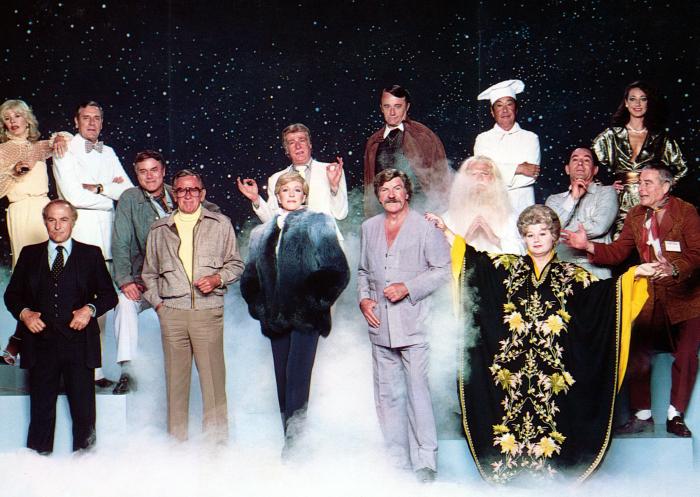


    Thursday, January 14, 7:30pm
    Directed by Blake Edwards, USA, 1981, 122 min
    Written by Edwards. Starring Julie Andrews, Richard Mulligan, William Holden, Robert Preston, Marisa Berenson, Larry Hagman


    After a long and remunerative career in Hollywood, director Felix Farmer (Robert Mulligan) is at the end of his rope. His latest film, a musical called NIGHT WIND, is a flop, his personal life falls apart and he finds he has few friends. Then Farmer has the insane idea to recall NIGHT WIND, add pornographic sequences starring his wife, a goody-goody Julie Andrews type (played by Julie Andrews, of course), and rerelease it. It’s an act of madness, of course, but then all of Hollywood is mad, unscrupulous and desperate in Blake Edwards’ deeply bitter, dark farce.


    The Edwards/Andrews team followed this with sizeable hit and critical success VICTOR VICTORIA, which brought old-fashioned big-movie craftsmanship and talent back to the top of the box office charts again. It’s an extraordinary showcase for Julie Andrews and Robert Preston. This is top of the line stuff, as proficient an example of grown-up entertainment as Hollywood had ever managed.


    Thursday, January 21, 7:30pm
    Directed by Blake Edwards, USA, 1982, 132 min
    Written by Blake Edwards from a story by Hans Hoemburg and Reinhold Schünzel. Starring Julie Andrews, Robert Preston, James Garner, Lesley Ann Warren, Alex Karras


    In Paris between the wars, a British singer – an operatic soprano – (Julie Andrews) slogs from dive to dive looking for work. She becomes friends with gay cabaret pianist Toddy (Robert Preston) who comes up with the idea of having her impersonate a man who in turn performs onstage in female “drag.” The act is a sensation and the gender reversal causes a lot of personal turmoil for smitten American gangster King Marchand (James Garner) and his retinue.


    VICTOR VICTORIA was a pinnacle of sorts for Edwards. His next projects must have been pretty dispiriting – one Pink Panther movie largely constructed of deleted scenes from other films in the series, a necessity created by the premature death of star Peter Sellers; and another Pink Panther movie starring Ted Wass as the lead investigator. Edwards’ next film betrays some of the ennui he felt during this period.


    Thursday, January 28, 7:30pm
    Directed by Blake Edwards, USA, 1983, 110 min
    Written by Blake Edwards, Milton Wexler and Geoffrey Edwards. Suggested by a film written by François Truffaut, Michel Fermaud and Suzanne Schiffman. Starring Burt Reynolds, Julie Andrews, Kim Basinger, Marilu Henner, Cynthia Sikes, Jennifer Edwards, Sela Ward


    A psychoanalyst played by Julie Andrews relates in flashback the tale of one of her most interesting patients, a wealthy sculptor who is obsessed by beautiful women and who pursues them even when it places his life in jeopardy. The film is told in a series of vignettes.


    THE MAN WHO LOVED WOMEN is an Americanization of François Truffaut’s 1977 film, released stateside under the same title. Though he was a box office star, Burt Reynolds is not ideal casting. In fact Blake Edwards wanted Warren Beatty or Dustin Hoffman. Reynolds does his best though and the rest of the cast does very well at times, especially Andrews and Kim Basinger. This is a minor Edwards film, and chiefly interesting as the film that closes this cycle, but taken with the right attitude it is a lot of fun, it is well shot by the great Haskell Wexler, and there are several classic sequences.

    The series has been programmed with author Bryan Connolly (DESTROY ALL  MOVIES!!!).

  2. Carol Burnett’s 70’s Comedy Variety Show was a Film Buff’s Dream

    Leave a Comment

    It was announced today that Texas native and comedy legend Carol Burnett will inducted into the Texas Film Hall Of Fame at the Texas Film Awards on March 10. Her film credits are excellent in themselves, with great performances in PETE ‘N’ TILLIE (1972), THE FRONT PAGE (1974), Robert Altman’s underrated THE WEDDING (1978), Alan Alda’s THE FOUR SEASONS (1981) and. of course, John Huston’s adaptation of ANNIE (1982); but it is her TV work that made Carol Burnett a household name.

    Her best known television show was THE CAROL BURNETT SHOW which ran from 1967 through 1978. Along with her unparalleled stock company: Harvey Korman, Vicki Lawrence, Lyle Waggoner and Tim Conway, and special guest stars, the show kept musical variety alive and kicking on television and brought Burnett’s extraordinary talent for comic characterization into American homes for years. Though filmed for telecast, it maintained a live energy reminiscent of the early days of live TV.

    Many of the show’s sketches were about movies, both current releases and classics. It was assumed that the audience was conversant in the Hollywood cinema of the ’30s, ’40s and ’50s. There were impossible-to-forget impressions of Gloria Swanson in SUNSET BOULEVARD and Bette Davis in ALL ABOUT EVE among many, many others.

    Here is one of the best, a parody of DOUBLE INDEMNITY, featuring Burnett in the Stanwyck role and singer Steve Lawrence as the doomed insurance agent who falls under her spell. This is the Burnett magic at its best.

  3. Critic/Historian Wheeler Winston Dixon on the Lost Art of Black & White

    Leave a Comment
    Here’s a great interview with critic Wheeler Winston Dixon, author of the new book “Black & White Cinema: A Short History” on the pleasures, challenges and meaning of monochrome cinematography.

    Here are some excerpts:

    “If you go on Amazon and you see some great black-and-white film, and it’s going for $3, or any kind of foreign or obscure film, buy it, because it’s going out of print, and they’re not going to put them back into print. With VHS, everything came out, everything. And then they looked at what sold, and what didn’t sell didn’t make the jump to DVDs. There were thousands of films, tens of thousands of films, that were on VHS and never made the jump to DVD. Important films. Now that we’re going to Blu-ray, lots of films aren’t making that jump.”

    Dixon goes on to make other good points. Black and white cinematographers has much more freedom for instance.

    “Remember that often working in color limited you in ways that black-and-white did not. Technicolor had a lock on the color processes until Eastmancolor came along in the early 1950s. So Technicolor controlled the cameras, the cameramen, the labs — everything had to be done through them. There were only 11 or so Technicolor cameras in Hollywood, so when you worked with Technicolor you also got Natalie Kalmus, the ‘color coordinator,’ and director of photography Ray Rennahan who was their in-house photographer, usually, and they typically wanted the colors to pop off the screen.”

    He also makes the point that black and white films are fundamentally different from color films.

    “To me black and white is more sensuous. It’s such a transformative act to make a black-and-white film. You are entering an entirely different world, right from the start. It’s so much more of a leap into another universe.

    Color films and particularly color 3-D films attempt to mimic some sort of spectacular reality, whereas black-and-white films are really a meditation on the image.”

    H/T Manohla Dargis

  4. AFS Viewfinders Podcast: Author Bryan Connolly on Blake Edwards

    Leave a Comment

    The new AFS Viewfinders podcast is up. You can find it on iTunes or click here to listen.

    Our guest is Bryan Connolly, author and viral media celebrity. Bryan is joining us as co-programmer and co-host of our January Essential Cinema series, Love Is A Two Way Street: Films Of Blake Edwards & Julie Andrews. The series includes 10 (1979), S.O.B. (1981), VICTOR VICTORIA (1982) and THE MAN WHO LOVED WOMEN (1983). These films are masterful examples of Edwards’ ability to work with a diverse palette, from social satire to keen interpersonal observation to, of course, slapstick physical comedy.

    Connolly and I talk about Edwards’ amazing career trajectory that took him to every level of Hollywood from the laundry room to the penthouse. We also talk about the social reasons for the widespread disparagement of physical comedy and the remarkable talent of Julie Andrews, Edwards’ wife and, perhaps, greatest star.*

    *Apologies to Peter Sellers


  5. Born On This Date: Cinema’s Greatest Magician George Méliès

    Leave a Comment

    George Méliès, born on this date in 1861, brought dreams and magic to the cinema, where they have remained ever since in varying quantities. A stage magician by trade who owned his own theater and obsessively tinkered with his illusions, Méliès immediately saw the advantages that the young medium of moving pictures offered. He built a camera and projector and equipped his theater for exhibition. Soon he was making his own short films, often built around magic tricks. He was an obsessive tinkerer who took great joy in developing optical illusions. Most film special effects that followed owe something to Méliès’ methods and his films still have the capacity to entertain and delight.

    Here is Méliès’ MERRY FROLICS OF SATAN, still an impressive compendium of all kinds of special effects and starring Méliès himself as Mephistopheles, naturally.

  6. Watch This: John Belushi Walks on His SNL Co-stars’ Graves in Tom Schiller’s Short

    Leave a Comment
    Tom Schiller will join AFS for a screening of SCHILLER’S REELS, his best short films, and his feature NOTHING LASTS FOREVER on Monday December 21. The show will be cohosted by author and Schiller superfan Zack Carlson.
    From the earliest days of Saturday Night Live, short films were a part of the show. Albert Brooks and Penelope Spheeris were among the many who made short films for the show, but writer/filmmaker Tom Schiller made the most abiding of all the SNL shorts of the first 15 years of the show’s run.
    Today the shorts are as funny as ever, and have new layers of meaning and sometimes pathos. John Belushi is hilarious in old man makeup, walking on the graves of his erstwhile cast members, but there’s more to the gag now. Schiller’s reels never pounce on the easy laugh. There is wit and sophistication about them, such as in LA DOLCE GILDA, which places Gilda Radner in the decadent Roman milieu of Federico Fellini. Schiller also loves distending and displacing time periods, as in his feature NOTHING LASTS FOREVER which glides between a 1930s Capra reality, a 1950’s television consumer frenzy and an ’80s New Wave future.
    Here’s that Belushi short: DON’T LOOK BACK IN ANGER, one of many shorts that will be featured at our December 21 screening.

  7. Happy 85th Birthday Godard; Huppert & Karina Recount Their First Meetings with J-L.G.

    Leave a Comment

    Today is the 85th birthday of a filmmaker who has lived a life of rebellion against the status quo, against safety, against security, against his own “success.” A filmmaker who has angered, alienated and bored many, and also made beautiful films which helped to create a new way of interacting with the moving image. Whether we love him or hate him we can agree that he’s one of a kind.

    Thanks to Criterion we can hear from Isabelle Huppert, star of his 1980 “comeback” movie EVERY MAN FOR HIMSELF, tell of her first meeting as they prepared for the film.
    And here Anna Karina, perhaps Godard’s most iconic ’60s female star, recalls her first meeting with Godard, whom she married in 1961 and was divorced from four years later.
  8. From Grady Hendrix: The Japanese Criterion Classics You Can’t Buy

    Leave a Comment
    Masahiro Shinoda’s KILLERS ON PARADE (1961)

    Our favorite writer on Asian Cinema Grady Hendrix has a Film Comment article here about some of the Japanese titles that Criterion has in its vaults that are not available on DVD but that are available on Hulu. While many people rely on Hulu for repeats of network TV shows (punctuated by annoying commercials unless a bribe-like surcharge is paid), the most essential feature of the streaming service is their Criterion titles. It does not include all the titles Criterion has released, but to make up for that it includes many films that have never been released on home video formats.

    As Hendrix says:

    Hulu is a repository for everything that Criterion would never put on DVD, from Ironfinger (65) and Golden Eyes (68), two very strange James Bond knock-offs that feel like they were made by and for small children, to deep catalogue cuts from international masters like Nagisa Oshima (Criterion DVD = 8 movies; Hulu = 16). If you only know Nobuhiko Obayashi from his experimental haunted mansion movie, House (77), you owe it to yourself to check out his experimental true crime castration movie, Sada (98), or his ultra-experimental gothic short film Emotion (66), both of which are streaming. (To be fair, Emotion is included as a supplement on the HouseDVD but at 40 minutes it’s a nice stand-alone film.)

  9. Born On This Day: Harpo Marx; Watch Harpo & Chico Play a Piano Duet Like No Other

    Leave a Comment

    Harpo Marx, one of the three funniest Marx Brothers, was born on this date in 1888.

    The Marx Brothers’ family had show biz connections and their mother Minnie had the necessary iron will to serve as their manager during the turn of the century musical variety years. The brothers were all fine musicians and it was in this capacity that they first took the stage. Harpo, master of many instruments, was the most talented at music. It was the comic ad libs the brothers threw around onstage and their responses to hecklers that made them major stars though. Harpo’s elaborate pantomimes gave the routines a sublime dimension and as we all know they went on, in middle age, to become movie stars as well.

    Here is a scene from THE BIG STORE (1941), not their best work, but like all Marx Brothers films, a showcase for some peerless routines. Here brothers Chico and Harpo execute a piano duet that contains humor, agility, brotherly love and, of course, anarchy.

  10. Watch This: The Life & Times of Don Luis Buñuel; also: His Perfect Martini Recipe

    Leave a Comment

    Luis Buñuel’s LOS OLVIDADOS screens Tuesday 11/24 at AFS @ The Marchesa, hosted by Richard Linklater with special guest Professor Charles Ramírez Berg, author of The Classical Mexican Cinema.

    Has there ever been a great filmmaker with the range and diversity of material shown by Luis Buñuel? It’s staggering to think that the same filmmaker who brought the world UN CHIEN ANDALOU also made BELLE DE JOUR. The same man behind the socially conscious (mostly) realist LOS OLVIDADOS also tripped off into the sensual surrealism of THAT OBSCURE OBJECT OF DESIRE.
    Here is a fine 1984 BBC doc that includes interviews with many of his contemporaries and collaborators.
    Enjoy:
    Also, just for kicks, here is Buñuel’s martini recipe, which includes a dash of sacrilege.

    The day before your guests arrive, put all the ingredients — glasses, gin, and shaker — in the refrigerator. Use a thermometer to make sure the ice is about twenty degrees below zero (centigrade). Don’t take anything out until your friends arrive; then pour a few drops of Noilly Prat and half a demitasse spoon of Angostura bitters over the ice. Shake it, then pour it out, keeping only the ice, which retains a faint taste of both. Then pour straight gin over the ice, shake it again, and serve.

    The making of a dry martini should resemble the Immaculate Conception, for, as Saint Thomas Aquinas once noted, the generative power of the Holy Ghost pierced the Virgin’s hymen “like a ray of sunlight through a window — leaving it unbroken.”

  11. Watch This: Live from Lisbon – The Austin Panel

    Leave a Comment
    Halfway around the world a few days ago, a group of people gathered together at the Lisbon & Estoril Film Festival to talk about Austin as a film city success story. The panel, consisting of Louis Black, Sandy Boone, David Gordon Green, Geoff Marslett and Bob Byington talk at length about what makes Austin special for filmmakers and audiences. It’s a very instructive master class, loaded with insight and great stories.
    Watch it here:

THANK YOU TO OUR SPONSORS