We often hear epic films characterized as “operatic.” Sometimes it’s a lazy adjective, but for Luchino Visconti (born on November 2nd, 1906) it is a correct comparison. In fact his productions of Grand Opera outnumber his feature films. By all contemporaneous accounts he grasped the dramatic and spectacular possibilities of opera as well as anyone of his era. This appreciation of dramatic gestures both massive and subtle also informed his screen work, which includes ROCCO AND HIS BROTHERS, SENSO, THE LEOPARD and THE DAMNED. Dramatic contradictions came easily to Visconti, a man born into nobility (his full title was Count Luchino Visconti di Madrone of Lonate Pozzolo) who later joined the Communist Party.
For some more insight on the fascinating biography of Visconti, former AFS Programming Director Chale Nafus sums it up pretty well here.
It was on the set of THE DAMNED that the following documentary was made. We hear from his stars Charlotte Rampling and Ingrid Thulin about his working methods as well as from the director himself who, unsurprisingly, is a perfectionist. His methods and philosophy might be described as old school in many ways. But this old school is a particularly good school and so his thoughts on the matter are well worth hearing and learning from.
The monthly AFS Discussion Club has been a small refuge of sanity for the Cinema-obsessed during this pandemic. We have been thrilled to welcome some pretty fantastic guests. This month was no obsession. AFS Lates Programmer and host Jazmyne Moreno joined us for a discussion of DAUGHTERS OF DARKNESS (1971), the arty vampire movie that combines overtones of classic Hollywood with the very permissive sexual atmosphere of the age of Aquarius.
Our discussion follows, and it is absolutely full of spoilers, so you should watch the film first if you haven’t already. As of press time it is available to stream in gorgeous high definition on the Criterion Channel. Check it out and enjoy the discussion with Moreno, AFS Lead Programmer Lars Nilsen and a number of the virtual attendees.
It’s Halloween month, and for many of us that means our home viewing diet takes a deep dive into the world of horror cinema. At this point maybe you have seen all of the biggies and are exploring the fringes a bit. As it happens we have also done a bit of nocturnal fringe-exploration, so for those who might like a little advance scouting report in the field of vampire movies we have compiled a Letterboxd list called “Medium Rare Stakes: Lesser Known Vampire Classics”
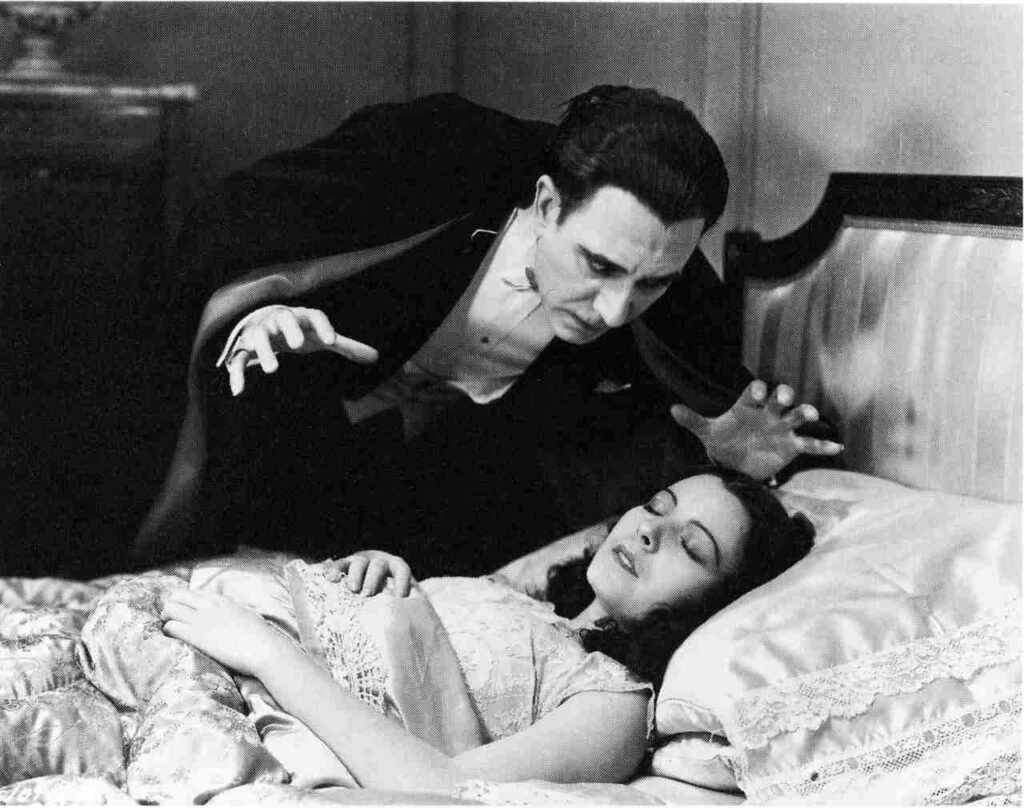
If you are not a deep Universal Horror nut, you may not have realized that at the same time Tod Browning’s epochal Lugosi DRACULA (1931) was filming, a Spanish language version of the film was also being made. During that era, there was no post-synch dubbing, so an entirely different cast filmed the dialogue scenes on the same sets at night. It’s called DRÁCULA (1931) and a lot of people think it is better than the admittedly-pokey English-language version. Judge for yourself.
DRÁCULA (1931)
Another non-English language oddity is DRACULA IN ISTANBUL (1953), which hits all the usual beats, but has a distinct and unusual Turkish feel. 1967’s THE LIVING CORPSE is a Pakistani take on the novel with sex and musical numbers(!) added in. Such far-flung locales as the Philippines (1972’s wiggy, color-tinted THE BLOOD DRINKERS) and Argentina (Emilio Vieyra’s mod-ish 1967 BLOOD OF THE VIRGINS) also make the list.
THE BLOOD DRINKERS (1964)
Back in the States, the Universal Dracula films hit American TV screens in the ’50s and there was an increased demand for vampire movies to slake the thirst of teenage viewers. BLOOD OF DRACULA (1957) is about a female teenage misfit who is in fact a vampire – there’s a lot of interesting stuff here about parental neglect and the place of education in society. CURSE OF THE UNDEAD is a vampire western with a surprisingly goth tone and a very good performance by Michael Pate as the mysterious black-clad stranger.
BLOOD OF DRACULA (1957)
Europe got into the horror game in a big way after the Hammer Dracula films began making a lot of money at the box office in the late ’50s. Roger Vadim’s BLOOD & ROSES (1960) is a fake art film in the best Vadim tradition, and it kicked off the long cycle of lesbian vampire movies, many of them based on J. Sheridan LeFanu’s story “Carmilla.” The Italian SLAUGHTER OF THE VAMPIRES (1962) is cheap but atmospheric, filmed in high contrast black and white on astonishing old-country locations and featuring the kind of dubbing that sounds like a flat, undifferentiated internal monologue, if you’re into that sort of thing. Another Italian horror film, 1972’s THE NIGHT OF THE DEVILS is made with much more polish, and is one of the few genuinely frightening Italian gothics outside the oeuvre of Mario Bava.
BLOOD AND ROSES (1960)
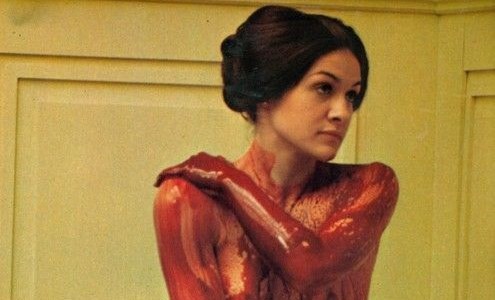
Some interesting Euro-cult auteurs made vampire films as well. Jess Franco’s VAMPYROS LESBOS (1971) is too well known at this point to consider it a rarity, but his DAUGHTER OF DRACULA (1972) is little discussed but very interesting, if you have the Jess Franco gene. Others will surely tune out – or doze off. The Polish filmmaker Walerian Borowczyck often operates on the fringes between the art film and the horror movie. His IMMORAL TALES (1973) features, in an omnibus of erotic horror tales, what may be the best representation yet of the Countess Elizabeth Bathory story. She is the Hungarian noblewoman who allegedly bathed in the blood of virgin serfs to attain eternal beauty.
IMMORAL TALES (1973)
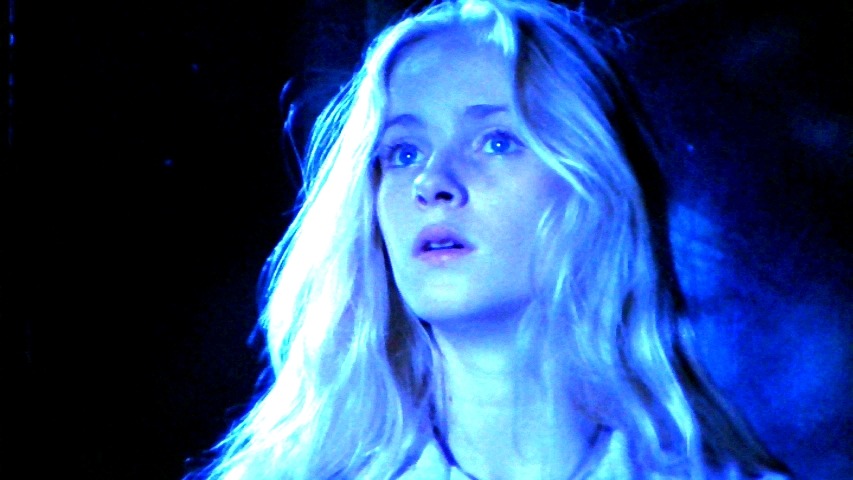
The low-budget American indie LEMORA: A CHILD’S TALE OF THE SUPERNATURAL (1973) deserves a special mention here as it is truly sui generis, a small-town Depression-era period piece about the teenage daughter of a gangster who becomes the target of a female vampire. It is really unusual and strangely effective. Highly recommended.
LEMORA: A CHILD’S TALE OF THE SUPERNATURAL (1973)
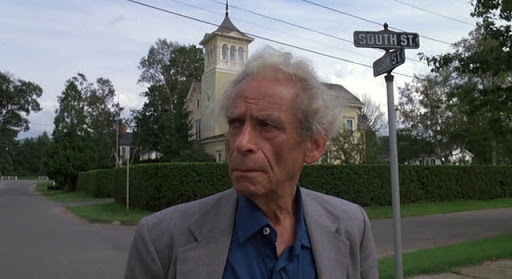
If you like to laugh along with your vampires, there are some funny ones on the list. A RETURN TO SALEM’S LOT (1987) is, in the best huckster tradition, not a sequel to Tobe Hooper’s 1979 TV movie SALEM’S LOT at all. But it is a Larry Cohen movie, so it has its share of laughs among the scares. Sam Fuller steals the show with a manic performance as a Nazi hunter turned Van Helsing. It’s really something. NOCTURNA (1979) is funny in spite of itself. It’s a mess if we’re being honest about it, but the sub-sub-genre of Disco Vampires is so shamefully underpopulated that we are forced to include it here. John Landis’ INNOCENT BLOOD (1992) is also very amusing, with a parade of top-flight character actors chiming in and giving their all.
A RETURN TO SALEM’S LOT (1987)
There are more on the list, and you probably have obscure favorites of your own. Keep exploring and let us know what some other favorites are in the Letterboxd comments.
Public Access Cable Television began in the early ’70s at the time that commercial cable television outlets began expanding their operations through the country. This system of allocating a certain number of channels for local programming was mandated by the FCC thanks to the advocacy of pioneers in the field of community media. The cable companies in their headlong rush for expansion agreed to not only dedicate channel space to the project but also to fund the creation and maintenance of production facilities.
This ushered in the golden age of Public Access Television with its mixture of City Council hearings, church services, shaky-cam gardening shows and, inevitably, late night anything-goes free-for-alls. Austin, naturally, had an active talent pool to draw from, and its CATV (Community Access Television) programs reflected the community well. Viewers had access to the usual municipal hearings and sermons, as well as the expected hours of guitarists cranking up sub-Eddie Van Halen eruptions of arpeggios and chaotic call-in shows offering psychic advice for the lovelorn or UFO abductees, or both.
In the midst of all of this, some community members were getting their hands on cameras or professional editing bays for the first time, beginning what for some would be an important part of their lives and careers. Here we should note that AFS administers Austin Public, which carries this long tradition of community media into the age of YouTube and podcasts. Austin Public offers classes, equipment access, and studios for live television, film, and podcast creation. There are still cable channels as well, one of them is the longest running CATV channel in the country in fact, which reach tens of thousands of Austinites.
One of Austin Public’s busiest producers is John Spottswood Moore. He has produced a six-part series called Our Town on TV about the history of Austin CATV. Here, in his words is a bit about the project:
“In this six-part series we have curated some of the weirdest and most touching moments from five decades of average Austinites making not so average TV. In “Famous Folks”, we see the likes of Allen Ginsberg, James Brown, and many other cultural legends who visited town. In “The City That Rocks”, we find out why Austin is a hub for live music. In “On The Street” we see the City’s many cultural shifts through 50 years of everyday people stopping to talk to the camera. So tune in, sit back, and enjoy five decades of guerilla television!”
We miss our Family Style screenings at the AFS Cinema with guest programmer/host Stacy Brick, so we asked her to share some of her best scary-but-not-too-scary movie recommendations so that we can stream them together. Here is Stacy:
Looking for some spooky or just plain fun Halloween movies to watch as a family? We’ve got you covered with some less obvious choices sure to produce laughs and maybe even start some interesting conversations.
ABBOTT AND COSTELLO MEET FRANKENSTEIN
It’s not only Frankenstein’s monster – Dracula, and the Wolf Man are invited to the party, too! By 1948 the character-driven horror films at Universal had petered out – along with the careers of Abbott and Costello. The genius idea to combine the comedy duo (playing for laughs) and the monsters (playing it straight) was a hit. Although it was a swan song for the monsters it was the first in a series of four comedic horror films for Abbott & Costello. You’ll laugh at the monsters and Abbott & Costello’s antics – no nightmares here!
Streaming on: Amazon, YouTube
5,000 FINGERS OF DR. T
This cult classic is the only film written and designed by Theodor S. Geisel – better known as Dr. Seuss. The film is a Technicolor avant-garde musical about an evil piano teacher who holds 500 boys captive and forces them to play a giant piano for eternity. Seuss said he wrote it as revenge on his piano teacher who would rap his knuckles with a pencil when he made a mistake. The film was a flop when it came out in 1953, presumably because it was too dark for most children of that time, making it hard to classify.
Streaming on: Criterion Channel
RETURN TO OZ
Fairuza Balk is Dorothy in this dark sequel to THE WIZARD OF OZ. This time around, Dorothy has some new friends from other L. Frank Baum stories, including Billina the chicken, Tik Tok the robot, and Jack Pumpkinhead. She must once again muster her courage to overcome evil in the Land of Oz and save her friends who have been turned to stone. In her review, Janet Maslin of The New York Times remarked, “Children are sure to be startled by its bleakness.” As a kid, I remember being terrified by the Wheelers, but as is the case with most 80’s movies, my kids (ages 10 and 12), weren’t disturbed in the least. Instead they thought it was “weird in a cool way.”
Streaming on: Disney+, Amazon
TEEN WOLF
This teen comedy with a twist opened in the summer of 1985, earning about 10 times less than that other, more well-known Michael J. Fox blockbuster released the same year. In the film, high-schooler Scott Howard (Fox) learns that he shares an interesting gene with his father. He goes to some keggers (relatively mild), plays some basketball, and is forced to decide if he should be his true self or play up his flashy alter ego to get with the in-crowd.
Streaming on: Amazon, YouTube
INVASION OF THE BODY SNATCHERS
This paranoid sci-fi film has been remade numerous times, but make sure you watch the original 1956 version. Dr. Miles Bennell is set on saving surrounding towns from the fate his small town has suffered. The pod people are taking over, using seed pods to replicate people and stealing their souls. The fast pace of the film is unique for the time and makes it that much better to enjoy with your kids. Keep this one to 10 and over.
We thought it might be fun, in the lead-up to Halloween, to take an approach to Italian giallo thrillers inspired by the late American film critic Andrew Sarris, whose highly influential 1968 book “The American Cinema: Directors and Directions 1929-1968” sorted American directors into ten different categories. Since we are working in a more limited field, we will limit the categories here. We hope that, like Sarris’ book, this will be a vector for discoveries and disputes galore.
Before we start, just what is a giallo film? In recent years, it has come to refer to practically any Italian horror film – many reviewers, for instance, have referred to Dario Argento’s 1977 supernatural horror film SUSPIRIA as a giallo for instance. It is not. Giallo (pronounced jee-AH-loh) movies are essentially murder mysteries, inspired by the sort of pulp novels that were sold cheaply throughout Europe in bright yellow paperback editions – giallo is Italian for yellow, you see.
Giallo films tend to be procedurals in which an innocent person – not a cop or detective – tracks the murderer through a labyrinth of clues and suspects. The killings are set-pieces, with ample POV shots, inserts of black-gloved hands holding gleaming straight-razors and the like. Sometimes there are bizarre, almost surrealistic, elements as well. These are typically pretty mechanical plots, and the formula – even when deviated from – is well understood by maker and viewer.
Here, with apologies to Andrew Sarris, are our categories of some of the most celebrated and/or interesting Giallo filmmakers. The placement of these directors into categories only takes into account their work in the genre. Many have done exceptional work in other areas that is not accounted for here.
As a corollary to this list, and to make it easier to add films to your personal watchlist, we have created a Letterboxd list of the titles mentioned here. You can find it here.
Pantheon Directors:
“These are the directors who have transcended their technical problems with a personal vision of the world. To speak any of their names is to evoke a self-contained world with its own laws and landscapes. They were also fortunate enough to find the proper conditions and collaborators for the full expression of their talent.” (Sarris)
Mario Bava:
THE EVIL EYE (aka THE GIRL WHO KNEW TOO MUCH), BLOOD & BLACK LACE, FIVE DOLLS FOR AN AUGUST MOON, HATCHET FOR THE HONEYMOON, TWITCH OF THE DEATH NERVE (aka BAY OF BLOOD)
Dario Argento:
THE BIRD WITH THE CRYSTAL PLUMAGE, THE CAT O’NINE TAILS, FOUR FLIES ON GREY VELVET, DEEP RED, TENEBRE, OPERA
The Far Side Of Paradise:
“These are the directors who fall short of the Pantheon either because of a fragmentation of their personal vision or because of disruptive career problems.” (Sarris)
Lucio Fulci:
ONE ON TOP OF THE OTHER, A LIZARD IN A WOMAN’S SKIN (aka SCHIZOID), DON’T TORTURE A DUCKLING, THE NEW YORK RIPPER, MURDER ROCK
Umberto Lenzi:
ORGASMO (aka PARANOIA), SO SWEET… SO PERVERSE, A QUIET PLACE TO KILL (also aka PARANOIA), OASIS OF FEAR (aka DIRTY PICTURES), SEVEN BLOOD STAINED ORCHIDS, KNIFE OF ICE, SPASMO, EYEBALL
https://www.youtube.com/watch?v=uY3AIPR-Mhs
Sergio Martino:
THE STRANGE VICE OF MRS. WARDH, THE CASE OF THE SCORPION’S TALE, YOUR VICE IS A LOCKED ROOM AND ONLY I HAVE THE KEY, ALL THE COLORS OF THE DARK (aka THEY’RE COMING TO GET YOU), TORSO
https://www.youtube.com/watch?v=W54YxxBU5wQ
Luciano Ercoli:
FORBIDDEN PHOTOS OF A LADY ABOVE SUSPICION, DEATH WALKS ON HIGH HEELS, DEATH WALKS AT MIDNIGHT
Massimo Dallamano:
WHAT HAVE YOU DONE TO SOLANGE?, WHAT HAVE THEY DONE TO YOUR DAUGHTERS?
Aldo Lado:
SHORT NIGHT OF GLASS DOLLS, WHO SAW HER DIE?
https://www.youtube.com/watch?v=DlMidH4tmvA
Expressive Esoterica:
“These are the unsung directors with difficult styles or unfashionable genres or both. Their deeper virtues are often obscured by irritating idiosyncrasies on the surface, but they are generally redeemed by their seriousness and grace.” (Sarris)
Emilio Miraglia:
THE NIGHT EVELYN CAME OUT OF THE GRAVE, THE RED QUEEN KILLS SEVEN TIMES
Silvio Amadio:
SMILE BEFORE DEATH, AMUCK!
https://www.youtube.com/watch?v=6TIKlWO0kaU
Lightly Likable:
“These are talented but uneven directors with the saving grace of unpretentiousness.” (Sarris)
Antonio Bido:
BLOODSTAINED SHADOW, WATCH ME WHEN I KILL
Alberto De Martino:
THE MAN WITH ICY EYES, THE KILLER IS ON THE PHONE
Romolo Guerreri:
THE SWEET BODY OF DEBORAH
https://www.youtube.com/watch?v=8UPEs3ASj44
Lamberto Bava:
A BLADE IN THE DARK, DELIRIUM
Just Passing Through:
This is a category of our own making. These are filmmakers who worked in a variety of genres and perhaps made an interesting giallo or two.
Enzo G. Castellari:
COLD EYES OF FEAR
Luigo Bazzoni:
THE FIFTH CORD
Pupi Avati:
THE HOUSE WITH LAUGHING WINDOWS
https://www.youtube.com/watch?v=V7kIXSz4bKk
Francesco Barilli:
PERFUME OF THE LADY IN BLACK
Duccio Tessari:
THE BLOODSTAINED BUTTERFLY, PUZZLE
Flavio Mogherini:
THE PYJAMA GIRL CASE
Elio Petri:
A QUIET PLACE IN THE COUNTRY
Fernando Di Leo:
SLAUGHTER HOTEL
Riccardo Freda:
THE IGUANA WITH THE TONGUE OF FIRE
Luigi Cozzi:
THE KILLER MUST KILL AGAIN (aka THE DARK IS DEATH’S FRIEND)
Here’s a bizarre cinematic relic that we can barely believe exists. Way back in 1971, at the International Film Festival in Belgrade, a number of the attendees were given the assignment of shooting a 3 minute magazine of film that would be edited together with the footage from the other participants, a sort of cinematic Exquisite Corpse.
This was not a new idea. It has been done before. But what makes this so special is the level of talent involved here. Just check the list of directors who worked on this film:
Frederick Wiseman
Paul Morrissey
Dusan Makavejev
Buck Henry
Milos Forman
Tinto Brass
and a couple of local Yugoslav lads:
Mladomir ‘Purisa’ Djordjevic and Karpo Acimovic-Godina.
The location (a tiny attic bedroom) was the same for each, some cooperative actors were on hand, and each director was required to include the line “I miss Sonia Henie.” Henie, if you don’t know, was a Norwegian figure skating champion turned movie star turned minor camp icon.
The final product is about as discontinuous as could be expected, but as a time capsule of the aesthetic, intellectual, and humor currents that flowed through international (male) Euro-American film culture at the time, it tells us a lot.
The video transfer quality is pretty poor here. Though it improves a lot in part two.
Hey, nobody said this art film stuff was going to be easy.
René Laloux’s wild psychedelic masterpiece FANTASTIC PLANET is one of the most popular films we’ve ever shown at the AFS Cinema. The look and feel complement the old-school sci-fi paperback moral of Roland Topor’s story perfectly. American audiences are largely unfamiliar with the rest of Laloux’s filmography as it was not widely distributed in the States (and remains hard to find), even as other stoned French sci-fi and fantasy art garnered a strong following here by way of Heavy Metal magazine, the domestic counterpart of the French publication Métal Hurlant.
Laloux would mine the Métal Hurlant aesthetic by collaborating with two of the magazine’s core artists on his next several projects. The first was the 1982 space adventure TIME MASTERS, featuring art by the internationally-renowned Moebius – who also collaborated with Jodorowsky on his Incal graphic novels and made an indelible impression on a young Japanese animator named Hayao Miyazaki. For the rest of the 80s, Laloux formed a creative partnership with Philippe Caza, and together they produced the 1988 feature GANDAHAR, and two shorts, HOW WANG FO WAS SAVED (1987) and the surreal LA PRISONNIERE (1988), which we present here for your enjoyment.
If you were one of the statistically rare people who owned a television in 1949, and you lived within range of the broadcasting tower of the Los Angeles TV station KTLA, you might just have tuned in one night and witnessed a remarkable sight – and sound. That was the date of the first episode of KORLA PANDIT’S ADVENTURES IN MUSIC. The show became a major hit for KTLA and audiences tuned in regularly to enjoy the hypnotic organ sounds – and equally mesmerizing eyes – of the man who, as the story propagated by KTLA went, was an immigrant from India, son of a high-caste government official and a French opera diva.
After years of success in Los Angeles, Pandit and his family moved to San Francisco, where he was also a hit with Bay Area audiences. He began to add mystical readings to his musical programs and, as the late ’50s zeitgeist began to pick up more Eastern Spirituality, he added more of it to the mix.
It’s already a fascinating story, but that’s just the beginning. The man who called himself Korla Pandit was actually a black man named John Roland Redd, who came to California from Missouri to seek better career opportunities in the less segregated West. Soon he found that even in sunny California his racial identity was an impediment, so he at first changed his performing name to Joan Rolando, in hopes that he might find more acceptance as a Mexican-American. This opened a few more doors for him, but his next transformation – into the exotic Korla Pandit – changed everything. He was still the same person, with the same musical virtuosity, but now he was able to gain a much greater foothold with white audiences and entertainment gate-keepers.
For many years after his television fame ended he played club engagements and turned out self-pressed records which he signed in the tens of thousands for adoring fans. Many years later he was rediscovered as an exotica music icon and had a last blush of fame, even appearing in Tim Burton’s film ED WOOD, before his death in 1998 at age 78.
Those original live TV shows were never videotaped, but there are some kinescopes and transcriptions of some of these performances. We think you’ll agree that these are unique and fascinating – somewhat narcotizing – artifacts of broadcast history.
There is a fine documentary from 2015 called KORLA about the man and his music that is well worth your time. It is currently streaming on Fandor. Watch the trailer here.
Last month we hosted a member-exclusive Zoom discussion with Professor Caroline Frick of the University of Texas and the invaluable Texas Archive of the Moving Image (TAMI) on the subject of the precode film THREE ON A MATCH. The following discussion covers a good deal of the history of Hollywood’s self-censoring production code, and the films made before it was strictly enforced.
We should warn you that the discussion gets into the particulars of the plot of THREE ON A MATCH. It is guaranteed to spoil the film for you if you haven’t seen it. Fortunately, as of this writing, the film can be seen on the Criterion Channel, which has a special sign-up deal for AFS Members.
Special thanks to Dr. Frick and all the AFS members who participated in the conversation. Be sure to join us for our next AFS Discussion Club on October 27th, which will focus on the 1971 art-horror classic DAUGHTERS OF DARKNESS (which happens to include a few nods to Pre-Code film and fashion). Sign up here >>
You can listen to the podcast below or stream it via your preferred podcast host.
In the run-up to the greatest holiday of the year, Halloween, we are typically packing the AFS Cinema with enthusiastic audiences for obtuse, oddly disquieting Art-Horror films.
This year the world itself is providing the obtuseness and odd disquiet, so we have compiled a list of Art-Horror films that you might enjoy at home. Many of these are available to watch on the various streaming services, some of the more obscure ones have been uploaded on popular video sharing sites by fans. All are highly recommended for the adventurous explorer of cinematic frontiers.
A tip for using Letterboxd lists: Click on the little “Read notes” button to the right of the List name so you can see our annotations specifying which streaming services are carrying each film.
There’s a really special group here in Austin that is helping to preserve Texas’ moving image history every day. It’s called TAMI – the Texas Archive Of The Moving Image. This October they are doing their latest Round-Up. This is a mass digitization collection in which people are encouraged to send in Texas-related home movies as well as – this strikes our fancy with a resounding gong – local television programs that you or your parents or grandparents may have taped back in the day. Those DESIGNING WOMEN episodes that Grandma (or Grandpa) taped might be full of news bulletins or TV commercials that are now historic in their importance. TAMI is accepting film, camcorder tapes, VHS tapes, you name it.
You can find out all about how to participate – it’s a mail-in event this year for obvious reasons – here. And while we’ve got you, here are some of the best local TV oddities from TAMI’s site.
A local news piece debunking misperceptions about dangers to pregnant women, some of them of medieval vintage but still going strong.
A couple of different cuts of a 1987 commercial for early-generation mobile phones featuring some extraordinarily happy phone owners, underscored by two increasingly frantic versions of “He’s Got The Whole World In His Hands.”
And from way back in the day, here’s a Pearl Beer commercial that features a bunch of people square dancing. Presumably, just after this the director called cut, they all got totally housed on Pearl, but that footage is now lost to history. Is it in a shoebox somewhere in your storage locker? If so, you know what to do!