Author Archives: Austin Culp

  1. Interview: AFS Film Programmer Lars Nilsen on Jazz Documentaries

    Leave a Comment

    This Sunday, we’ll launch our new Jazz on Film series, programmed by documentarian and University of Texas Professor Dr. Paul Stekler. The series dives into jazz and the people who make this music and live by its rhythms. Here’s AFS Lead Film Programmer Lars Nilsen on the series.

    How did how did this Jazz series come together?

    University of Texas Professor and filmmaker Paul Stekler walked up to me at a screening and said “let’s do a series about New Orleans music.” I suggested instead of doing that, because I feel like we’ve kind of covered a lot of that in our past Les Blank shows, how about we sort of expand the whole thing and then look at jazz films. So I researched the availability of any possible titles we might play in a jazz on film series. He made his suggestions, I made my suggestions, and we sort of brought it together as sort of a final package. We ended up refining the series down just to three titles, or three show times I should say, over four titles. The common denominator is jazz music in some way or another, although it’s a fairly diverse bunch of styles of jazz that we cover in the series.

    On: LETS GET LOST

    So the first film, LET’S GET LOST, goes far beyond just the style of jazz. LET’S GET LOST is about Chet Baker, a jazz trumpeter from the Cool California jazz scene that evolved after bop had come and gone. A sort of post bop evolved on the West Coast, which became “Cool jazz,” mainly white musicians operating out of Los Angeles around Shelly Manne’s nightclub. These musicians had found their own sort of style. We might have looked at “Birth Of The Cool,” Miles Davis’s album, as sort of a blueprint for this style of jazz, it’s sometimes fairly harmonically complex but not volcanic in its inventiveness. Chet Baker emerged from the scene as sort of a star for a lot of reasons, partly because he was an excellent jazz musician, trumpeter, singer, and interpreter of songs. But, then there was also a photographer named William Claxton who had taken these photos of him that are just among the most beautiful photographs ever taken. Baker was as handsome as a movie star, maybe handsomer, and so he became a star both because of the quality of his music and because of his sort of movie star image. That’s really what that movie, LET’S GET LOST, is about. It’s not just about Chet Baker as musician, it’s about Chet Baker as this ruined photographic subject. The film was made by different photographer, Bruce Weber, and what he is documenting is Chet Baker, not this young handsome man, but an old man who looks like a ruin, who looks almost like when we see Piranesi’s etchings of the ruins of Rome that are still beautiful, but they’re ruins. Chet Baker in this film is still beautiful but he’s a ruin, and he’s not only visually a ruin, he’s a ruin when we hear his music. His embouchure for blowing on the trumpet isn’t quite there anymore, his singing voice is no longer this clear beautiful sound it has guitar, it’s an old man’s voice. That’s what that movie is about, it’s about the sort of ruined beauty that is still beauty.

    ON: PIANO PLAYERS RARELY EVER PLAY TOGETHER & JACKIE McLEAN ON MARS

    PIANO PLAYERS RARELY EVER PLAY TOGETHER is about three generations of New Orleans piano players: Tuts Washington, Professor Longhair, and Allen Toussaint. With those three playing together, we observe how musical traditions have wended through these generations, how musical traditions change as they’re adopted by a particular person’s personality, and how that person’s personality becomes absorbed in the musical tradition. So when we hear Allen Toussaint playing the piano, he is playing piano as Allen Toussaint, but also as Tuts Washington, Professor Longhair, and also as a whole line of people whose names we don’t know because they were before recorded history. So that’s what the film’s about: it’s both piano playing and then the tradition. We also see a good deal of New Orleans tradition in the film. We also get to see what comes with a jazz life, which is to say a life of improvisation, a life of fun, a life of celebration, and a life of dealing with one’s considerable troubles by having fun and plenty of music.

    On that same bill is JACKIE MCLEAN ON MARS, which is a film about Jackie McLean who is a an excellent post-bop musician from the East Coast who, in order to sort of hustle a living together, has taken a job teaching at State University of New York. He’s teaching a jazz class and we observe one of his classes and how he talks to the students. In an interesting sort of way, it’s a parallel to the New Orleans documentary because we hear something of the jazz acculturation as he attempts to pass it on to another generation of students. We hear the imperfection of an academic setting for putting this over, and it becomes a comic tension in the thing that he’s dropping all of this amazing science on these students in this very sort of hip lingo and hip language and there’s a difficulty in communicating it. So it’s called JACKIE MCLEAN ON MARS because it’s almost like his head space is from a completely different planet. I don’t even know if he plays music in that movie. It’s just about the jazz culture and trying to communicate jazz culture across generations.

    On: I CALLED HIM MORGAN

    I CALLED HIM MORGAN is the most recent film made in this whole series. It was made a couple years ago by Swedish filmmaker Kasper Colin. It is about jazz, a jazz lifestyle, and a manslaughter that happens. The great jazz trumpeter Lee Morgan, who recorded for Blue Note, was also part of a post-bop/hard-bop generation. He was killed by his wife in an altercation in a bar on a cold winter night, and the film—I would say in a way sort of influenced by podcasts like Serial—goes through and talks about the many facets of the killing and the death and, at the same time, we go through and we understand a lot about Lee Morgan’s life as it leads up to it. It’s a life that is building towards tragedy. Like almost everybody else that we examine in this series, he had drug problems. That’s an overriding theme in this series is drugs and people dealing with drugs, people beating drugs, etc.

    HOW ARE JAZZ AND FILM SIMILAR ART FORMS?

    Jazz is probably the greatest indigenous American art form, an art form created by African Americans, many of whom were brought here during slave times. As an art form, there’s so much contradiction bound up in it, in that people who have been oppressed, who were enslaved, who came to this country in chains in many cases, gave America its highest flowering of culture. There’s not even a close second place. It’s so important that we understand this art form. If I asked a lot of young people what you think of jazz, they would probably think of smooth jazz and Kenny G, so I do think it’s important to sort of have a grounding and an understanding that this is an art form that America should be really proud of.

    Film, and in particular documentary, is an art form that Americans can feel very strongly about having had a hand in creating. Americans have elevated the documentary to an art form in the last century. So these two art forms coming together should justly give us pride in our American heritage, as complicated it may be, and inspire us to sort of move forward as Americans and value our artists and support the arts.

    If you had to recommend one album per artist profiled in this series, which album would you recommend?

    Chet Baker: “Playboys” with Art Pepper is a session that shows off Baker’s tone and power alongside his friend and fellow junkie, altoist Art Pepper, who went down the same road of drug addiction as his friend Baker but lived to tell about it – also the LET’S GET LOST soundtrack album, which provides quite a contrast to the energy of Baker’s youth.

    Professor Longhair: “Rock n’ Roll Gumbo” – with Clarence ‘Gatemouth’ Brown on guitar. This is a session made late in life after not recording for many years, and it is just on fire with energy and invention. I think it is the best Professor Longhair record and one of the best New Orleans piano records of all.
    Allen Toussaint: Many to choose from, including some of the finest soul records of the ’70s, but for his piano playing, “The Wild Sound Of New Orleans”
    Jackie McLean: “One Step Beyond” – Jackie McLean came up as a bop saxophonist and, as hard bop cooled off, and began incorporating new harmonic textures , McLean was right there in the midst of it, listening and leading. “One Step Beyond” features McLean’s fierce, bop-inflected tone in an extremely modern setting, alongside vibist Bobby Hutcherson, trombonist Grachan Moncur, and driven by the beat of 17-year old master drummer Tony Williams.
    Lee Morgan: “Sidewinder” – Among the most popular artists on Blue Note Records in the ’60s, trumpeter Lee Morgan helped to bring the blues back into post bop. His music, which features some of the dynamics of his mentor Art Blakey’s hard bop sound, also appealed to R&B audiences, and Morgan’s proud and sometimes truculent personality comes through in his playing.

  2. Interview: Chris Beale, producer of Australian Short Film Today, talks about films from the land down under

    Leave a Comment

    Australian Short Film Today screens their new short film lineup at AFS Cinema on Wednesday, November 28. Join us early for an Aussie reception, then stay after the film for a conversation between AFS Founder Richard Linklater and the program’s producer, Chris Beale. Members get in free! Get tickets.


    Coming up on November 28, AFS presents Australian Short Film Today, a collection of shorts from the land down under. From Jane Campion’s student film PEEL to the Academy Award-nominated THE ELEVEN O’CLOCK, the program represents the continent’s unique filmmaking scene. We had the opportunity to speak with Chris Beale, producer of Australian Short Film Today.

    AFS: You served on the selection committee of the Australian Short Film Today program. Tell us about the process.

    Chris Beale: We tracked about 1,000 films, saw over 230, and narrowed the number down to 35 for the selection committee, and they selected the 9 films we are screening. It was a huge labor of love.

    What makes this evening a not-to-be-missed film event?

    You’ll see a wide range of well-made films dealing with serious as well as light themes, and you’ll see unusual characters and hear unusual stories, threaded with an Australian sense of fun. Australians are great storytellers.

    Also, it is not often you see a retrospective of a short film. We are showing legendary director Jane Campion’s student film PEEL. It won best short film at Cannes in 1986. I met Jane at Lincoln Center last year and asked her permission to screen her short, and she said yes, although we also needed the permission of AFTERS (Australian Film Television & Radio School) where Jane made the film. We’ve screened films from AFTERS before and they have been generous to us with their films.

    What themes did you see this year?

    One theme is that – apart from Jane’s film – there is only one student film in this year’s program (ADELE). This is a change from past years. This reflects the emergence of small production houses and crowdfunding, as well as new socially-oriented producers such as the production company behind KILL OFF, and we’re also seeing established screenwriters and actors producing and directing their own shorts as a calling card for a feature film directorship.

    Can you talk about one particular short within the program that you think audiences will particularly enjoy?

    Well, it’s hard to choose one because they are all so different. I think the audience will enjoy THE ELEVEN O’CLOCK, a cleverly-written comedy in which the psychologist’s patient thinks he is the psychiatrist. This short was nominated for a U.S. Academy Award this year. But so many others have won audiences’ hearts: ADELE, KILL OFF and LIBRARY OF LOVE for example. There is a keen following for WELCOME HOME ALLEN, a poignant film about a group of Viking warriors returning from an ancient war to a modern world. I don’t fully understand this film but I love it.

    In what ways do the selected films reflect the changing society of Australia?

    This year’s shorts reflect the rapidly changing nature of Australian society. It’s now mostly an inclusive society. There are two films this year that include immigrants to Australia from Africa. The female lead character from the Congo in ADELE is at high school in Australia and trapped in an arranged marriage, so she is a prisoner of that unattractive part of African tradition. Will she escape from that? The supporting male character from the Sudan in KILL OFF interacts with a young Australian girl with an intellectual disability (who is actually played by an American actress). He is the one adult who connects with her best, based on their shared passion for Krump.

    Australian Short Film Today has been in existence for years. Can you talk about trends you are seeing in Australian film; shorts, in particular?

    Australia has a small but highly developed film industry, with a small local box office. As a result, Australia exports movies as well as highly-trained actors and skilled directors all over the world.

    Australian shorts are very diverse and cover a wide range of topics. While feature films dominate, I think short films occupy a bigger mindset for the film-going audience’s consciousness in Australia than in most other countries.

    One trend is that short films are getting longer, and longer is not necessarily better. This is perhaps due to increased funding for shorts from state funding agencies and crowdfunding. I generally like to see shorts work within a 7-12 minute timeframe, so in constructing a 90-minute program we focus on those. It is hard to make a good short. The filmmaker has to draw the audience in quickly, deliver the story, and end quickly. Good short filmmaking is an art in itself.

    What is the history of the Australian Short Film Today? How did you get involved in this program? Why was this touring program created?

    Australian Short Film Today was founded in 1992 by a dear friend who had been a kindergarten teacher and the first on-air presenter of Romper Room on Australian television. She started it as a one-night stand in New York, and it became one of my favorite nights of the year. She had an artistic mind and it was anything but a children’s program. When she died in 2015, I felt I had to carry it on. After curating the first edition three years ago, I thought we should take the program to other cities to share the films broadly. This year the program will be shown in 8 cities including London, Paris and Berlin.

    What is the importance of this touring program to Australian filmmakers and the Australian film industry?

    The touring program is important in showcasing the talents of young filmmakers and increasing their global exposure. Our mission is to help them get that exposure.

    What’s on your Austin to-do list when you are in town? Any favorite places that you always visit?

    On my to-do list is dinner at Emmer & Rye. It’s one of the best restaurants in the country in my opinion.

    About Chris Beale:

    Chris and Francesca Beale are Australian expats who live in New York. Directly and through the Chris and Francesca Beale Foundation they support the arts, particularly film and ballet. They support Australian Short Film Today, an international traveling showcase of Australian film talent, and Australian International Screen Forum in New York, which connects Australian feature film screen talent with US film, television and digital production and distribution companies.

  3. Hitting the Road? Enjoy our podcast recommendations from AFS staff

    Leave a Comment

    ‘Tis the season to pack up and hit the road for the holidays. There’s no better time than now to start listening to new podcasts to keep you entertained along the way. We asked the staff here at AFS for podcast recommendations to hold you over for the next six weeks. Shameless plug: you can always listen to the AFS Viewfinders podcast here and anywhere else you can stream podcasts (iTunes, Spotify, etc).

    P.S. On December 6, we’ll be joined by Karina Longworth, one of the top podcasters around. Longworth’s You Must Remember This podcast delves into stories of classic Hollywood and its idols, including Jane Fonda, Joan Crawford, Jean Seberg, and many, many more. Longworth will host a rare 35mm screening of WAIT TILL THE SUN SHINES, NELLIE, then sit down for a conversation with Richard Linklater. This is a can’t miss event. Get your tickets here.

    Without further adieu…

    Lars Nilsen, Lead Film Programmer

    You Must Remember This is in the top rank of movie podcasts, and Karina Longworth is bringing the literature and lore of Hollywood to the masses in new ways, and making new connections with audiences. Classic Hollywood’s behind-the-scenes dramas are often as compelling as the onscreen ones, and Karina brings that to life.

    Gilbert Gottfried’s Amazing Colossal Podcast can be maddeningly juvenile, but the guests are a pretty amazing cross-section of the film and TV nostalgia circuit. Expect to hear a lot of well-rehearsed stories/lies from people who have spent a lot of time on the convention floor signing autographs, but in-between enjoy the hourlong conversations with some fairly fascinating people who are scarcely interviewed elsewhere – people like Rosanna Arquette, Keith Carradine, Richard Donner and others.

    The Best Show with Tom Scharpling is the podcast outgrowth of Scharpling’s earlier WFMU show of the same name. Scharpling, a comedy writer and director, is very quick and funny, and his shows are a master-class in how to do comedy without a trace of hackishness. There are call-ins, special guests from all disciplines, and regular “character” call-ins from the mind of Superchunk drummer Jon Wurster. It’s a long (3-4) hour hang-out type show, and, for me anyway, has become an unmissable weekly routine.

    The Carson Podcast is totally not for everyone. Every week a different guest is interviewed about Johnny Carson’s “Tonight Show” run. One week it will be Angie Dickinson, another week it will be Carson’s cue-card man, the next week it is Ed McMahon’s daughter. I don’t even especially care all that much about Carson or the show but the stories are super-interesting. From listening to this podcast for a year and a half, I feel that a virtual hologram of the show’s 30 year history has been etched into my brain, and I like it.

    Cole Roulain and Ericca Long, hosts of The Magic Lantern Podcast, are sort of the Nick and Nora Charles of movie podcasting. They are a married couple whose enthusiasm and respect for each others’ opinions and feelings is the animating spirit of the show. There are no facile opinions here, no parroting of publicity angles; these two engage with films both old and new with open minds and open hearts. It’s a joy to hear this much sincerity and intelligent consideration of films. After listening to two or three of these, Cole and Ericca begin to feel like treasured, trusted old friends whose advice and opinions we look forward to immensely.

    Christine Lee, Director of Marketing and Communications

    I recommend Homecoming, a narrative podcast with A-list talent including Catherine Keener and David Schwimmer. The story lures you in and keeps you guessing throughout — it makes for compelling and fun listening. It reminded me of my Serial (season one!) addiction. An Amazon Original TV adaptation just launched, with Julia Roberts as the lead. Can’t wait to see how it compares to the podcast!

    Shannon Kors, Sales Manager

    The DGA Director’s Cut is an intimate conversation usually between a filmmaker (writer/director/actor, etc) and a currently released film director. It’s a great conversation with some behind-the-scenes of the creative process with an audience Q&A section as well. Very similar to a Rick-moderated conversation with another filmmaker.

    Max Benitez, Production Services Specialist

    Like many cultural phenomena, what was once niche programming is now an NPR podcast. Stretch and Bobbito had global reach before the internet and their 90’s radio show discovered artists like Jay Z and Wu-Tang Clan. Kids in my Chicago high school would pass around bootleg tapes of their show recorded off the New York City airwaves. Now Stretch and Bob’s interviews range from filmmaker Jonah Hill to singer Erykah Badu to graphic novelist Edgardo Miranda-Rodriguez.

    I also listen to Fresh Air (WHYY) and The Business (KCRW) faithfully, too. But it’s also nice to hear boisterousness that sounds like hanging out with old friends.

    Michael Thielvoldt, Program Manager

    I love Karina Longworth’s show You Must Remember This. Additionally, though, I listen to Film Spotting, Slate’s Spoiler Special, and the film relevant episodes of Studio 360 and The Turnaround. For anyone with the ambition to hunt down a retired podcast there used to be a great series titled Watching the Directors, created and hosted by Joe and Melissa Johnson, that looked at a different director and her/his auteur signature per episode. This is definitely worth listening to if you can find it.

    Chris Engberg, Manager, Austin Studios

    I Was There Too with Matt Gourley is great. Interviews with people involved in some way or another in giant films, classics, etc. Matt Gourley also hosts podcasts with Paul F. Tompkins, Andy Daly, and other big comedy types — all great but not as film centric as this.

    Austin Culp, Marketing Strategist

    I’ve been making it a weekly habit to listen to Unspooled, hosted by Amy Nicholson (of the Canon) and Paul Scheer (from “The League” and many other projects). They’re doing a week-by-week review of the AFI Top 100 list from 2007, going behind-the-scenes of film and interviewing fans, friends, and those tangentially related to the film (the current owner of the boat from THE AFRICAN QUEEN).

  4. “2018’s Most Illuminating Pop Doc” MATANGI/MAYA/M.I.A. opens Wednesday, November 21 at AFS Cinema

    Leave a Comment

    MATANGI/MAYA/M.I.A. opens Wednesday, November 21 at AFS Cinema. Buy Tickets.

    Drawn from a cache of personal video recordings from the past 22 years, director Steve Loveridge’s Sundance award winning MATANGI / MAYA / M.I.A. is a startlingly personal profile of the critically acclaimed artist, chronicling her remarkable journey from refugee immigrant to pop star.

    She began as Matangi. Daughter of the founder of Sri Lanka’s armed Tamil resistance, she hid from the government in the face of a vicious and bloody civil war. When her family fled to the UK, she became Maya, a precocious and creative immigrant teenager in London. Finally, the world met her as M.I.A. when she emerged on the global stage, having created a mashup, cut-and-paste identity that pulled from every corner of her journey along the way; a sonic sketchbook that blended Tamil politics, art school punk, hip-hop beats and the unwavering, ultra-confident voice of a burgeoning multicultural youth.

    Never one to compromise on her vision, Maya kept her camera rolling throughout. MATANGI / MAYA / M.I.A. provides unparalleled, intimate access to the artist in her battles with the music industry and mainstream media as her success and fame explodes, becoming one of the most recognizable, outspoken and provocative voices in music today.

    HERE’S WHAT THE CRITICS ARE SAYING

    “This is not a normal pop documentary, because M.I.A. is not a normal pop star.”
    THE ATLANTIC

    “Inspires deep respect for the fierce and independent artist that is M.I.A., a person whose voice is necessary, now more than ever.”
    LOS ANGELES TIMES

    “M.I.A.’s status as a pioneering, outspoken, determined brown woman is yet to be fully celebrated. When that time comes, this doc will be waiting to influence and inspire in equal measure.”
    TIME OUT

    “The time feels suddenly ripe for the West to reassess her perspective anew, to see not irrelevance but foresight.”
    — VULTURE

    “It belies a pair of long-standing contemporary challenges: which members of the entertainment industry have license to cross the political commentary divide? And exactly how do these people, usually women or minorities, make their voices on personally important issues heard without being ostracized or mocked?”
    NPR

    “2018’s most illuminating pop doc.”
    THE GUARDIAN

  5. Watch This: New Restoration of Don Hertzfeldt’s short REJECTED

    Leave a Comment

    If animation moves you, we’re showing an incredible amount of it this month at AFS Cinema. From our retrospective of Czech puppeteer Jiri Trnka, to classics like THE LAST UNICORN, to contemporary anime such as LIZ AND THE BLUE BIRD, MFKZ, PAPRIKA, and MIRAI.

    In 2000, when 23 year old Don Hertzfeldt made the short film REJECTED, he never could have dreamed that his hours of labor with a 35mm camera, paper and pens would change the way animated short films were perceived in the new century. Directly and indirectly, the film created a new consciousness of humor and visual storytelling that went way up-market with Adult Swim and helped Hertzfeldt become the important and thoughtful filmmaker he has become since.

    Here is REJECTED at last in an HD remaster. Enjoy.

  6. AFS Viewfinders Podcast: Author/Producer Zack Carlson Answers What Makes An Action Movie Work

    Leave a Comment

    Hill on Earth: Three Films by Walter Hill, programmed by Zack Carlson, begins November 2nd. The series includes THE WARRIORS, SOUTHERN COMFORT, and HARD TIMES.

    For this AFS Viewfinders podcast, Lars Nilsen speaks with Writer/Producer Zack Carlson (Destroy All Movies, DAMSEL, JUNGLE TRAP), who presents a Walter Hill series at AFS Cinema this November. This podcast covers filmmaker Walter Hill (THE WARRIORS, STREETS OF FIRE), including his directing choices and casting THE WARRIORS ensemble. On top of that, the conversation cracks open the entire action movie genre—from LETHAL WEAPON to PREDATOR—discussing just what makes an action movie work (and not work), including characters, authenticity, stunts, and special effects. Plug in and sit down for this hour-long discourse between Zack Carlson and Lars Nilsen.


    As a piece of bonus content, you can get a flavor for the series in this video where Zack goes over what makes Walter Hill stand out from other filmmakers.

    https://www.facebook.com/austinfilm/videos/1945802022195019/

  7. How Do You Make Music for Giallo Films? Composer Curtis Heath Explains

    Leave a Comment

    For this extra special guest Viewfinders post, composer Curtis Heath (STUMPED, HELLION, 1985) offers his insights on the techniques composers used to score for giallo films. Heath will join us this Friday for a one-time-only introduction for THEY’RE COMING TO GET YOU, where he’ll bring in some of these very instruments and do a live demo before the film. Fans of giallo films and film scores will not want to miss this one. Get your tickets here

    THEY’RE COMING TO GET YOU (TUTTI I COLORI DEL BUIO) is a different type of giallo. Director Sergio Martino attempts to replace the genre’s standard black-gloved sociopath with the Devil himself, à la ROSEMARY’S BABY, which had been a box-office and critical success the previous year. Occult themes, with all their psychedelic paranoia and sexual tension, provide the perfect backdrop to Bruno Nicolai’s unsettling score. But, what exactly are all these weird sounds?

    Nicolai got his start in film as a music editor for Ennio Morricone, with whom he attended conservatory in Rome. Eventually their collaborations, with Nicolai orchestrating and conducting, would create an iconic sound that defined Spaghetti Westerns. In 1964, they joined other notable Italian composers in founding Gruppo di Improvvisazione Nuova Consonanza (also known as The Group or Il Gruppo) which was a collective dedicated to developing new, avant-garde musical techniques, sometimes by modifying the instruments themselves! This creative period matched perfectly with the irreverent, jarring giallo style.

    Here are some of Bruno Nicolai’s instruments and techniques:

    Prepared guitar and piano:
    Inspired by John Cage, Nicolai would place utensils, scrap metal, screws and paper clips in the strings of pianos and guitars. This turned them into unpredictable percussive instruments.

    Baritone Silvertone Danelectro:
    Popular in Country and Western music, Nicolai used this instrument to conjure the American West in his orchestrations for Spaghetti Westerns. However, the gritty, dark low-end also works well for giallo.

    Tape echo:
    The Binson Echorec is an Italian invention that allows sounds to echo and loop on top of themselves ad nauseam. With the right sound input and the right knob twiddling, an entire new universe could be created. Pink Floyd would later adapt this machine and associated techniques to create many of their iconic sounds in the 1970s.

    Farfisa:
    This transistor-based keyboard had switches to emulate strings, horns, woodwinds, and organ… none of which sounded remotely like they’re named! PERFECT for giallo! (Especially considering you could save money by not hiring an entire string section.)

    Mellotron:
    Like the Farfisa, only the Mellotron had ACTUAL recordings of flutes and choirs on a series of tape machines hidden inside the unit. These pieces of gear are engineering marvels, or nightmares depending on who you ask.

    Musical Saw:
    Just a standard saw for cutting wood! Bowed properly, it creates a queasy sound similar to the sci-fi Theremin of the 1950s.

    Waterphone:
    Invented by Richard Waters in 1968, the instrument is a metal bowl, filled with water or oil, with long tines welded along its edges. The tines can be plucked or bowed creating an eerie effect.

    • Contributed by Curtis Heath
  8. Giallo, Ghosts, and Gore: Horror Films at AFS Cinema this October

    Leave a Comment

    October is here and the Halloween season is upon us. As you’re scheduling your own 31 Nights of Halloween, look no further than the AFS Cinema calendar to layer in rare theatrical screenings and more. This month, we’re presenting a variety of horror films, from a giallo series to a Japanese vampire trilogy to John Carpenter’s classic THE THING.

    GIALLO: FIVE NOTES IN BLACK

    October 5 – 28

    The Italian style of thriller that has become known as the giallo, is, when done well, fascinating and haunting, thanks in large part to the films’ scores. This series presents some of the best films of the genre, and some of the best soundtracks.


    THE BLOODTHIRSTY TRILOGY

    October 6 – 20

    Inspired by the runaway success of the British and American gothic horror films of the sixties, Toho studios brought the vampiric tropes of the Dracula legend to Japanese screens with The Vampire Doll, Lake of Dracula, and Evil of Dracula – three spookily effective cult classics collectively known as The Bloodthirsty Trilogy.

    ABBOTT AND COSTELLO MEET FRANKENSTEIN

    October 14

    It’s not only Frankenstein’s monster (Glenn Strange) –Dracula (Bela Lugosi) and the Wolf Man (Lon Chaney Jr.) are invited to the party, too! By 1948 the character-driven horror films at Universal had petered out – along with the careers of Abbott and Costello. The genius idea to combine the comedy duo (playing for laughs) and the monsters (playing it straight) was a hit. Although it was a swan song for the monsters it was the first in a series of four comedic horror films for Abbott & Costello. Come celebrate Halloween with AFS while we laugh at the monsters and Abbott & Costello’s antics – no nightmares here!

    LATES: THE ADDICTION

    October 19 – 20

    A PhD candidate in philosophy explores being and nothingness as a vampire and craven junkie for that most precious sanguine fluid – blood. From writer Nicholas St. John (KING OF NEW YORK, DRILLER KILLER) comes a deliriously heady blend of Descartes and Catholic despair set to the colorful hip-hop conceits of Cypress Hill’s “I Wanna Get High”. An utterly original nocturnal trek through the metaphysical starring: Lily Taylor, Christopher Walken, Annabella Sciorra and a third of the eventual Sopranos cast. THE ADDICTION is a bite in the night – Abel Ferrara’s New York –shot in stark black and white.

    EVERGREENS: HAUSU

    Opens October 23 – Additional showtimes to be added soon

    How to describe Nobuhiko Obayashi’s 1977 movie House? As a psychedelic ghost tale? A stream-of-consciousness bedtime story? An episode of Scooby Doo as directed by Dario Argento? Any of the above will do for this hallucinatory head trip about a schoolgirl who travels with six classmates to her ailing aunt’s creaky country home, only to come face to face with evil spirits, bloodthirsty pianos, and a demonic housecat. Too absurd to be genuinely terrifying, yet too nightmarish to be merely comic, House seems like it was beamed to Earth from another planet. Or perhaps the mind of a child: the director fashioned the script after the eccentric musings of his eleven-year-old daughter, then employed all the tricks in his analog arsenal (mattes, animation, and collage) to make them a visually astonishing, raucous reality. Never before released in the United States, and a bona fide cult classic in the making, House is one of the most exciting genre discoveries in years. Janus Films

    HUMA BHABHA PRESENTS: THE THING

    October 24 – 29

    In what may be the most expressive use of practical special effects technology in a horror film, John Carpenter, and effects guru Rob Bottin have created an unforgettably visceral and effective scare machine of a film about a shape-changing alien invader whose first casualties on Earth are the inhabitants of a polar research station.

    EYESLICER HALLOWEEN TOUR

    October 23

    Taking viewers on a chaotic journey through the liminal space of the Halloween season, The Eyeslicer Halloween Special feels like an acid trip down the Halloween aisle at Party City. The Special features work by over a dozen boundary-pushing American filmmakers (and includes shorts that have played at places like Sundance, SXSW, TIFF, and True/False). The Special is created by Dan Schoenbrun and Vanessa McDonnell (collective:unconscious, Chained for Life), executive produced by the radical artist collective Meow Wolf, and hosted by nine amateur Elvira impersonators we found on Craigs List.

    HABICAT FOR HUMANITY: SLEEPWALKERS

    October 26

    Stephen King’s tale about a mother-son duo hiding an unusual secret. When they move to a small town in search of new prey, a high-school girl has to fight for her life in this gory (and at times humorous) horror film.

    HALLOWEEN: THE CHANGELING

    October 31

    The fully-restored 1980 gem that made Martin Scorsese’s 11 Scariest Horror Movies Of All Time list. This movie represents a career peak for both star George C. Scott and director Peter Medak (THE RULING CLASS.) Oscar-winner Scott delivers major feels as a classical music composer consumed by grief after his wife and daughter are killed in a shocking accident. When he moves to a secluded Victorian mansion, he finds himself haunted by a paranormal entity that unleashes an even more disturbing secret. Based on actual events! (AGFA)

    HALLOWEEN: SISTERS

    October 31

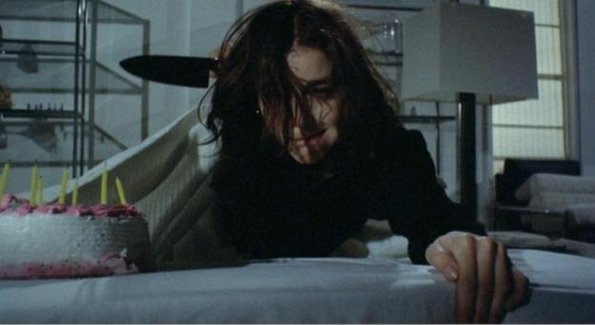
    Margot Kidder is Danielle, a beautiful model separated from her Siamese twin, Dominique. When a hotshot reporter (Jennifer Salt) suspects Dominique of a brutal murder, she becomes dangerously ensnared in the sisters’ insidious sibling bond. A scary and stylish paean to female destructiveness, De Palma’s first foray into horror voyeurism is a stunning amalgam of split-screen effects, bloody birthday cakes, and a chilling score by frequent Hitchcock collaborator Bernard Herrmann.-Janus

  9. Watch This: Q&A from THE OLD MAN & THE GUN

    Leave a Comment

    Earlier this week, AFS members were treated to a Sneak Preview of THE OLD MAN & THE GUN, the newest film from AFS Grant recipient David Lowery. We were fortunate to have producers Toby Halbrooks and James M. Johnston join us for a special Q&A after the film, where they talked about working with the wonder duo of Robert Redford (for what is rumored to be his last acting role) and Sissy Spacek, and more.

    Members get access to great sneak previews like this. Become a member today: austinfilm.org/join


    THE OLD MAN AND THE GUN opens in theaters on September 28.

  10. Program Notes: IN THE LAST DAYS OF THE CITY

    Leave a Comment

    IN THE LAST DAYS OF THE CITY screened on September 20, 2018 as a part of our Children of Abraham/Ibrahim series.

    At once an ode and a requiem for Cairo, In the Last Days of the City, Tamer El-Said’s heartbreaking debut feature, is a master-class in capturing time and space. Though the Egyptian capital takes center stage here, this melancholic poem speaks to the magic and violence of the Arab metropolis at large, with Beirut and Baghdad also making an appearance, the former literally and the latter spiritually.

    Khalid Abdalla’s disillusioned flaneur anchors the film in the soul-crushing years preceding the Arab Spring, but the greater power here lies in Said’s somber retrospection on the last decade. Though the vast majority of the film was shot before 2011, and took about eight years to finish, one gets the feeling it could not have been made without the numbing desperation that has overtaken the country following 2013. The film thrives in expressing the inexpressible, fixating on scenes of violence and chaos with the same reverence and attention it gives those of romance and friendship. In this way, Said faithfully captures the fever of and paradox of being a Cairene in the 21st century. His pseudo-documentary style is disheartening and alarming at times, but it also succeeds at capturing the nuance of Downtown Cairo’s aesthetic, at once one of decadence and decay.

    The line between fiction and reality is further blurred by our protagonist, who simply goes by the first name of his actor, Khaled. Besides the name, film Khaled also shares the actor’s disjointed sense of belonging, with dizziness that accompanies those who have one foot inside their home and the other far away. Through character and visual motifs, Said places the film and its characters squarely in conversation with much of contemporary Egyptian independent cinema, particularly that of Ahmed Abdalla. While in no way derivative of Abdalla’s work, In the Last Days of the City shares delightful similarities with the themes of his filmography, and especially with Heliopolis (2009), Microphone (2010), and Rags and Tatters (2013). Heliopolis, in which Said actually had a cameo, similarly follows a filmmaker who does not know what he’s trying to capture, but knows he simply must film. Though Heliopolis focuses on the eponymous Cairo district, while Last Days focuses primarily on the downtown center, both share a potent sense of spatial tragedy as well as a desire to investigate and resist nostalgia, despite the temptation to indulge in its comforts. Less concerned with the past, Microphone echoes the need to capture the fleeting present, doubling down on the notion of filmmaking as archiving that is so prevalent in both the text and metatext of Last Days. Though radically different in its subject matter and use (or lack thereof) of dialogue, Rags and Tatters mirrors Last Days’ dissolution of reality through its obsession with the mundane. In their fascination with forgotten urban spaces and corners, both films seek to excavate the Cairo that is all but ignored by mainstream cinema and television, and in the process challenge our limited notions of what the city is or can be.

    Many were at first shocked when Last Days was covertly ‘banned’ from being screened in Egypt, given it does not explicitly attack the government, but anyone who watches closely will see that it does so much more. By inviting us to such an alienated and contradictory exploration of Cairo, Said pushes his audience to soak in the discomfort of the present. And that’s bound to get folks riled up.

    • Contributed by Hazem Fahmy, University of Texas at Austin
  11. AFS Programmer Lars Nilsen’s 12 Must-See Films From Toronto International Film Festival 2018

    Leave a Comment

    From an outsider’s view, the Toronto International Film Festival may appear to be a glamorous, high-profile festival with back-to-back red carpet premieres of this year’s crop of Oscar contenders. For AFS Lead Film Programmer Lars Nilsen, the festival is a great opportunity to explore the pool of films that will someday make their way to the AFS Cinema. Fresh off his return from watching a personal record breaking 37(!) films, we spoke with Lars about his favorites from the festival. Be on the lookout for many of these film to make their way onto the AFS calendar in the coming months.

    BIRDS OF PASSAGE

    dir. Ciro Guerra & Cristina Gallego

    “This is a film co-directed by Ciro Guerra, whose films EMBRACE OF THE SERPENT and THE WIND JOURNEYS we’ve played at our cinema. BIRDS OF PASSAGE is almost like a Godfather film in its scope. It’s a film about a crime organization formed among indigenous Columbian people who have an encounter with some Peace Corps volunteers who really want to buy some weed. So they go from being these people who live in a barter economy to becoming business tycoons in a way, over a 15-year period. It’s a wide, sweeping film about the ways of the first world coming to these people. It is an exciting, action-packed, incredibly violent, emotionally resonant film; but it’s also a sort of political tract about Capitalism. And I always think it’s really interesting when there’s that kind of a subtext to a film.”


    “I DO NOT CARE IF WE GO DOWN IN HISTORY AS BARBARIANS”

    dir. Radu Jude

    “Radu Jude (whose films AFERIM! and SCARRED HEARTS we’ve shown) has a new, fascinating film which takes place in his native Romania. It’s about people putting on a historical pageant about World War II, and what happened during World War II in Romania, which was a very complicated time period. The film is about three hours long, and it’s mostly just people having conversations and quoting from books.  It’s Godard-ian in the sense that it’s a film that’s made out of material that is non-traditional film material. It’s really good, and a really important film for our time. I was watching it with a friend and we walked out of it like ‘wow, is America the most illiterate country in the world?’ because these Romanians are talking about everything from like political theory to Laurel and Hardy in their conversations, and the breadth and scope of their discourse is so wide. It’s a really special film, I liked it a lot.”


    OUR TIME

    dir. Carlos Reygadas

    “Carlos Reygadas, who made POST TENEBRAS LUX has a new film that’s amazing in scope. Three-hour long movies is one of the themes this year at TIFF I have to say. OUR TIME is a three-hour long movie about a married couple who are intellectuals. He is a poet, they’re ranchers on a huge spread outside of Mexico City and their sex life is very eventful, which sort of sows the seeds of their destruction, or at least the destruction of certain concepts that they hold dear. It’s a really interesting film and I can’t say much about it without spoiling it. But for me, it was one of the most emotionally wrenching movies I saw at the festival. I think it’s kind of a masterpiece, actually.”


    MAYA

    dir. Mia Hansen-Love

    “There’s a very good new movie by Mia Hansen-Love, who has guest programmed for us before. It’s about a French journalist who was held hostage by terrorists and is trying to re-acclimate. He goes on a trip to India–which is the country where he grew up–and we see him trying to sort of rebuild his soul. It’s a sort of small film full of small observations and it’s just very good film with a lot of heart.”


    HIGH LIFE

    dir. Claire Denis

    “The new Claire Denis film HIGH LIFE takes place in a space station/penal colony where prisoners are being dispatched to the outer reaches of the universe to see what happens when they go into a black hole. It stars Robert Pattinson and its an odd sort of prison movie (in space), and of course, it’s directed by Claire Denis so it’s weird and unusual and I liked it.”


    HOTEL BY THE RIVER

    dir. Hong Sang-soo

    “Another filmmaker we love, South Korea’s Hong Sang-soo. We’ve shown several of his films.  His new one, HOTEL BY THE RIVER, is part of his cycle of black and white chamber films with a small cast. It’s about a poet staying in a hotel, and his sons come to join him, and a couple of women recognize him as the poet he is, and there’s a lot of back and forth kind of like a drawing-room farce. I read a review immediately afterward saying that this was a “sad” new movie from Hong Sang-soo and it made me realize that everyone experiences movies so differently. I was laughing all the way through this film, and I didn’t think it was sad, I thought it was very drily funny, like so much of Hong’s work”


    NON-FICTION (aka DOUBLE LIVES)

    dir. Olivier Assayas

    “There’s a good, talky (not in a bad way) new Olivier Assayas movie called NON-FICTION, it’s about a bunch of Parisian intellectuals who are authors and book publishers and people adjacent to the literary industry sort of dealing with the technological change and sort of what it means in terms of a shift in the French world of letters, if you will. It’s sort of a salon film. We experience the pleasure of good conversation with interesting people. There are some arch laughs, and a lot of very on-point cultural observations.”


    BURNING

    dir. Chang-dong Lee

    “Chang-dong Lee’s new film BURNING (which is going to be playing at Fantastic Fest) is a pretty riveting film based on a Murakami short story called “Barn Burning”.  I don’t want to spoil what the movie’s about, but it’s a really interesting story about a guy who falls in love with a woman, a romantic triangle with an older rich guy develops, and then the rivalry between the two men reaches extreme proportions.”


    SHOPLIFTERS

    dir. Hirokazu Koreeda

    “The new film from Koreeda, whose film THE THIRD MURDER we just played, is called SHOPLIFTERS. This was the Palme D’Or winner at Cannes this year. It’s a pretty amazing neo-neo-realist film about a family of very poor people in a city in Japan who make a living hand-to-mouth: stealing, hustling, begging, living however they can. Things happen over the course of the family’s life of course, which I won’t spoil here. A really nice, really wonderful, well acted film.


    AMERICAN DHARMA

    dir. Errol Morris

    “AMERICAN DHARMA is a full-length interview with the fascist, Steve Bannon.  And a lot of people I talked to had real mixed feelings about this because they felt like, ‘why give the microphone and camera to this fascist to tell his fascist, racist stories?’ But (as always for me with Errol Morris films) I think it’s fascinating to hear from Steve Bannon. Because Bannon trips over himself, he trips over his logical fallacies at every turn, and it becomes more of a pathological document about what creates a Steve Bannon, which I think is valuable. And it’s creepy to spend time with Steve Bannon, there’s no doubt about that–but I also feel like I have insight into the sort of mental processes that create a Steve Bannon and I think it’s valuable for that reason alone.”


    THE WILD PEAR TREE

    dir. Nuri Bilge Ceylan

    “I saw a movie called THE WILD PEAR TREE which is by the director of WINTER SLEEP, which won the Palme D’Or a few years ago (and which just played at the AFS Cinema) . This new film takes place partly in the Anatolian region of Turkey, partly in the cities, but it’s about a young man whose father is a poet. Over the course of his life his father has become a school teacher and a gambling addict and is generally kind of a fuck-up, and we see him through the son’s eyes. The son–so full of promise and ideals–judges the father. Over the course of the three-hour long film we see as he begins to forgive his father and draws insight over his own life from looking at his father’s ruined, wasted life: which may or may not have been so ruined and wasted, as it turns out. It’s like a big discursive novel that bulges out in some places and is understated in others, but is so full of detail that it gives you a vivid sense of time and place.”


    MONROVIA, INDIANA

    dir. Frederick Wiseman

    “Frederick Wiseman is a filmmaker who we’ve played every film that he’s come out with since the AFS Cinema has been open, and I can’t imagine us not playing a new Frederick Wiseman film (or an older film as it’s restored).  I think Wiseman is really in the top tier of our greatest living filmmakers.  He has a new film called MONROVIA, INDIANA, and it’s in the manner of some of his recent films like IN JACKSON HEIGHTS where he goes and explores a neighborhood and sees how the neighborhood works. Here he goes to a small town in Indiana and he examines the process by which the town runs, by which the culture happens in the town, and how the school system works, and all of that.  We see the mechanisms of small-town America circa 2018, or 2016, or whenever the film was made.  And it has a whole new gloss now that Trump has been elected based on voters from towns like Monrovia, Indiana. I’m not sure the political tone was intended at the time the cameras were rolling, but it’s fascinating to watch people in church, to watch people having a wedding, to watch a Masonic ceremony, to watch a town council meeting, and to just see the way that small towns work. It’s not ‘urbane-New-York-guy-is-looking-at-small-town-Americans-and-judging-them’ I don’t think that’s the case. It’s not a film where we’re laughing at people. There are some times where we’re laughing with them, but it’s a film that really makes us think about what it’s like to be, for instance, a guy who runs a gun shop in Monrovia, Indiana.”


  12. AFS Viewfinders Podcast: Michael Tully, director of DON’T LEAVE HOME, opening September 14 at AFS Cinema

    Leave a Comment

    DON’T LEAVE HOME opens on September 14 at AFS Cinema. Filmmaker Michael Tully and actress Anna Margaret Hollyman will be in attendance at shows during the first weekend. Get your tickets today.

    On this episode of the AFS Viewfinders podcast, we visit with Austin-based filmmaker Michael Tully, whose new feature film DON’T LEAVE HOME opens September 14 at AFS Cinema. Tully has been immersed in the film world for years, not only as a filmmaker but also as a writer for Hammer to Nail, cinephile, and now teacher. His previous features include SEPTIEN (2011) and PING PONG SUMMER (2014), both of which premiered at the Sundance Film Festival. In this conversation, Tully talks about his experiences teaching film classes, hitting the international festival circuit, why he had to shoot his new gothic horror film in Ireland, what makes sound design key to making an effective horror film, and more.

    Photos by Wally Hall

THANK YOU TO OUR SPONSORS