Setsuko Hara (born on June 17 1920) did not have an especially long acting career. Even though she lived to the age of 95, she retired from the screen in 1962, and became something of a recluse, even as the world became more and more aware of her special gifts during the decades that followed.
She had acted in many films, including Akira Kurosawa’s 1946 NO REGRETS FOR OUR YOUTH, before the legendary director Yasujirô Ozu cast her in LATE SPRING (1949) as Noriko, an unmarried woman in her late ’20s who is torn between familial devotion and the expectations of society. It’s a remarkable film, and Setsuko Hara essays the role of Noriko with enormous skill and subtlety. It was the first of her six collaborations with Ozu, whose vision blended especially well with her talents. Their collaborations resulted in some of the finest films that have ever been made, TOKYO STORY (1953) and LATE AUTUMN (1960) are highly recommended, but you can’t go wrong here. You can find these on the Criterion Channel and Kanopy, by the way.
She became an icon in Japanese culture, representing a particular archetype in society that might best be exemplified by her LATE SPRING character. She was called the “Eternal Virgin” by many – which did not exactly thrill her. Her retirement immediately following Ozu’s death, deprived the world of her artistry, but she seemed perfectly happy to go on living without the cinema. Her last 50 years were spent in seclusion in Kamakura, a small city outside Tokyo.
Her legend, which persisted in Japanese culture for decades after her films ceased to be widely known by the mainstream public, inspired filmmaker Satoshi Kon to make the 2001 film MILLENNIUM ACTRESS which features as its subject a reclusive former movie star very much in the Setsuko Hara mold.
In collaboration with his brother Nathan Zellner, David Zellner has made some of the most fascinating and unusual films of the past decade plus. From their absurdist comedy short films to the narrative features (GOLIATH, KID-THING, KUMIKO THE TREASURE HUNTER, DAMSEL) that have made them major figures on the independent film stage, their output has never been short of adventurous. Both the Zellners are world class filmgoers, as well, and we miss the opportunity in the current quarantine landscape to talk movies with them in the AFS Cinema lobby. Maybe their lists of recommended films will have to do for the time being. Here are some recommendations from David Zellner, watch this space for a list from Nathan soon. Enjoy.
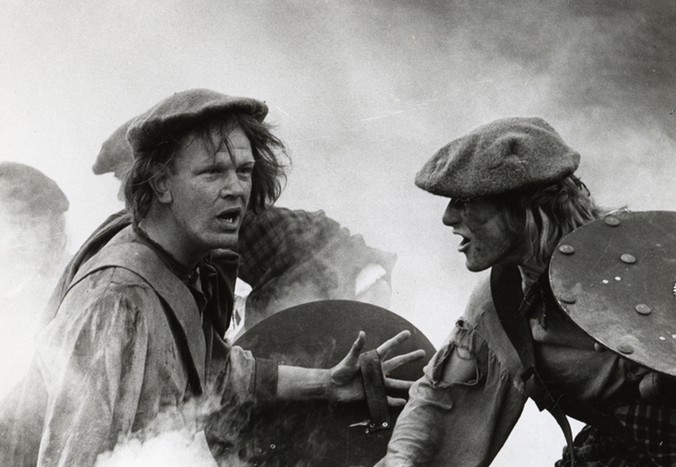
A docudrama about The Battle of Culloden, described in the opening as “one of the most mishandled and brutal battles ever fought in Britain”. While it takes place in 1746 and much attention is given to its historical accuracy, the entire story is seen though the eyes of a TV news crew present at the battle, covering it as contemporary (for 1964) war reporters would. This anachronism is surprisingly effective in its approach, and makes for one of the most original war films I’ve ever seen. Editor’s note: the stream posted here may not be an authorized use of the film, but its rarity compels us to post it anyway, we will happily replace with a legitimate stream if found.
The Koker Trilogy: WHERE IS THE FRIEND’S HOME; LIFE & NOTHING MORE…; THROUGH THE OLIVE TREES
(1987, 1992, 1994, Dir. Abbas Kiarostami) – Criterion Channel
Humane and profound but devoid of any sentimentality, this trilogy is solid gold. Each film is less a sequel and more like another layer of onion skin peeled back, exposing a greater “truth” than the films which preceded it.
ANGST
(1983, Dir. Gerald Kargl) – Amazon Prime
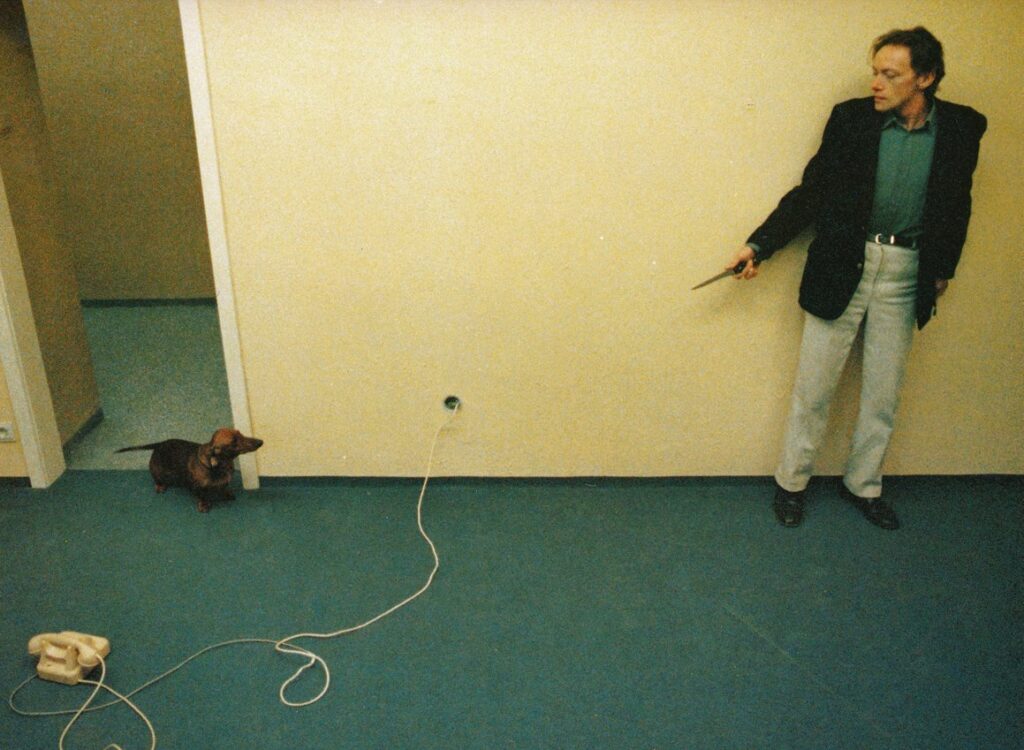
I saw this for the first time a couple of years ago at the AFS Cinema. Maybe the opposite of the Koker Trilogy in terms of feel-good moviegoing, so probably not for everyone but it’s so unique and singular- particularly with its sound design and cinematography. I don’t really like slasher films but I loved this, it’s about 24 hours in the life of a serial killer who’s the exact opposite of the Hannibal Lecter mastermind type- he’s absolutely terrible at what he does. Surprisingly the final act veers into a bit of absurdism and slapstick (by Austrian standards), and features a great performance by a Dachshund.
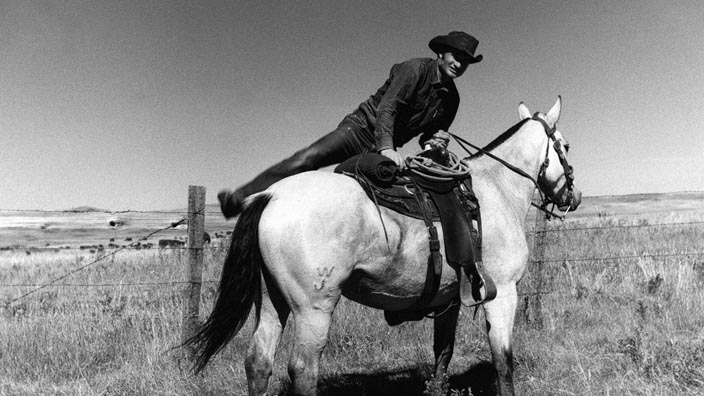
A cowboy in Alberta breaks in a wild horse. That’s it. I saw this National Film Board of Canada documentary short when I was a teenager and it really stuck with me. Unconventional for its time in terms of its handheld camerawork and absence of narration, it has such a breezy, dreamy feel to it. The score is amazing and builds to a gratifying finale.
I WILL BUY YOU
(1956, Dir. Masaki Kobayashi) – Criterion Channel
Kobayashi isn’t quite as well known internationally as Ozu or Kurosawa, but he’s one of my personal favorites. I WILL BUY YOU (what a title!) is about a cutthroat Japanese professional baseball scout trying to court a promising young athlete for the Toyo Flowers. There’s maybe about a minute’s worth of actual baseball in this film, the rest is about the relentless hustle of these talent scouts and the bribery-fueled business they operate in.
STRANGERS IN GOOD COMPANY
(1990, Dir. Cynthia Scott) – Amazon Prime
I saw this for the first time just recently. While on a field trip, a group of old women get stranded in the countryside when their bus breaks down. Lots of foraging and hanging out ensues. Largely improvised with nonprofessional actors, it’s so sweet and pure.
One of the most astonishing feats in sports history happened on June 12, 1970. The Pittsburgh Pirates baseball team played the San Diego Padres at San Diego Stadium. The starting pitcher for the Pirates, the mercurial and idiosyncratic Dock Ellis, had forgotten that it was his day to pitch and had taken LSD at around noon in Los Angeles. Shortly afterwards he found out it was in fact his starting day so he was hustled onto a plane and he took the mound at 6pm. The rest is history. Instead of impeding his ability to throw accurate pitches, the psychedelic compound seemed to leave “trails” that actually helped his placement. As Ellis recalled:
“I was zeroed in on the glove, but I didn’t hit the glove too much. I remember hitting a couple of batters, and the bases were loaded two or three times. The ball was small sometimes, the ball was large sometimes, sometimes I saw the catcher, sometimes I didn’t. Sometimes, I tried to stare the hitter down and throw while I was looking at him. I chewed my gum until it turned to powder. They say I had about three to four fielding chances. I remember diving out of the way of a ball I thought was a line drive. I jumped, but the ball wasn’t hit hard and never reached me.”
In the decades that followed, the event achieved the patina of a gonzo legend. Ellis, who died in 2008, became synonymous with this one magical afternoon. But in 2014, a documentary was made that told much more of Ellis’ story and painted the corners of his place in sports and social history. As it happens, there was a lot more to Dock than the no-hitter. He and his Pirates team hold an important place in the story of race and sports.
That doc, called NO NO: A DOCKUMENTARY, was produced and directed by Austin’s Jeffrey Radice, and was proudly supported by the Austin Film Society. If you are an Amazon Prime subscriber you can stream it here. It uses interviews and archival footage to show Ellis in the light of his times. Perhaps the high point of the film is an audio recording in which the embattled Ellis reads aloud a letter of support and encouragement he received from none other than Jackie Robinson. It’s a terrific movie and we recommend it. You will be a Dock Ellis fan before the 10-minute mark.
Here’s a scene from NO NO that shows some of the historical context of the times, as the Pirates introduced their all-Black starting lineup.
Judy Garland (born June 10, 1922) has been gone for over fifty years now, but her legacy lives on in her films, her recordings and in the cultural values she represented – particularly to the gay community. Stonewall coincided with her funeral. The rainbow Pride flag, designed by Gilbert Baker, is likely, in part, a nod to “Over The Rainbow.”
The cultural icon status she enjoys is complicated, and many have written and spoken about it over the years, but it would all be a moot point if she had not been a truly spectacular performer. At the microphone she sometimes gave the impression of a colossal hurricane of life-energy coursing through a thin reed. You can see that in the performance that follows, which our friend Rebecca Beegle shared with us as part of her AFS History Of Television presentation about Garland’s short-lived TV show.
The situation was this. President Kennedy had been assassinated in November, 1963. The nation was naturally in shock and mourning during this time period, and Garland was especially distraught, as she had campaigned for JFK and become friends with him. At times when he needed comfort he used to call her and ask her to sing “Over The Rainbow” by phone.
Three weeks after the tragedy, she returned to her television show. The song she chose to sang was not a typical one. You just don’t hear this one done from the stage by popular music performers, but this was the song that conveyed her emotion best.
She was always a performer who felt deeply, and communicated these feelings with great power. As she sings the “Battle Hymn Of The Republic” here, it almost seems like this tiny, fragile, cracked corporeal vessel will shatter under the strain of the mighty storm that courses through it. Yes, it is theatrical, but that’s who she is. She expresses raw truth in the same show business language invented by slick, skillful liars, and here it reaches a level of sanctification in national grief.
It’s a remarkable moment. Please enjoy and reflect.
In anticipation of Spike Lee’s newest film DA 5 BLOODS, which premieres this Friday on Netflix, we were hunting around for some classic Spike interviews. At this point, we probably all know how much power Lee can put into his films, but he also brings a showman’s flair to his interviews, and shares perspective that help to enrich the viewing of his work.
Here’s a page, nestled deep in the voluminous University Of Texas web architecture, that collects many of the recordings of John Pierson’s legendary Master Classes that he conducted at the University from 2006-2012. It’s quite a collection – and in many ways a time capsule of the period ( for instance as of today an interview with a particularly reprehensible person has not been scrubbed from the site.)
You can hear candid discussions conducted by John Pierson with such giants as Gus Van Sant, Charles Burnett, Spike Jonze, and many others. Pierson does a great job with these. They serve their purpose as education quite well, and also entertain.
But back to what brought us here: a great 2007 discussion between Pierson and his old friend Spike Lee, After some back-and-forth centered around his then-current film WHEN THE LEVEES BROKE, the conversation goes into some different areas. Lee discusses his predecessors (Charles Burnett, Haile Gerima and Julie Dash) and the generation of black filmmakers that followed his breakthrough. Throughout the session with Pierson – and later with the students – his acute sense of cultural criticism shines forth.
Austin’s Evan Purchell is a film historian and archivist whose popular and acclaimed (it was a 2018 Artforum Best) Instagram account Ask Any Buddy documents gay adult film and video history through contemporaneous print sources. It’s fascinating. Additionally he has branched into filmmaking with his film ASK ANY BUDDY, of which the BFI says, “This lovingly edited compilation of erotic gay film is the nearest you’ll get to experiencing queer life in the glory days between 1968 and 1986.” Fair warning to those who may not want to go all the way – it’s pretty explicit. You can watch ASK ANY BUDDY here as part of the online QFest St. Louis Film Festival. Read more about the film and the ongoing project here in an interview with The Queer Review.
Here’s Evan:
One of the things that I really try to get at with my work on Ask Any Buddy (the film and the Instagram feed) is that what we call ‘queer cinema’ runs so much deeper than most people realize, beyond the PARIS IS BURNINGs and DESERT HEARTSs and MOONLIGHTs. In that spirit, here are ten films worth checking out while you shelter-in-place for Pride Month.
Salomé
(1922, dir. Charles Bryant and Alla Nazimova) – Available on the Internet Archive and for purchase at Kino Lorber
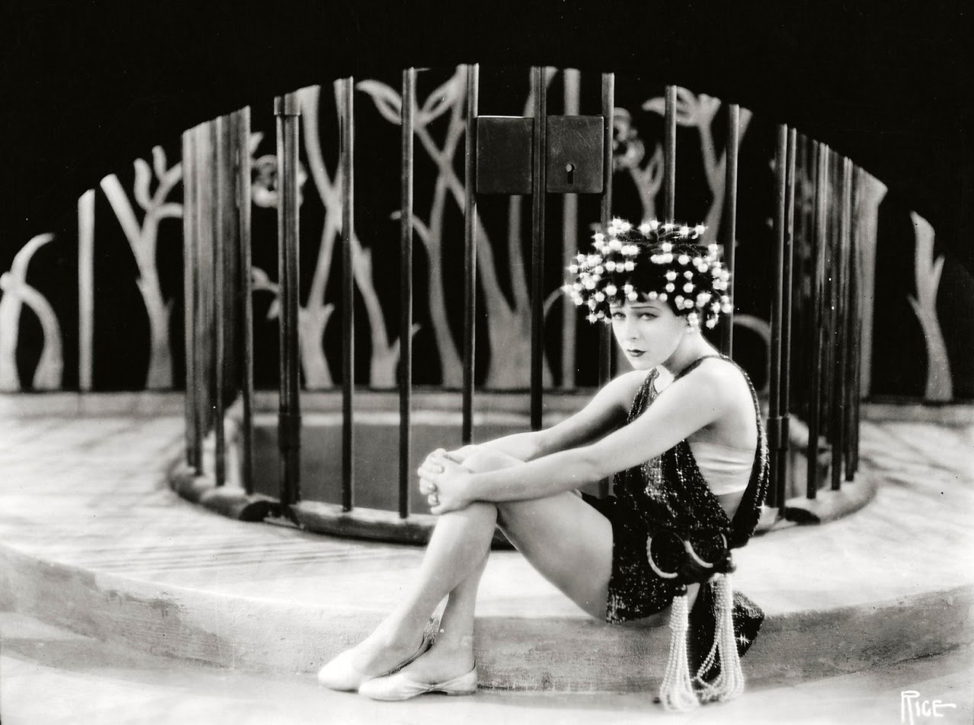
This silent adaptation of Oscar Wilde’s play is legendary for many reasons, the least of which is Kenneth Anger’s oft-repeated claim that the film’ deliberately featured an all-queer cast as an homage to the playwright. I’ll leave it to you to decide whether that’s true or not, but the real reasons to watch are for producer/codirector/star Alla Nazimova’s captivating lead performance and the stunning, Aubrey Beardsley-inspired production design. This public domain film is all over YouTube, but I’d recommend paying for a rental of Kino’s gorgeous restoration on their platform.
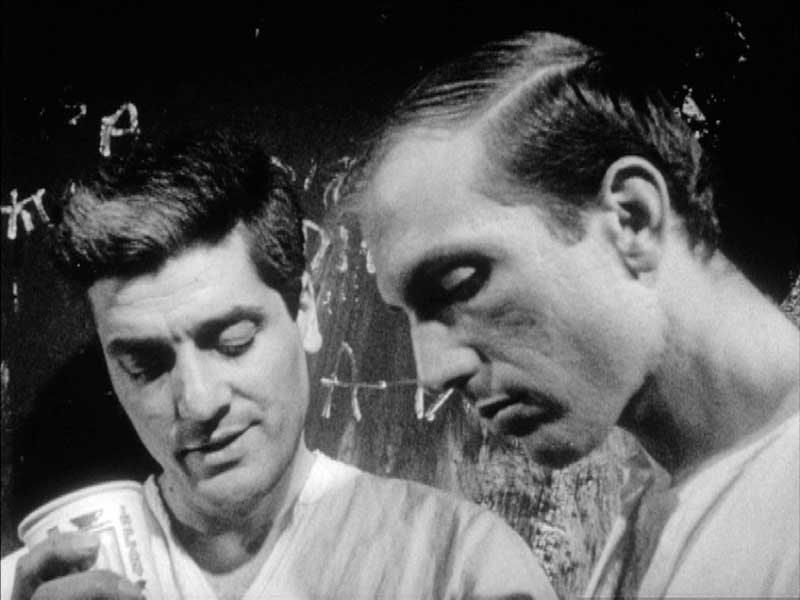
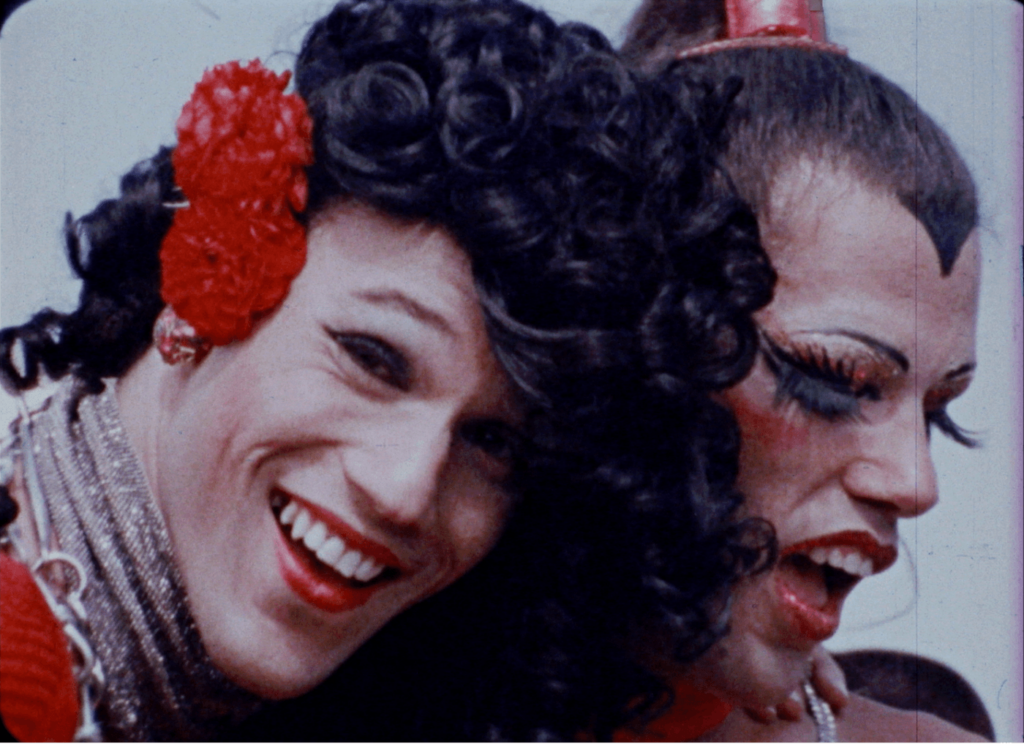
Though he’s best remembered for no-budget trash horror epics like Bloodthirsty Butchers and The Rats Are Coming, The Werewolves Are Here!, Andy Milligan’s film debut about a lonely night at the tubs is a largely forgotten landmark in the history of queer cinema. Written by Off-Off-Broadway legend Hope Stansbury and set at New York’s St. Mark’s Baths, the film had a long life on the exploitation circuit, becoming one of the first overtly queer-themed films to gain wide distribution playing arthouses and porno theaters alike.
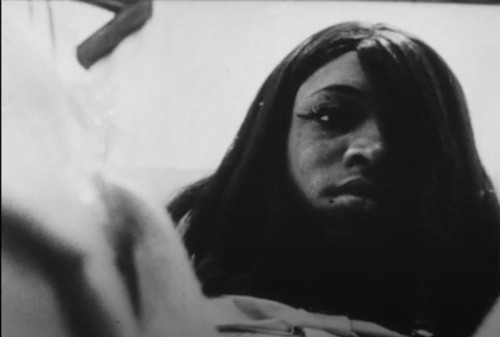
This UCLA student film crafts a more lively and sympathetic portrait of a trans woman of color in eight minutes than just about any Hollywood production has in the five decades since. Director Nick Ursin would go on to a long career as a cinematographer in the burgeoning gay adult film industry, working with major directors like Tom DeSimone, Joe Gage, and his partner in ‘legitimate’ work, Norman Yonemoto, to make some of the greatest all-male features of the 70s and 80s.
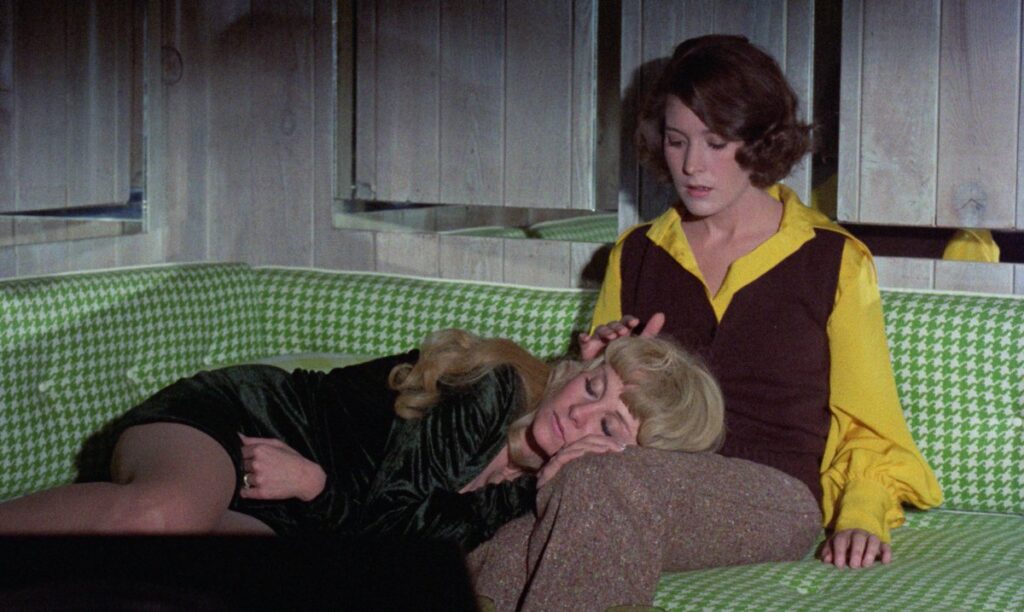
“An explicit picture!” “The tragedy of today’s lonely housewife!” screamed exploitation maverick Harry Novak’s graphic campaign for this, a quietly sensitive lesbian melodrama from first-time directors Barbara Peeters and Jack Deerson. At a time when lesbian representation on film didn’t extend much past ‘evil butch’ and ‘predatory fem,’ it’s shocking to see a movie like this that DOESN’T end with suicide or someone being crushed by a tree (looking at you, The Fox).
A Very Natural Thing
(1974, dir. Christopher Larkin) – Streaming on Amazon Prime
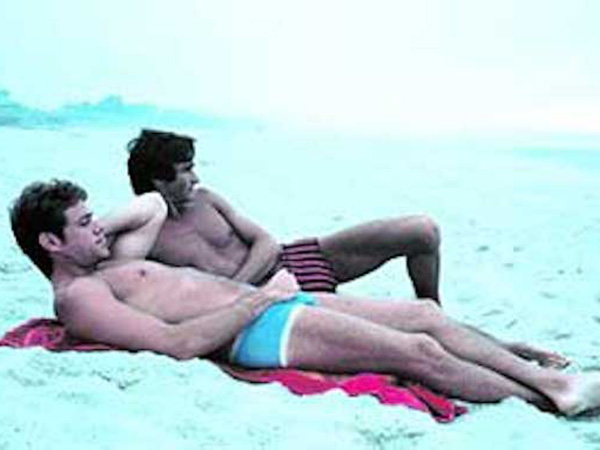
This sole feature from onetime monk Christopher Larkin would already be notable for being one of the first gay independent features to receive legitimate mainstream distribution, but that it also holds up so well after all these years is what really makes it special. A sort of gay take on Love Story, the film’s central examination of the struggle between monogamy and promiscuity in gay relationships in many ways feel more valid now in the age of PrEP than ever — unlike Love Story, though, nobody dies at the end. Keep an eye out for Celluloid Closet author Vito Russo’s cameo as a Fire Island houseguest.
Gay U.S.A.
(1977, dir. Arthur J. Bressan, Jr.) – Streaming on Amazon Prime
Since in-person Pride events have been canceled this year, why not watch the mother of all parade films instead? Shot at five different parades across the United States on the same day in 1977, this second feature from Passing Strangers and Buddies director Arthur Bressan captures a politically energized queer community in the midst of Anita Bryant’s homophobic crusade. Though it’s sad to see that we’re still dealing with many of the same issues all these years later, it’s hard not to get swept up in the spirit on display here.
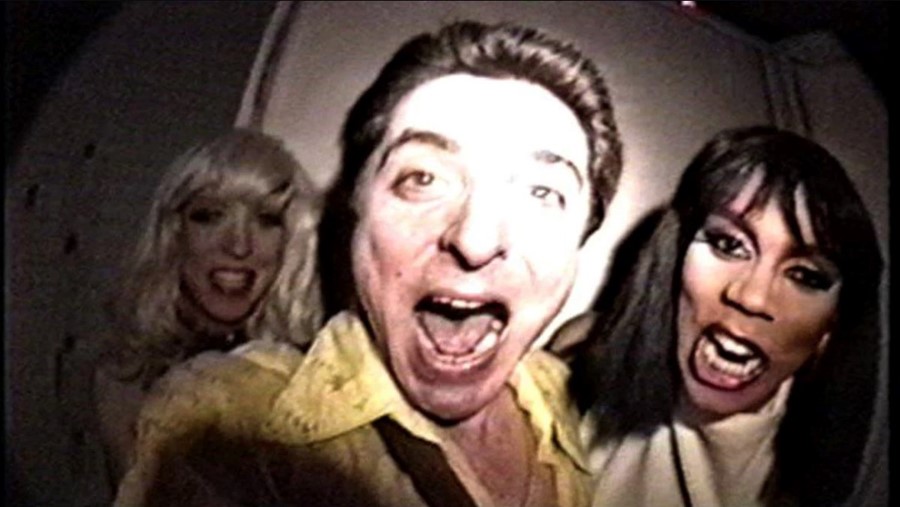
Since we still can’t (or, well, shouldn’t) really go out, I’ve been living vicariously through this enormous collection of videos by New York nightlife documentarian Nelson Sullivan. An early adopter of portable video, Sullivan spent six years documenting both his life and a downtown arts scene that was going through a creative renaissance in the midst of the AIDS crisis. Striking the perfect balance of entertaining and mundane, these videos capture friends and future superstars like RuPaul, Lady Bunny, Larry Tee, John Sex, Deee-lite and many others during the early stages of their careers. But Sullivan is the real star of his videos, constantly turning the lens back on himself to offer his own wry commentary on the proceedings. It’s a daunting collection to go through, so why not start with this summer day trip to Coney Island?
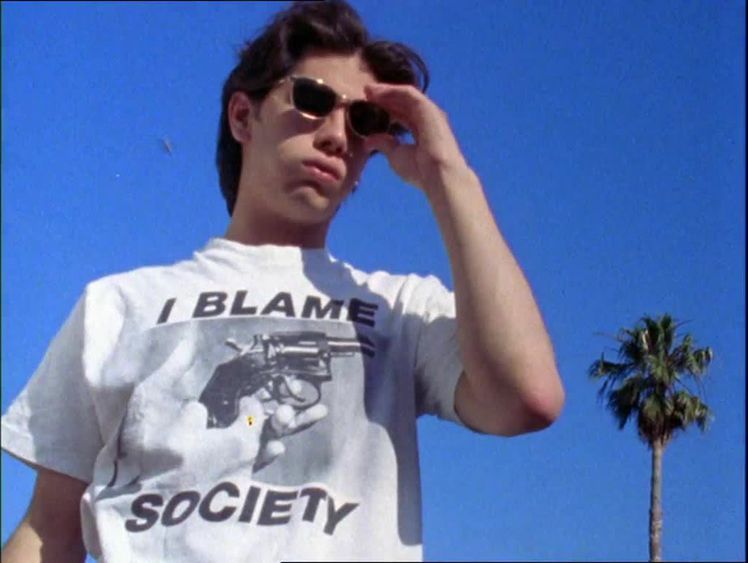
It usually gets overshadowed by its two follow-ups, The Doom Generation and Nowhere, but this is my favorite of Gregg Araki’s ‘Teenage Apocalypse’ trilogy. An overt homage to Godard’s Masculin Féminin in its fragmentary structure, the film follows a group of queer teens as they deal with relationships, depression, homophobia, and hookups predicated on bootleg Nine Inch Nails tapes. There’s an intimacy and an empathy here that most other films from this period are lacking — not to mention a killer industrial soundtrack.
BloodSisters
(1995, dir. Michelle Handelman) –Streaming on Vimeo
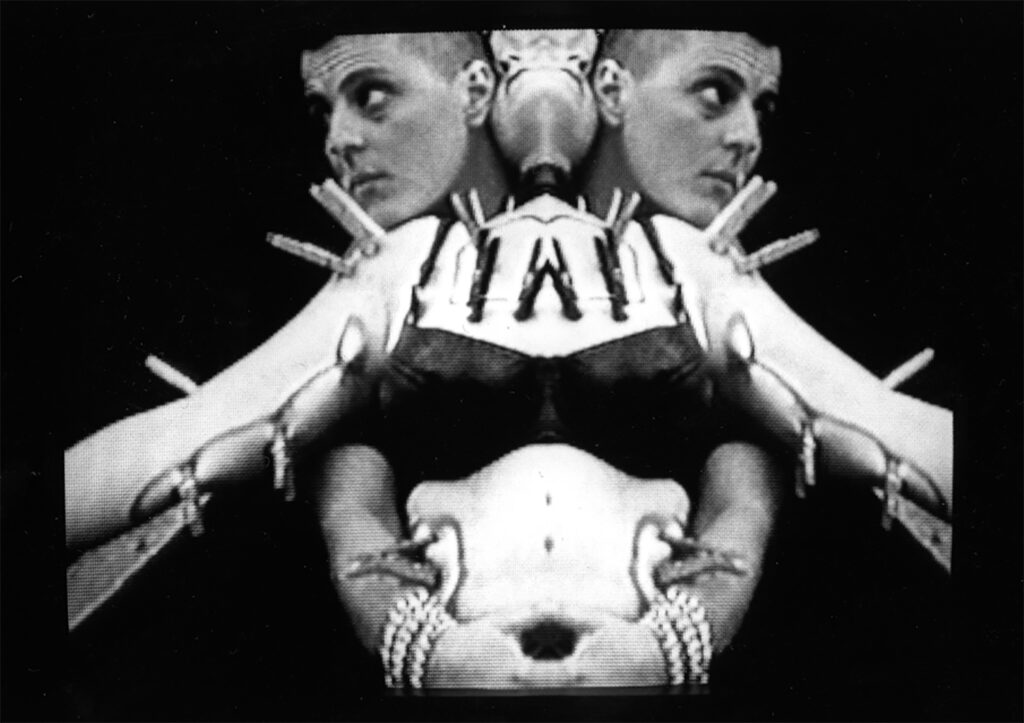
This groundbreaking documentary about San Francisco’s lesbian leather and s/m scenes was due to celebrate its 25th anniversary at this year’s BFI Flare, but thanks to COVID-19, director Michelle Handelman has made it available to stream for free on Vimeo. Don’t let the subject matter scare you if you’re a bit of a prude — this is a wonderfully entertaining document that’s as sexy as it is informative and radical.
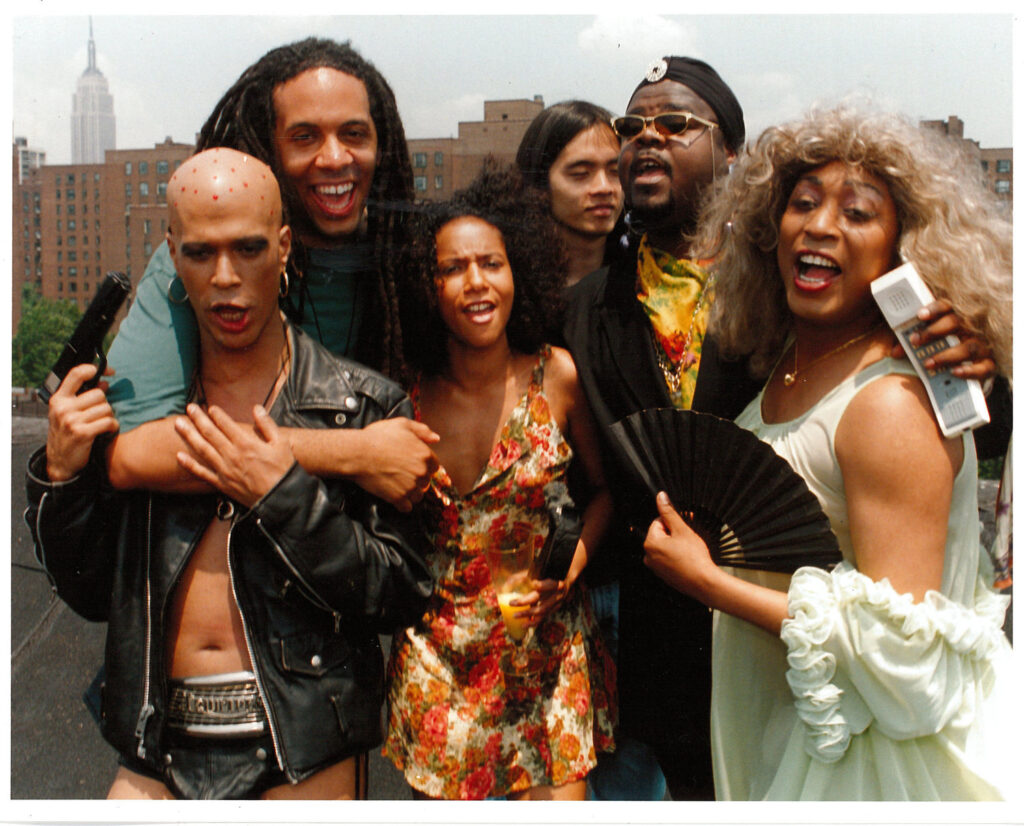
“We’re black faggots with a political agenda — we’re your worst nightmare.” Thus begins Stephen Winter’s debut feature, a caustic comedy that recalls a delirious mix of Lizzie Borden’s Born in Flames and Rainer Werner Fassbinder’s The Third Generation. Made deep into the worsening AIDS epidemic, the film finds a group of queer people of color who start an ACT UP-like ‘terrorist group’ to attack the closeted conservative politicans turning their back on their constituents. As irresistible as that sounds, what makes the film so remarkable is the way Winter uses that premise as a jumping off point for examinations of addiction, alcoholism, abortion, identity, religion, the closet, and the realities of queer inner city life in the ‘90s. The result is something that feels wholly unique — loud, angry, transgressive, messy, and very funny.
The last decade or so has been a golden age of online archiving and digitization of our heritage as preserved in moving images. Within the online collection of videos shared by the National Museum of African American History are some real treasures – including the short film you will see below, which was produced as part of the National Educational Television show, BLACK JOURNAL, produced by William Greaves.
Greaves’ best known film, SYMBIOPSYCHOTAXIPLASM, is an avant-garde work inspired by his work in documentary filmmaking. It is a landmark piece of cinema and should be viewed post-haste – you can see it on the Criterion Channel. Greaves’ work-for-hire as a producer and director is also of a very high standard, as may be observed in this documentary about Alice Coltrane, produced by Greaves and directed by fellow documentary legend St. Clair Bourne.
The segment takes the viewer into the home of musician and composer Alice Coltrane and her family. It was made three years after the death of Alice’s husband John Coltrane, and his connection and legacy are an important part of the film, but the subject of the film is not merely Mrs. John Coltrane, it is Alice Coltrane, musician, mother, and spiritual being. The sensitivity of perception and distinction that Bourne and Greaves bring to the portrait is notable. As a document of Alice Coltrane’s music and underlying currents of thought it is priceless. Our only complaint is the short 15 minute running time.
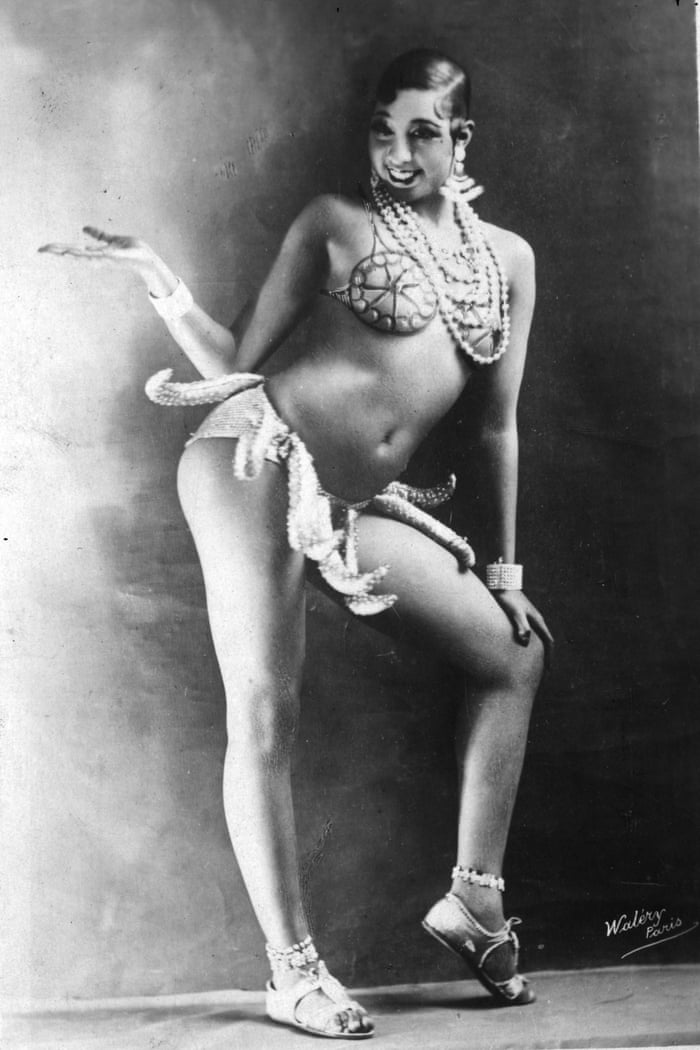
Most people reading this probably have at least a rudimentary idea of who Josephine Baker (born on June 3, 1906) was. A black American entertainer from St. Louis, given a chance to join a singing and dancing revue that traveled to Paris in 1925, who then became the toast of the City Of Light, finding a new life of acceptance outside the racial strictures of her home country, and who, in the process, spread her creative wings and emerged as a true superstar.
Hemingway called her “the most sensational woman anybody ever saw, or ever will.” Picasso said she was “the Nefertiti of Now.” A correspondent for the Los Angeles Examiner was even moved to poetry by her act, saying that “if an orchid could sizzle, it would be something like Josephine Baker.”
She became one of the most famous people on the entire continent of Europe with her singing, dancing on stage and, eventually, her film performances. The respect she was accorded in Europe led her to renounce her American citizenship in 1937 in protest of the racist conditions that prevailed in the States. A writer for the Philadelphia Inquirer later said that “her appearances have been marked by perhaps the most outspoken opposition to racial discrimination and segregation ever shown by a Negro artist, except Paul Robeson.”
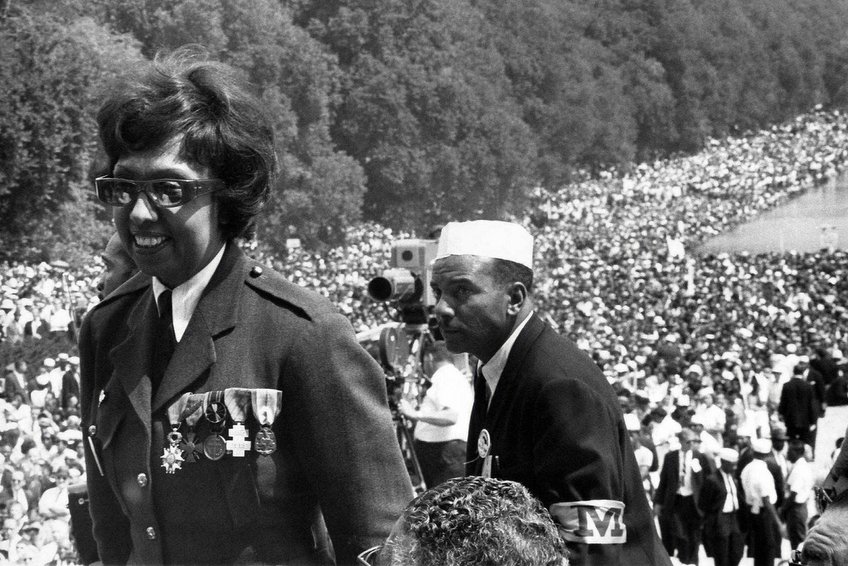
All of that amounts to a hell of a great story already, but there’s more. At the time of her death in 1975, among her treasured effects were several medals bestowed by the French Republic, the Croix de guerre, the Médaille de la Résistance with Rosette, and the badge of Chevalier in the Légion d’honneur. It is an understatement to say that France did not give these out like candy. They had to be earned – and at great risk – the Croix de guerre is awarded for outstanding heroism in combat and the Médaille de la Résistance is rewarded to those who courageously aided the fight against Nazi occupation. Baker’s resistance efforts would make her a legend even if she had not been an incandescent entertainer and outspoken pioneer for racial justice.
Baker’s first inklings of the trouble in Europe came when she visited Vienna in 1928. The crucible of hate had already begun to sizzle in Hitler’s home city. Posters depicting a caricatured “black devil” appeared on thoroughfares, and hateful elements massed in the streets to protest her appearance. It was too reminiscent of home for Baker. Much later, as the Nazi occupation squeezed France, Baker was visited by patriotic French counter-intelligence officers and enlisted into the cause of the Resistance. When she was warned of the danger, she told her contact “France made me what I am. I will be grateful forever. The people of Paris have given me everything… I am ready, captain, to give them my life. You can use me as you wish.”
Baker’s duties were many, concealing Resistance fighters in her Riviera chateau, obtaining visas, passing communications and documents over borders by writing them in invisible ink on her sheet music as she toured. She smuggled photographs and maps in her underwear, knowing that she would likely not be strip-searched at customs check points. As a celebrity, she attended parties and diplomatic functions, making skillful chit-chat with Axis functionaries and recording the information about troop movements by writing it on her hands and arms. Her risks, as recorded in the later citations by General Charles DeGaulle, were many and her bravery was extraordinary.
After the Liberation of Paris, Baker returned to her adopted home city of Paris, this time in military dress. Here she aided recovery efforts, even selling her jewelry and clothes to buy food and coal for the residents. Already a beloved figure, Baker became an icon of French resilience and humanity. Her memory is still honored there to this day.
Josephine Baker, in her French military uniform at the March On Washington in 1963
We have only faintly scratched the surface of Baker’s story here, of course. If you would like to find out more about her story, including her years in America before and after Europe, we recommend Phyllis Rose’s riveting 1989 biography “Jazz Cleopatra: Josephine Baker In Her Time.”
“The precise role of the artist, then, is to illuminate that darkness, blaze roads through that vast forest, so that we will not, in all our doing, lose sight of its purpose, which is, after all, to make the world a more human dwelling place.” – James Baldwin.
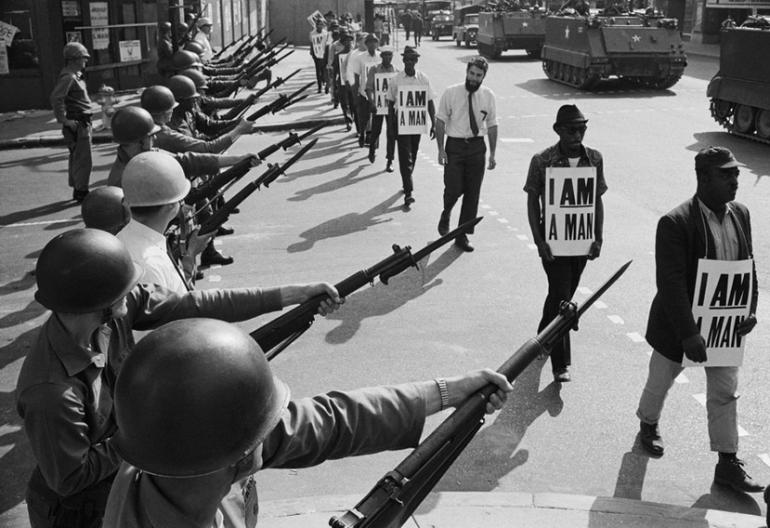
Film is not only the great empathy machine, but an art form that can encompass other mediums and multiple voices in seeking the truth. In this moment, we look to the visions and voices of black artists and change-makers, in front of and behind the camera. These are stories about race in America, and about the struggle and sacrifice made by African-Americans for equality and freedom. Here is our recommended watch list.
13th
2016, Dir. Ava DuVernay (Netflix)
DuVernay in this documentary makes the case that slavery, which was supposedly abolished by the 13th Amendment, lives on in myriad ways, as African Americans are criminalized, dehumanized and incarcerated in appalling numbers.
CRIME + PUNISHMENT
2018, Dir. Stephen T. Maing (Hulu)
Within the New York City Police Department, a group of black and Latinx officers resist the institutionalized racism of the quota system. This thoughtful documentary tells their story.
DO NOT RESIST
2016, Dir. Craig Atkinson (Amazon Prime)
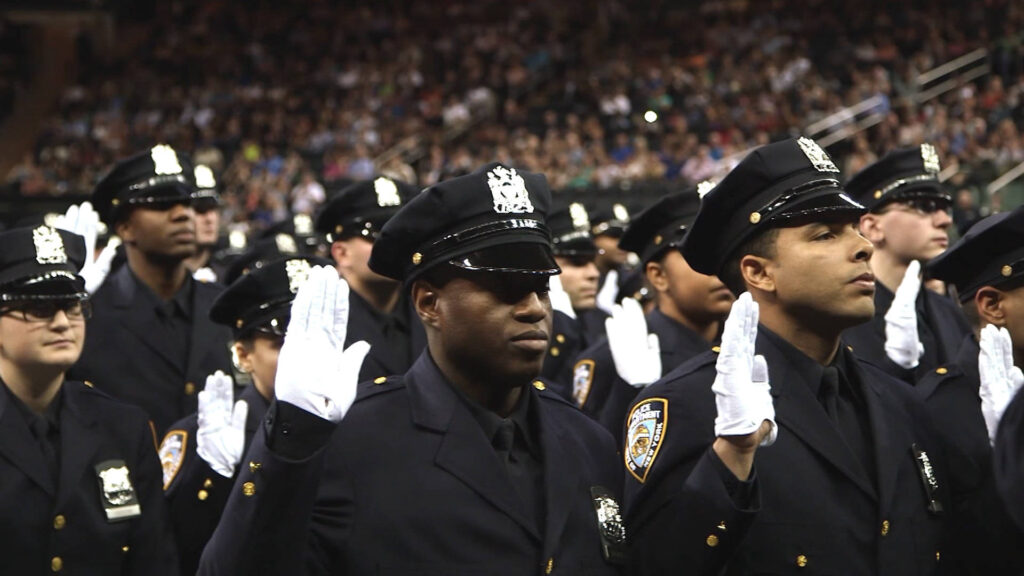
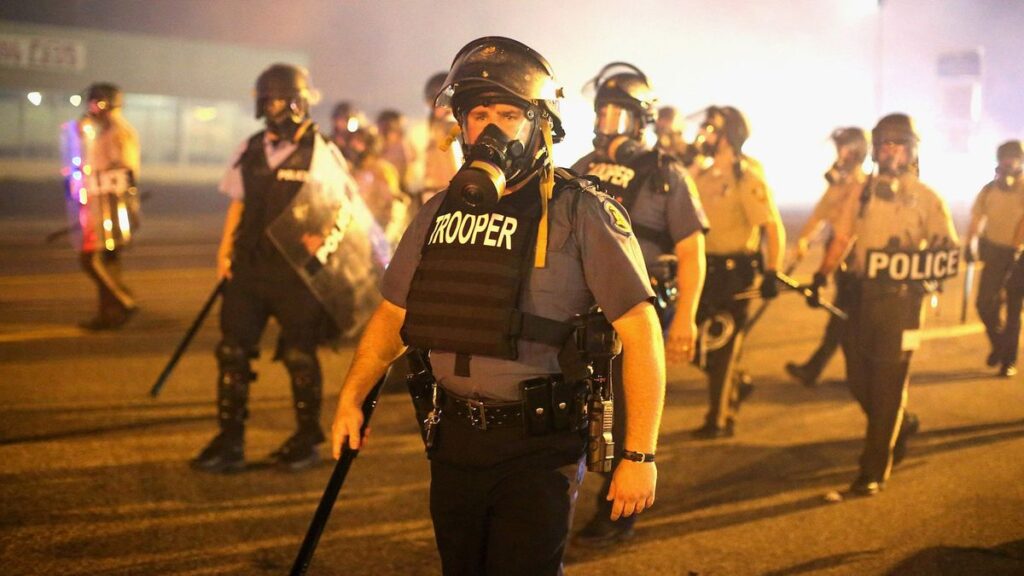
In the years following 9/11, police departments throughout the US have become increasingly militarized, using weapons and tactics perfected against occupied communities in other countries. As a result, a state of quasi-war has come to exist between police and policed, most damagingly in the relations between people of color and police departments. This documentary, made in the wake of Ferguson, examines the issues at hand, and what might be done to solve the problem.
FRUITVALE STATION
2013, Dir. Ryan Coogler (Amazon Prime)
Ryan Coogler’s first feature-length film is based on the true story of Oscar Grant, a 22-year old man killed by transit police in Oakland on New Years Day 2009. Coogler, and his lead actor Michael B. Jordan, show us the humanity of this young man and give us an insight beyond the details of the crime that took his life.
I AM NOT YOUR NEGRO
2017, Dir, Raoul Peck (Amazon Prime)
Few if any intellectuals ever confronted the psychological and spiritual implications of racism – for all parties involved – like the writer James Baldwin. This film uses film clips, sections of an unpublished manuscript and archival footage to help us understand the apocalyptic toll of racism on all of us.
IF BEALE STREET COULD TALK
2018, Dir. Barry Jenkins (Hulu)
Barry Jenkins’ bold and operatic adaptation of James Baldwin’s novel follows a young couple as they attempt to build a life together in early ’70s New York. Discrimination by landlords, employers, and the police is presented as a realistic part of life, and the parallels with contemporary conditions are clear.
AMERICAN PROMISE
2013, Dir. Michéle Stephenson & Joe Brewster (YouTube)
Filmed over the course of 12 years, AMERICAN PROMISE depicts the progress of two young black boys as they proceed through the competitive New York preparatory school system, long considered a necessary point of passage for financial and career success. The moments of cultural interface here are allowed to play out without preachiness. We are allowed to draw our own conclusions about the options available to the boys, and we can evaluate the fairness and effectiveness of this system.
DEAR WHITE PEOPLE
2014, Dir. Justin Simeon (Rentable on Amazon & YouTube)
This comedy-drama takes us onto a campus where a number of black students confront the racist legacy of some of the college institutions. This thoughtful and engaging film spawned a Netflix series of the same name, which is also recommended.
DO THE RIGHT THING
1989, Dir. Spike Lee (Rentable on Amazon and YouTube)
Over the course of a blistering hot summer day in Brooklyn, an Italian-American owned pizzeria in a predominately black neighborhood becomes the focal point of a struggle over race, heritage and respect. Spike Lee does not make any of his characters straw men for his perspective. The dynamic lives and breathes with real energy, and the viewer is left to draw his or her own conclusions. A vibrant, vital, essential masterpiece of Cinema. Lee’s epic MALCOLM X is also highly recommended.
MUDBOUND
2017, Dir. Dee Rees (Netflix)
A small Southern town is the setting of this historical drama as we follow two families on opposing sides of the color line before and after the cataclysmic change wrought on their communities and their nation by World War II, as well as the ongoing historical scourge of racism in the South.
WHAT YOU GONNA DO WHEN THE WORLD’S ON FIRE
2019, Dir. Roberto Minervini (Kanopy)
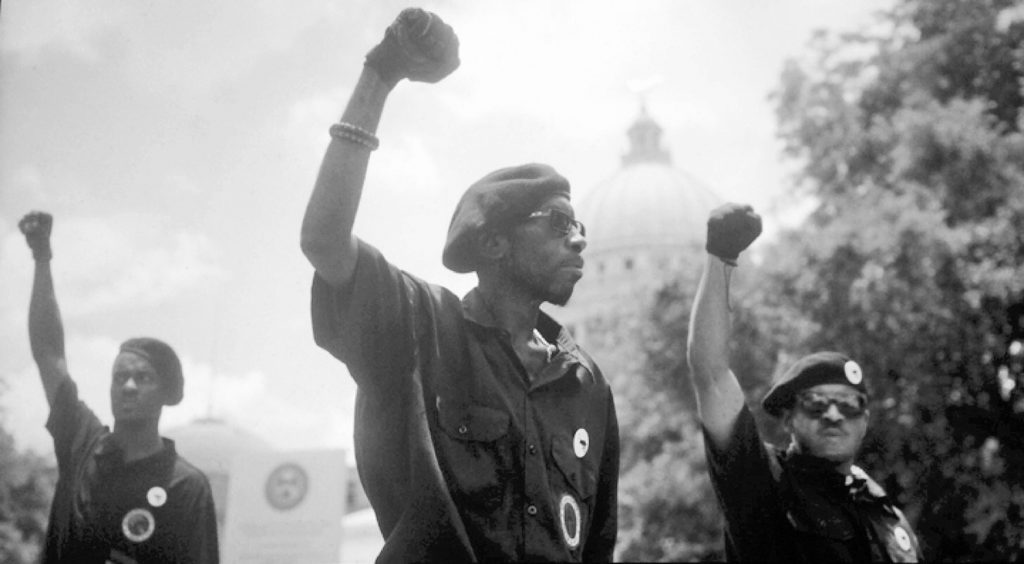
Houston-based filmmaker Minervini is a close observer and sympathetic chronicler of the minutiae of culture. Here he examines several threads of African American cultural life in New Orleans. We visit the New Black Panther Party as it works for positive change – and basic sustenance of life, we follow a female ex-con as she starts a business, and we accompany two young boys as they navigate life in their neighborhood.
THE BLACK PANTHERS, VANGUARD OF THE REVOLUTION
2015, Dir. Stanley Nelson (Kanopy)
Filmmaker Stanley Nelson provides the thorough and definitive documentary that the Black Panther Party deserves. Many people whose education about this movement has been fragmentary may be surprised to learn about the extent of the activities of the party. Far more than a militant arm of resistance, the Panthers provided education, nutrition, and other resources. Nelson does not whitewash the gender inequality within the movement either, as the interviewees provide a blueprint for further lessons to be learned as the movement continues.
FREEDOM RIDERS
2010, Dir. Stanley Nelson (Kanopy)
Stanley Nelson here turns his attention to a great American story, the chronicle of the Freedom Rides of 1961, in which more than 400 Americans, black and white, traveled together on buses and trains through the segregated south making demonstrations of unity and resistance and carrying the struggle into the heart of Jim Crow territory. Nelson lets the Riders themselves tell their stories – many of which are harrowing beyond belief.
The ’67 through ’75 era comes to life in this compendium of recently discovered 16mm footage shot by a Swedish television crew. Because the films are not edited into a news context, the subjects, including Angela Davis, Kathleen Cleaver and Bobby Seale, are seen in all their candor as they interact with one another and the journalists. Here we are able to see these thinkers and leaders unconstrained by paradign-reinforcing media structures.
On that note, coming in July to the AFS Virtual Cinema, we have a biographical documentary about one of those Freedom Riders, who has since gone on to much more. We are sure you are familiar with him, Representative John Lewis. The documentary is called JOHN LEWIS: GOOD TROUBLE and it opens on July 3.
Also, MISS JUNETEENTH is coming June 19th to AFS Virtual Cinema. Juneteenth, also known as Freedom Day, is the celebration of the end of slavery in Texas. In this first narrative feature by Texas filmmaker Channing Godfrey Peoples, a former Miss Juneteenth queen in Fort Worth confronts the legacy of structural racism in her personal life, as she struggles for better opportunities for herself and her teenaged daughter. The film debuted to great praise at this year’s Sundance Film Festival.
Here’s an interview that you may have missed when it was released straight into the vortex of the initial stage of Covid panic back in March – a mere 2,000 months ago – or that’s how it feels anyway. The actual conversation that we hear took place a number of months earlier (and that’s when the unmasked, un-distanced photo that accompanies it was taken as well, so don’t worry).
These are two of the most important voices in contemporary world cinema right now and it is a joy to hear them talk about their encounter points with each others’ work. They could not be more complimentary or more sincere, and the insights come from a place of deep knowledge about both the mechanisms and the soul of cinema.
Reichardt’s new film FIRST COW was scheduled at the AFS Cinema before we closed for safety purposes. We also hosted an Olivier Assayas retrospective in 2018 with the director in attendance.
The actual interview starts at the 5:55 mark if you want to skip the framing remarks – mostly about who Reichardt and Assayas are for those who might not know their work. Thanks to Talkhouse for making this available so that the rest of us can have the sensation of sitting silently at a dinner table and eavesdropping on these two contemporary masters.
The Austin Film Society was established to support a community of filmmakers based in Texas. The scene blossomed from a few DIY filmmakers scattered across the state to a booming independent film community, featuring artists of all backgrounds, with diverse influences and practices. AFS has directly funded over 500 independent film projects by Texas filmmakers, most of them with tiny budgets but big vision.
AFS is proud to announce that, beginning today, we are sharing work by AFS-supported artists via our “Virtual Cinema”, a selection of films christened “the Lone Star Slate”. Where finding Texas-made independent films to stream used to require a bit of internet digging, we are now featuring a varied catalog right here at AFS. From our portal, each title is available as a video-on-demand rental. The collection features a bit of something for everyone, from engaging social justice documentaries, to imaginative comedies, experimental work and beyond.
While the slate of titles may rotate, we look forward to continuing to provide this portal for cinema lovers to find these important regional stories, a wonderful alternative to corporate streaming services.
The first releases from AFS’s Lone Star Slate collection are listed here. VOD purchases support the filmmakers and the Austin Film Society.
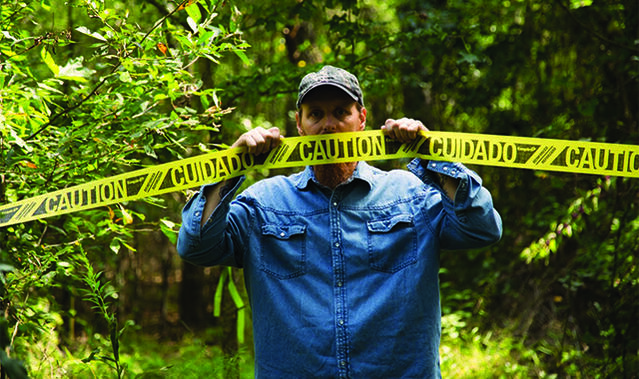
In this dramatic, firsthand account of activists on the front line of the climate fight, one man risks it all to stop the tar sands of the Keystone XL oil pipeline from crossing his land. Shot in the forests, pastures, and living rooms of rural East Texas, ABOVE ALL ELSE follows David Daniel, a retired stunt man and high-wire artist, as he rallies neighbors and activists to join him in a final act of brinkmanship: a tree-top blockade of the controversial pipeline. What begins as a stand against corporate encroachments on one man’s land becomes a rallying cry for climate protesters nationwide.
Narrative Feature, Annie Silverstein, 2020, 108 min.
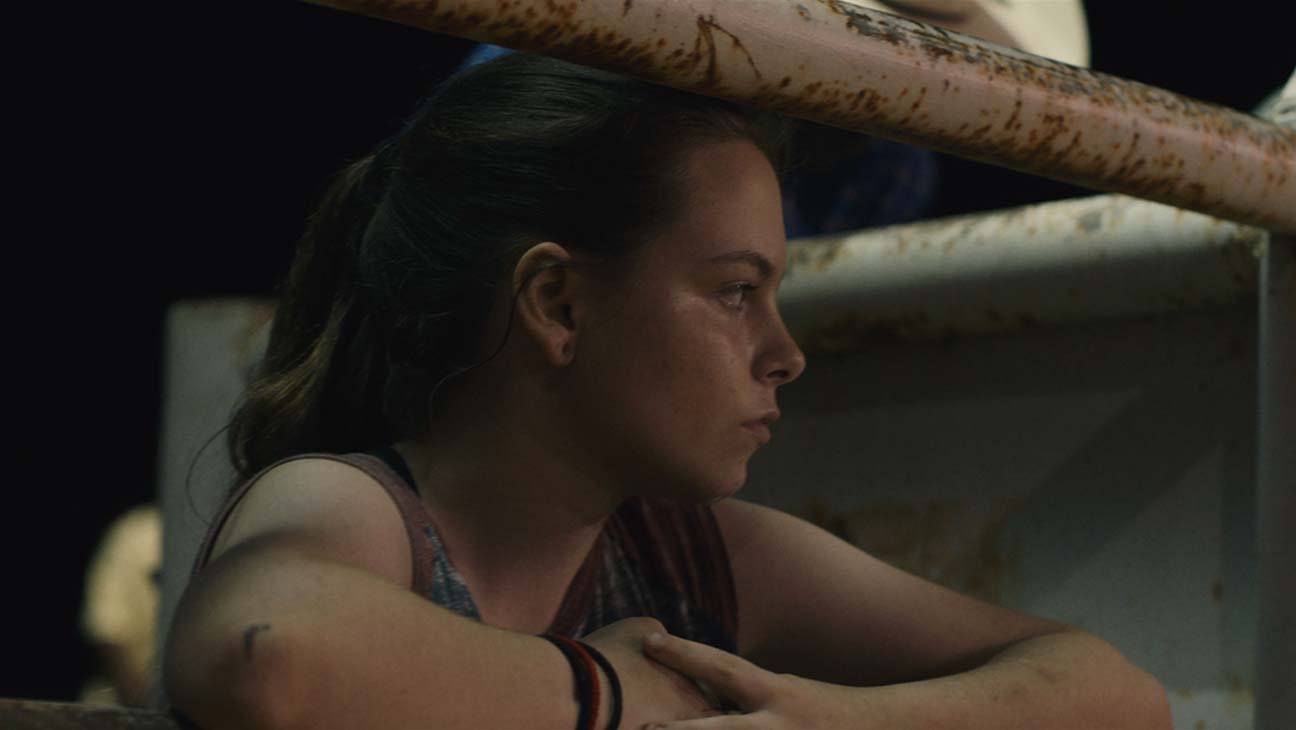
A selection of the 2019 Cannes Film Festival. Kris, a headstrong teenager from a rural neighborhood on the outskirts of Houston, is destined to follow her mother to the state penitentiary, until she’s forced to work for her equally willful neighbor, Abe, an aging bullrider struggling to keep a foothold in the rodeo circuit. Drawing consolation from an unlikely bond, Kris and Abe both attempt to right their paths, before it’s too late. Noel Murray of The Los Angeles Times says, “This movie has a rare sense of place. It preserves an entire world and the fragile people within it.”
Documentary Feature, Juan Pablo González, 2018, 61 min.
In the Mexican village of Milpillas, a family remembers the last day they saw their youngest child, Nando, a lifelong horse wrangler. Exploring a rural community’s daily rituals, CABALLERANGO evokes the presence of those who have parted. In the words of Vikram Murthi of RogerEbert.com, “González employs a creative rhythmic strategy to communicate his empathy towards the Milpillas community. He conditions his audience to observe the mundane at length. Thus, when the unexpected invades the frame, it engenders surprise or awe, like a late-night vigil that stalks the streets. It’s an attempt to inure the audience into the pace of life in Milpillas while also demonstrating how ghosts, metaphoric and literal, permanently disrupt everyday lives. The spectral drives CABALLERANGO while the people themselves reside at its center.”
When Jennifer Laude, a Filipina transwoman, is brutally murdered by a U.S. Marine, three women intimately invested in the case an activist attorney (Virgie Suarez), a transgender journalist (Meredith Talusan), and Jennifer’s mother (Julita Nanay Laude) galvanize a political uprising, pursuing justice and taking on hardened histories of U.S. imperialism.
“While the facts were relatively straightforward, the aftermath soon became maddeningly complicated. ‘My life has value,’ Ms. Laude once declared. She was right, and this film takes that truth to heart.” – Ken Jaworowski, The New York Times
Documentary Feature, Nancy Schiesari, 2016, 76 min.
CANINE SOLDIERS explores the experience of going to war with a Military Working Dog, trained to find bombs before they can kill or maim soldiers, often at the expense of the dog’s sanity. Schiesari’s open, observational style allows the viewer a direct experience of the war dog program, pushing us to make our own observations and judgements about America’s defense project and the acceptability of war’s lasting wounds.
Documentary Feature, Ben and Bo Powell, 2020, 70 min.
Meet the people of Rosedale, Mississippi, in this gently composed peek at life in a fading but beloved Delta town. All sorts of people make their homes in this quintessential and iconic American community. Despite a painful past and an uncertain future, Rosedale’s still hanging on.
“NOTHIN’ NO BETTER hides what must have been a staggering amount of research and time spent in the community to get so many voices into such a small package. There’s no sit-down interviews – the only direct interaction with the filmmakers are a few brief portrait shots in front of a hastily hung sheet. Instead, a representative cross section of the townfolk gets a few minutes each in front of the camera, undertaking the most mundane of tasks. Each momentary glimpse of a life feels fleeting, yet the end result is like walking through a small town art gallery, where every picture is by a local artist who captures something raw, small, and organic. It’s not the moments, but the entirety that create the real picture.” – Richard Whittaker, Austin Chronicle
Features a pre-recorded Q&A with Directors Ben and Bo Powell.
Narrative Feature, Jason Cortlund and Julia Halperin, 2011, 94 min.
A food lovers’ film. Lucien and Regina are foragers – they gather wild mushrooms and sell them to New York restaurants. Their lifestyle is simple, their income unstable. As Regina seeks more stability and Lucien wants to devote himself to full-time nomadic foraging, their individual desires put the marriage to a test. The late Roger Ebert, a fan of NOW, FORAGER, has called it “an uncompromising film about two people who don’t deserve each other – but maybe nobody deserves either one of them.”
Documentary Feature, Patrick Bresnan and Ivete Lucas, 2019, 112 min.
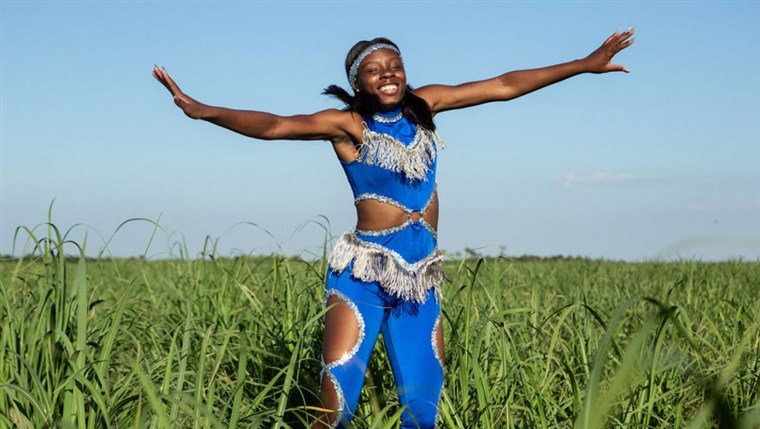
Ivete Lucas and Patrick Bresnan create a portrait of PAHOKEE, a small rural town located in the Florida Everglades, a community tightly knit together that struggles with financial insecurities and a bleak future. Through an extremely precise observational approach, the film manages to capture the daily life of the town with a great wealth of nuanced details. From sports events to school beauty contests, the filmmakers observe how, through social and collective rituals, the ideas of gender and identity are publicly displayed while creating new narratives. Moving past the crucial Wiseman lesson, which Lucas and Bresnan have fully absorbed, the film possesses the distinct feel of a Gil Scott Heron song, with its deep streak of rural blues tinged with urban echoes. A complex and multi-layered work that recalls also both the gritty social realism of the new American cinema as well as the neorealist touch. PAHOKEE is a powerful portrait of a forgotten America absent from the current political discourse.
“With a patient and unobtrusive eye, filmmakers Lucas and Bresnan paint impressionistic portraits of a quartet of charismatic teenagers over the course of a pivotal school year.” – Jen Yamato, Los Angeles Times
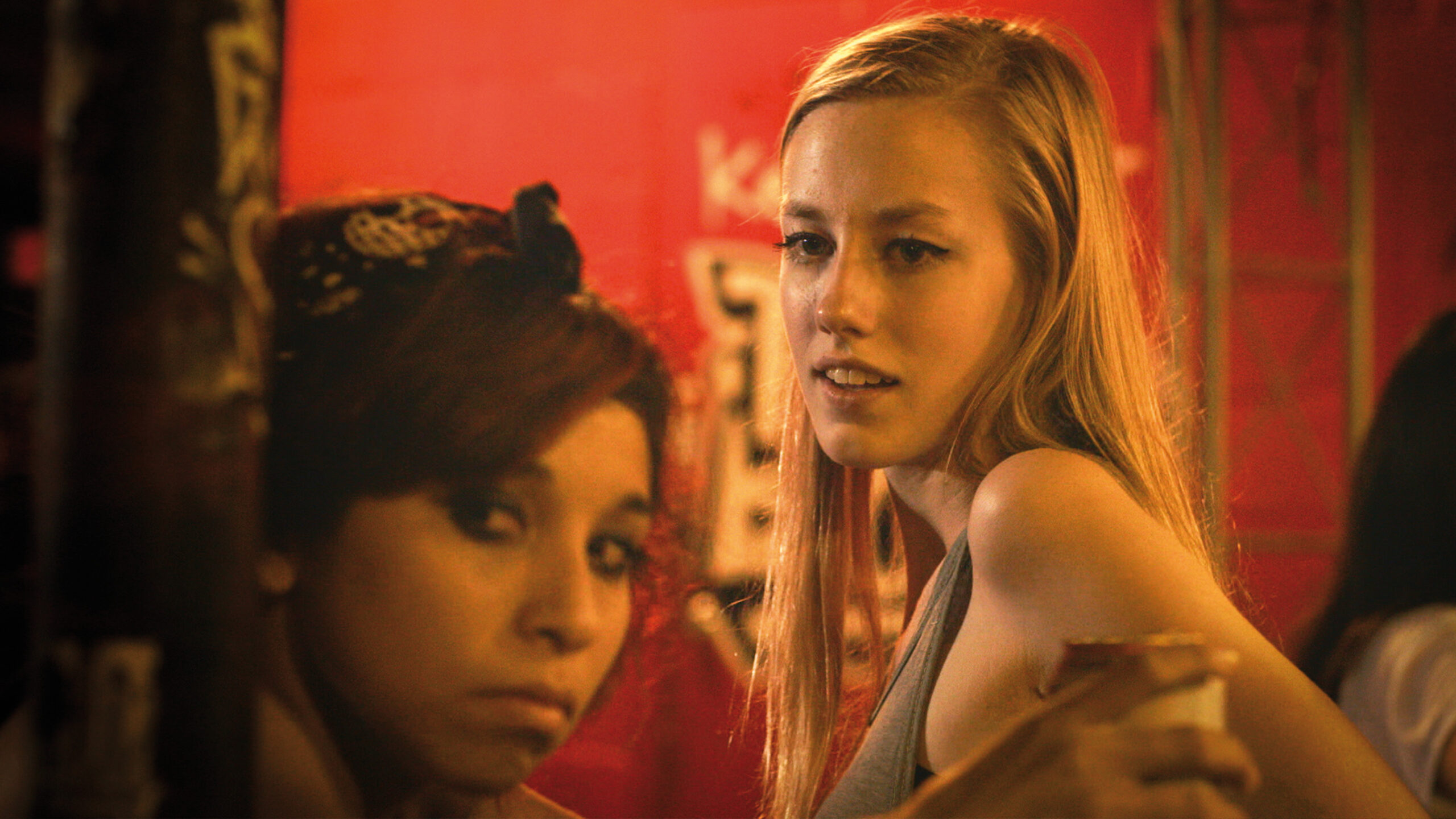
A story of love, sex and teen pregnancy in San Antonio, Texas. PETTING ZOO is the portrait of a young woman coming into her own, in an environment that does not always present ideal circumstances.
“It may read like a familiar tale, one you’ve seen a few times before. But the devil’s in the details and it’s to the film’s credit that PETTING ZOO gets those details right every single time. Whether it’s the spot-on, nonsensical conversations of stoners sprawled across a living room; the soul-sucking, endless routine of working in a crappy diner; or an intimate, cathartic moment cuddling with a cat, Magee’s direction illuminates both the hope and the drudgery that cumulatively amass as we make decisions that irrevocably alter our lives, whether we realize it or not.” – Josh Kupecki, Austin Chronicle
Neil is a questioning teen who secretly writes erotic fan fiction about a popular SciFi hero. When his classmate Julia discovers this, she leads him on an adventure of self-discovery. With strong performances from leads Michael Johnston and Hannah Marks as well as a surprising turn from Michael Ian Black.
“An engaging comedy-drama about adolescent outsiders who dabble in fan-fiction while inventing themselves.” – Joe Leydon, Variety
Narrative Feature, Kelly Daniela Norris, 2013, 98 min.
In the wake of her brother’s suicide, a young Mexican woman (Seedne Bujaidar) journeys to the place he’d always dreamt of going – Cuba – where, through tortured ruminations and the guidance of a devoted stranger, she searches for answers, and must decide whether to open herself up to love and loss once again. SOMBRAS DE AZUL is something of a film elegy; a poetic re-imagining of the director’s own experience of bereavement following the death of her brother.
When we watch classic Hollywood movies we see a galaxy of stars, exuding glamour and cool and impossible charm. Because these people are long gone, and because even when they were alive we only saw them under highly controlled circumstances, they sometimes represent a sort of perfection to us.
And that’s one reason why these breakdowns and miscues are so endearing. We realize that Bogart was a very good actor playing an unruffled detective, but it’s fun to see a little ruffling now and then. We know that Bette Davis and Carole Lombard had extraordinary vocabularies for communicating aggravation or displeasure, but it is an absolute joy to hear them express it.
Here’s a tightly edited compilation of some of the best outtakes from Warner Brothers’ end-of-year “Breakdown Reels.” These were created by the studio’s editors, presumably for a holiday party or something.
And here is a playlist consisting of the raw reels, about two hours worth. There are some duds here, but also some shining treasures, and a lot of in-jokes whose meaning is lost to the sands of time. Enjoy.