It’s not every day that you get to listen to a couple of the greatest filmmakers of a generation just talk. But that’s the magic of the Texas Film Awards, which took place on March 8th, 2018, where audiences are treated to the kind of star-studded glamour and magical movie moments rarely witnessed outside of Hollywood.
This year, as a special tribute to the late Jonathan Demme, Richard Linklater sat down with Paul Thomas Anderson (the recipient of the inaugural Jonathan Demme Award) for an intimate conversation about their mutual friend. It’s a beautiful, inspiring discussion. Enjoy.
As you might know by now if you’ve been following AFS, the CinemaTexas Rewind series runs from March 22 through April 22 at the AFS Cinema. Full details are here.
Part of the charm of the original ’70s and ’80s CinemaTexas film screenings at the University Of Texas was the mimeographed notes, written by students and/or faculty distributed at each screening. You can read a comprehensive collection of these in this new book from UT Press, which also has the advantage of being in a much more readable format.
Additionally, we’ll have a limited number of xeroxed note sets at each screening.
However, since we don’t want to deplete forests any more than possible, we are providing scans of all notes for the films in the series. You can read those at this link. Enjoy!
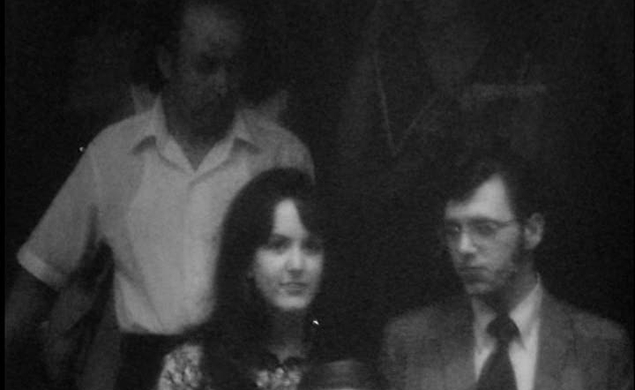
From Friday, March 23 through Sunday March 25, the AFS Cinema will welcome Emily Armstrong and Pat Ivers for a trio of screenings of their work. Starting in the mid ’70s they ran a public access show in New York called GoNightclubbing! and they did just that, capturing hundreds of hours from the fertile Downtown New York music scene, which encompassed all manner of styles and attitudes. We look forward to their films and stories.
In the meantime, to tide you over here is a clip from the Cramps performing “Surfin’ Bird” in 1979. If you never saw this band, one of the most high-energy, high-danger bands of all time, this is as close as you’re ever likely to get.
AFS Cinema is excited to present Bernardo Bertolucci’s remarkable early film BEFORE THE REVOLUTION this Saturday, March 24th at 6:00 PM. We will be screening a rare 35mm print all the way from the Cineteca di Bologna…the chance to see this film in 35mm probably won’t happen again anytime soon, so be advised.
Here’s Jonathan Rosenbaum on the film:
It is not surprising that Bernardo Bertolucci’s second feature — made when he was only 22 and released a year later in 1964 — has never been as fashionable as THE CONFORMIST(1969) or as popular as LAST TANGO IN PARIS (1972). But even though it is sometimes raggy and choppy as storytelling, BEFORE THE REVOLUTION is still possibly the most impressive thing he has done to date.
There probably isn’t another Bertolucci film, at least until the recent BESEIGED (1998), that is constructed so closely around individual pieces of music, pop, jazz, and classical, culminating in a climactic premiere of a Verdi opera, Macbeth, heard off-camera but never seen. And like John Cassavetes’ SHADOWS (1960) — evoked directly in one love scene between the callow young hero Fabrizio (Francesco Barilli) and his slightly older and neurotic aunt Gina (Adriana Asti), played out to the accompaniment of a tenor saxophone solo – BEFORE THE REVOLUTION has all the vibrant emotional intensity of youth giving its all.
“Movies should not be about other movies, they should be about your experience of life.” – Olivier Assayas
Nest week, French director Olivier Assayas joins us in-person at the AFS Cinema for a limited retrospective of his films, including the premiere of the new restoration of his 1994 classic, COLD WATER (a Janus Films release). The director will also be present at the screenings of SOMETHING IN THE AIR and PARIS AWAKENS.
Assayas is the voice of a generation. His brilliant body of work addresses our rapidly globalizing and increasingly technological environments, and interrogates the meaning of art and artistic creation in our finite existence. Born in 1955, he was an adolescent during the galvanizing “social revolution” of May 1968, an experience that would forever impact the way he sees the relationship between ideas and the world. His films return to these themes again and again, with ever more poignancy and bite.
We’re less than a week out from this year’s Texas Film Awards. The annual event brings in actors, filmmakers, and others in the film industry to Austin to celebrate the Texas film industry. Among the special guests this year will be director Paul Thomas Anderson and actor Armie Hammer.
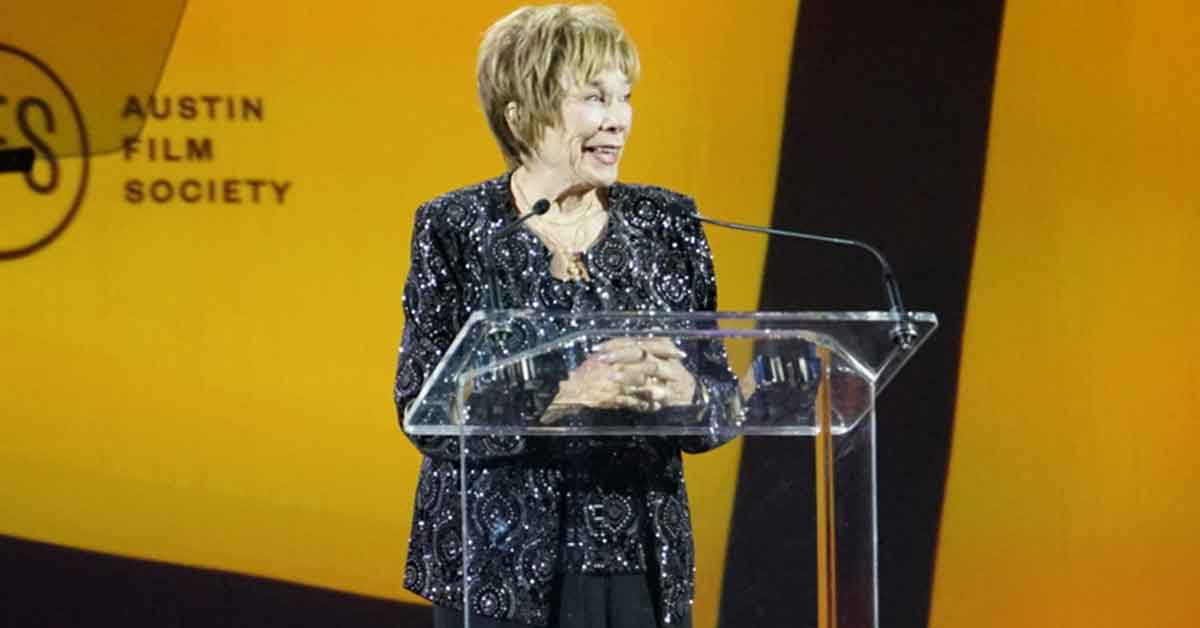
As a throwback to last year, we’re looking back at all of the speeches and clips from our 2017 guests, including honorees Shirley MacLaine, Tye Sheridan, Sarah Green, Hector Galán, and Jeff Nichols. Each of our honorees are introduced by a friend or past collaborator. Watch the full clips below.
This week’s Austin Chronicle presents an informative overview of AFS’ upcoming CinemaTexas Rewind series. Here’s a little bit more about CinemaTexas and the films to be screened, as well as the new book that has brought CinemaTexas back into the spotlight.
From the early ‘70s through the mid ‘80s, there was an on-campus film-programming initiative at the University of Texas called CinemaTexas. Every Monday through Thursday night there was a separate two movie lineup programmed by Radio-Television-Film Department faculty and graduate students.
The unique set of influences and doctrines that held sway at the time, and the prodigious talent pool of the student and faculty collaborators make these programs of ongoing interest today.
Now a historic selection of the original program materials has been published by UT Press as “CinemaTexas Notes: The Early Days of Austin Film Culture,” edited by Louis Black and Collins Swords. We are honored to welcome some of the CinemaTexas alumni back to reprise some of their favorite films as part of this accompanying series. The book will be for sale at the theater as well.
Thu, Mar 22: This screening introduced by Richard Linklater with audience discussion to follow.
Encore screening Sun, Mar 25
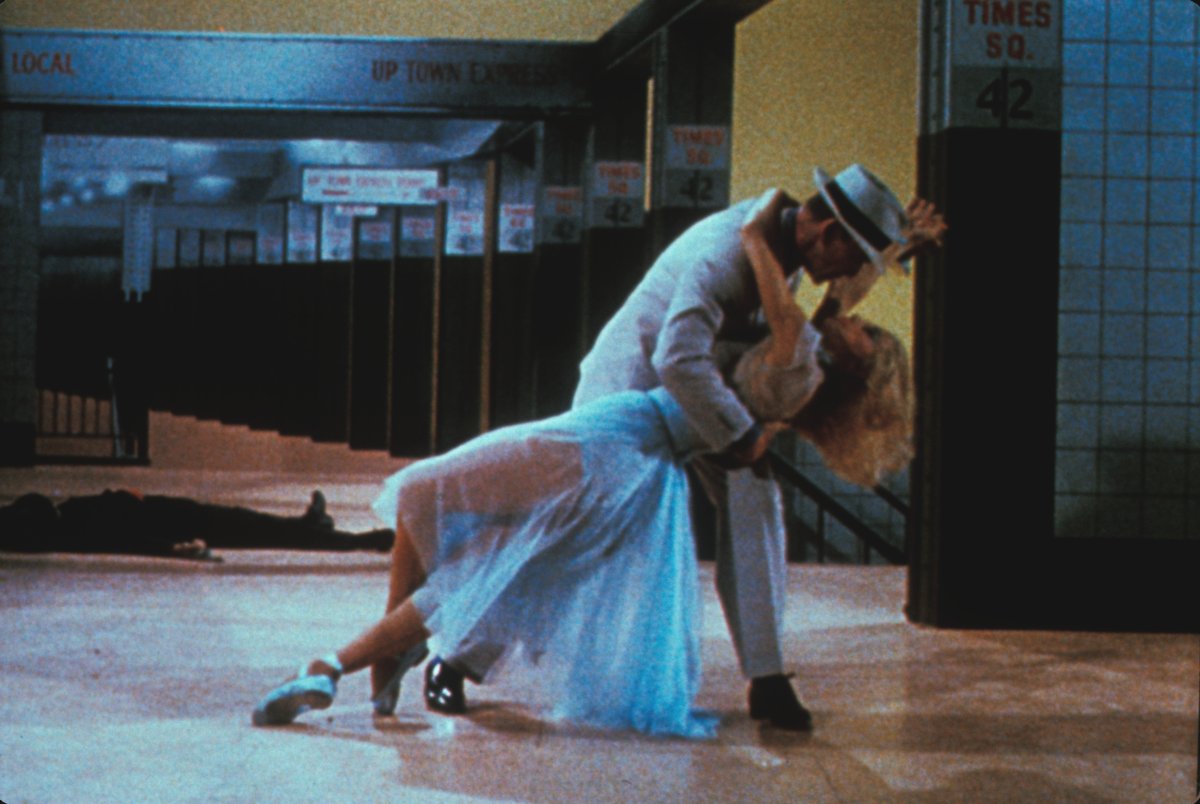
“Before Minnelli, the backstage musical always excluded itself by framing the musical action with the stage, even if from that island of dramatic safety it took off into the empyrean as with Busby Berkeley. In contrast, Minnelli has always accented the abstraction of the film image by framing it against a backdrop of artificiality in other mediums. … The question still remains, though, why are these actions possible, and even essential, if the cinema is thought to be a fundamentally ‘realist’ medium. The answer is, of course, the star system and the musical actor. In the backstage musical, we know from the very first that all the kids are singers and dancers waiting for the chance to be stars.”
– David Rodowick and Ed Lowry, Vol. 12, No. 4, Feb. 21, 1977.
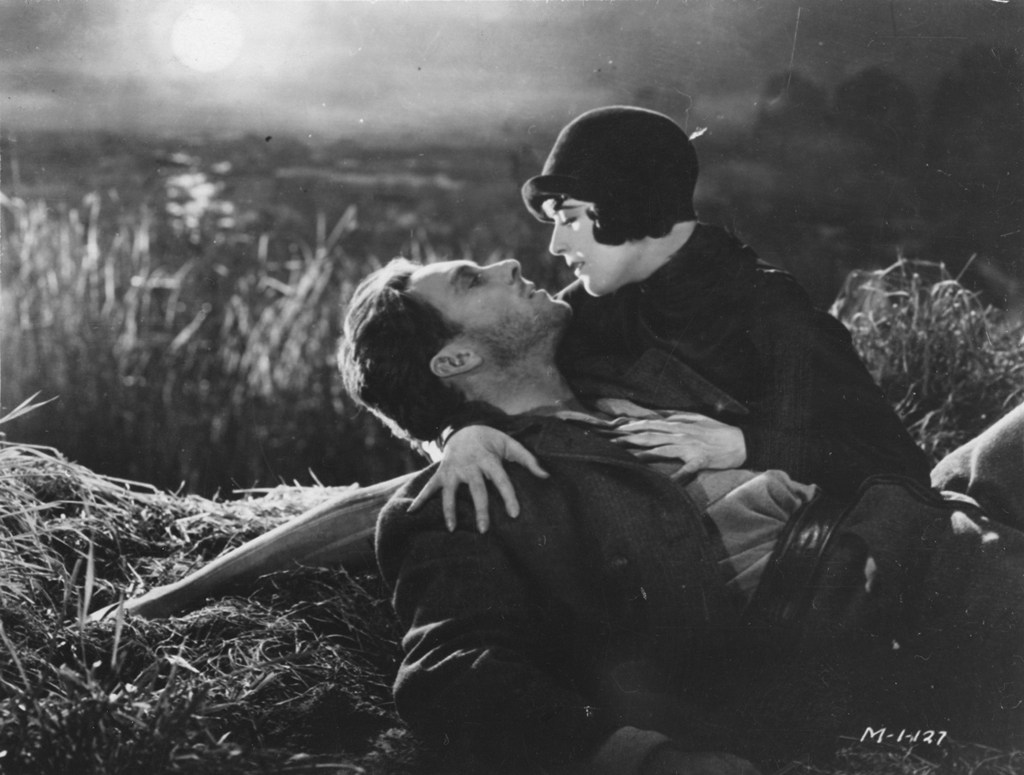
SUNRISE
Directed by F.W. Murnau
USA, 1927, 1h 34min, 35mm
Thu, Mar 29: This screening introduced by original CinemaTexas alumnus and noted game developer Warren Spector with audience discussion to follow.
“Hollywood’s dominance of the world film market has been challenged but rarely in the eighty-odd years since the birth of the motion picture. Perhaps the most serious challenge was that posed by the German film industry during the 1920s. … Hollywood’s response to the German challenge was simple: bring all of that talent to the United States. Make the top German filmmakers offers they couldn’t refuse; simultaneously weaken the German film industry and build up Hollywood.”
Thu April 5: This screening introduced by original CinemaTexas alumnus Louis Black with audience discussion to follow.
Encore screening Tue April 10
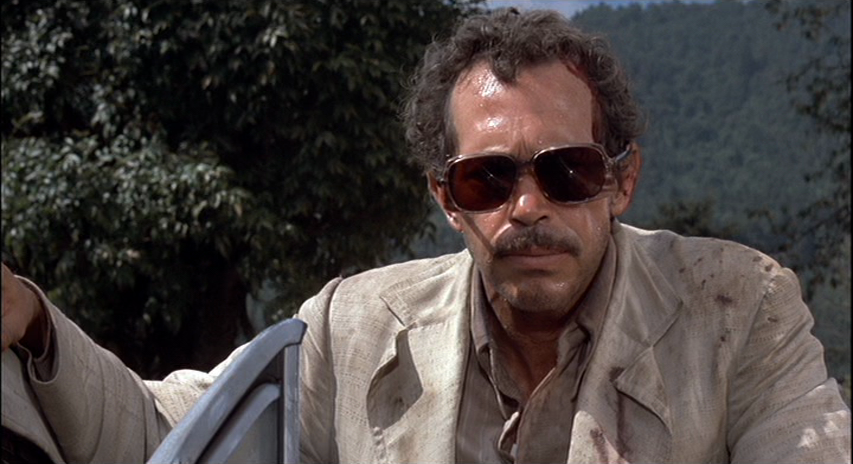
“Generally regarded as a failure when it was released, the film’s critical stature has only slightly improved over the years. To set the record straight: Bring Me the Head of Alfredo Garcia is one of the most important and brilliant of Peckinpah’s films. In many ways it represents the culmination of the first (and so far greatest) period of his work. It is an ugly, vicious film about not very glamorous people engaged in ugly, vicious activities.”
– Louis Black, Vol. 19, No. 2, Oct. 28, 1980.
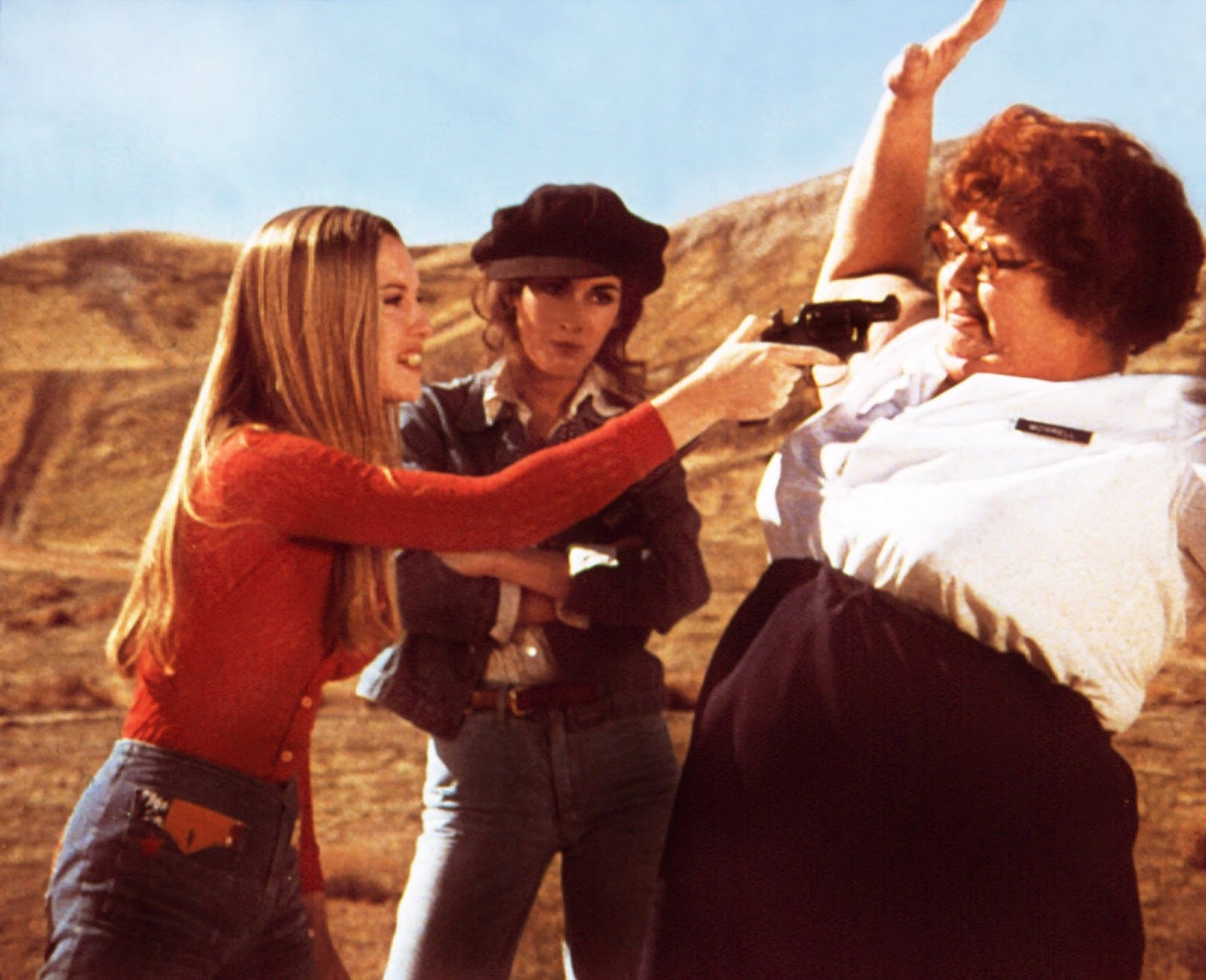
CAGED HEAT
Directed by Jonathan Demme
USA, 1974, 1h 23min, 35mm
Thu April 12: This screening introduced by original CinemaTexas alumnus and noted film critic Marjorie Baumgarten with audience discussion to follow.
“In 1970 Roger Corman’s New World Pictures released The Big Doll House, a film which began a whole cycle of women-in-prison pictures. Where Hollywood had occasionally turned out films in this vein [they] were largely a variation on the standard (men’s) prison genre. Big Doll House, however, generated several films which followed many of the conventions it had established: woman warden/male doctor, integrated cellmates, acceptance of lesbian relationships and, especially, women armed and dangerous at the end. … Caged Heat is at once the best of the films in this genre and the ultimate send-up of them.”
– Louis Black, Vol. 14, No. 3, April 3, 1978.
Tue April 17: This screening introduced by original CinemaTexas alumnus and Austin Chronicle publisher Nick Barbaro
On NECROLOGY: “”The credits listed at the end of the film are woefully incomplete. The following is a complete breakdown of the relevant statistics regarding Necrology. Total performers: 326 (191 male, 135 female) Credited performers: 76 (53 male, 23 female) Uncredited performers: 250 (138 male, 112 female). In examining these statistics, certain patterns come immediately to mind, patterns which raise serious questions about Lawder’s integrity. Most obvious is the implied sexism of the credits. Only 17.04% of the women in the film are credited, whereas fully 27.75% of the men receive credits.”
– Nick Barbaro, Vol. 21, No. 3, Dec. 7, 1981
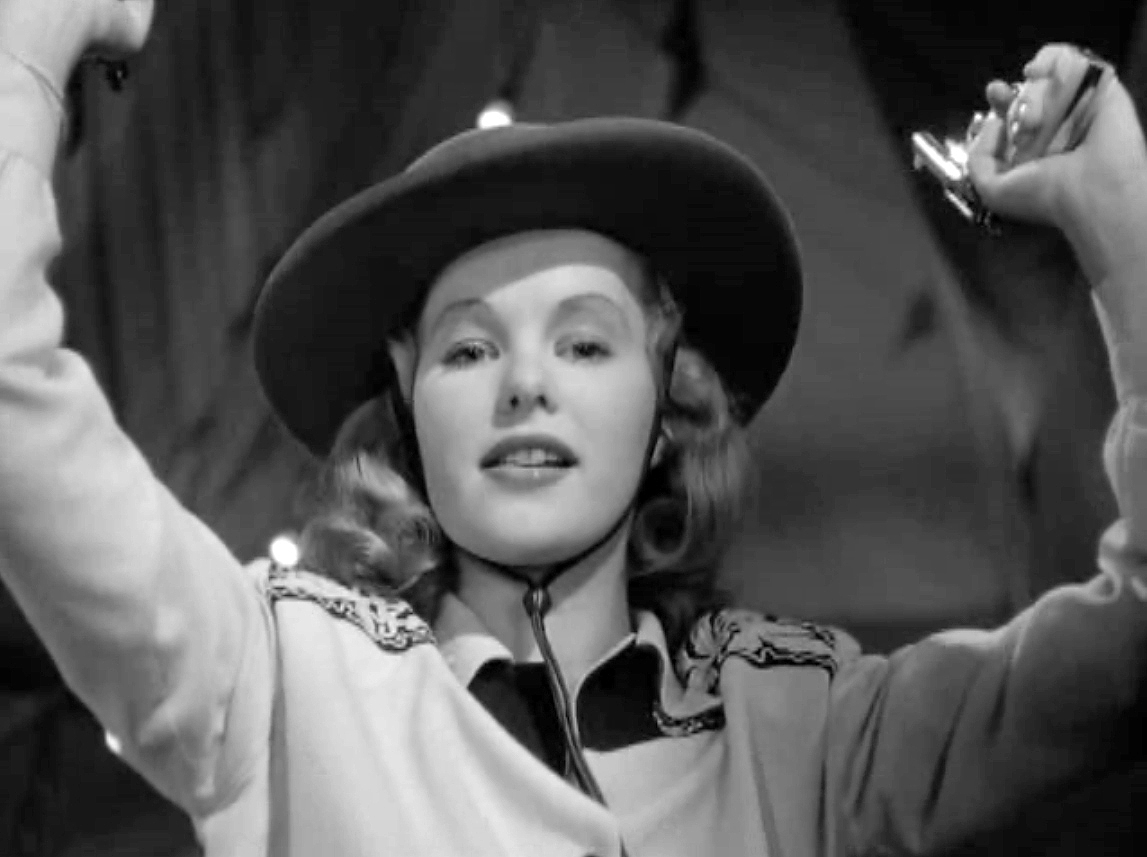
GUN CRAZY
Directed by Joseph H. Lewis
USA, 1950, 1h 27min, 35mm
Thu, Apr 19: This screening followed by a panel discussion with select CinemaTexas alumni focusing on the influence of their mentor Ed Lowry
Encore screening Sun, Apr 22
“The most outstanding sequence in the whole film is the single shot bank robbery; for, if nothing else about the film were notable, this shot would make it all worthwhile and in a better known film would likely be touted the world round. Lewis sets his camera in the back seat of the car the couple is driving to a bank robbery. … By keeping the camera pointed always forward, Lewis denies us the tension-releasing effect of being able to look backward to check for ourselves. Fourteen years later, in Bande à Part, Godard was to ‘innovatively’ place his camera in the back seat of a car, watching only the backs of the heads of the couple in the front seat as they drove and talked.”
Director Bette Gordon is in Austin presenting her films at the AFS Cinema this weekend. We hope to see you there for the screenings of VARIETY (1983), THE DROWNING (2017), LUMINOUS MOTION (1998) and her Experimental Short Works. Each screening will be followed by a Q&A that promises to be unforgettable.
John Boyega in ATTACK THE BLOCK, screening March 3
Today’s Austin Chronicle features a nice preview of the SXSW@25 program that starts at the AFS Cinema on Friday, March 2. The AFS programming team has worked with SXSW Film to choose a selection of some of the highlights from recent years of the fest. The screenings run in the days before SXSW Film, except for MARWENCOL, which runs after, on March 21.
Here’s the lineup:
Fri, Mar 2: 45365 – Directed by Bill Ross IV, Turner Ross, USA, 2009, 1h 30min, Digital:
A peripatetic portrait of a hometown and slices of memories become a cinematic story. The breakout, award-winning debut is from documentary filmmakers and brothers Bill and Turner Ross (CONTEMPORARY COLOR, TCHOUPITOULAS, WESTERN.)
Sat, Mar 3: AUDIENCE OF ONE – Directed by Mike Jacobs, USA, 2007, 1h 28min, DCP:
God visits Pentecostal clergyman Richard Gazowsky to send him on a mission: make a Christian movie as big and epic as STAR WARS. Richard gets into action, though he’s never made a movie before, and also had never seen one (before watching STAR WARS). This is a documentary.
Sat. March 3: ATTACK THE BLOCK – Directed by Joe Cornish, UK, 2011, 1h 28min, DCP:
A gang of teenage thugs in south London meet their match when they must defend their neighborhood from an alien invasion. One of the most fun, inventive and surprising debut features to recently premiere at SXSW, featuring a breakout performance by John Boyega.
Sun, Mar 4 : WEEKEND – Directed by Andrew Haigh, UK, 2011, 1h 37min, Digital:
No one knew British director Andrew Haigh’s name when he showed up at SXSW in 2011 with his tiny independent film in hand. By the end of the festival, Andrew and this film were the revelation of the festival. This simmering queer romance is still a knock-out.
Mon, Mar 5: SUN DON’T SHINE – Directed by Amy Seimetz, USA, 2012, 1h 30min, Digital:
For her feature directorial debut, writer/director/actor Amy Seimetz chose her favorite subject, her home state of Florida, where she says people go when they are “running away from something.” Her sweat-drenched noir, with its hapless would-be Bonnie and Clyde, is one of the strongest indie debuts you’ll ever see, and predicted Amy’s great success with future projects such as Showtime’s The Girlfriend Experience.
Wed, Mar 21: MARWENCOL – Directed by Jeff Malmberg, USA, 2010, 1h 23min, Digital:
After being beaten into a brain-damaging coma by five men outside a bar, Mark builds a 1/6th scale World War II-era town in his backyard. Mark populates the town he dubs “Marwencol” with dolls representing his friends and family and creates life-like photographs detailing the town’s many relationships and dramas.
Abbas Kiarostami’s 24 FRAMES opens at the AFS Cinema on Friday, February 23. Tickets and more info here.
The death of Iranian writer/director Abbas Kiarostami in 2016 robbed us of one of cinema’s great masters. Though he had lived a relatively long, and certainly productive, life, his perspective on film and on life was still evolving and he continued to experiment with the technical possibilities of the medium.
With all that in mind, the posthumous release of his final film 24 FRAMES is a great gift to all of us. It is a work of meditation and experimentation, and, as critic Godfrey Cheshire writes, “this lovely final film is one that could be enjoyed by fourth-graders as easily as the most knowledgeable of Kiarostami’s admirers.”
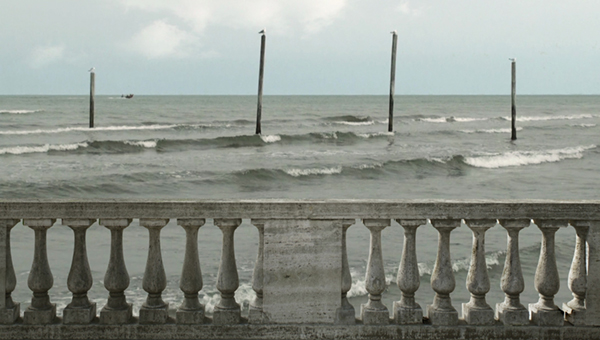
The premise of the film is simple. The director has taken 24 still images, most of them his own photographs, and digitally animated, with the help of collaborators Ali Kamali and Ahmad Kiarostami (the filmmaker’s son), a new narrative of what happens before and after the shutter snaps. Each “frame” lasts four and a half minutes and is a short film in and of itself.
It is not a film for everyone, but it is possessed of great insight and poetic expression and should certainly be seen on the big screen.
Here’s what the critics are saying about 24 FRAMES:
“Since Kiarostami knew this was likely to be his last movie, there is an inescapably elegiac quality to 24 FRAMES’ concentrated meditation on image-making. 24 FRAMES is a must for longtime Kiarostami observers (and that should include all cinephiles)” – Marjorie Baumgarten, Austin Chronicle
“24 FRAMES immediately communicates the power of the theater experience, in the way that so many of Kiarostami’s movies can.” – David Sims, The Atlantic
“Takes up residence in your mental jukebox in a way that’s so haunting, for a while it crowds out all the other beauty you’ve heard.” – Owen Gleiberman, Variety
“The chief pleasure of 24 FRAMES is how it attunes you to appreciate any movement, whether it’s snow falling, waves crashing, or birds pecking the earth.” – Ben Sachs, Chicago Reader
“In an age where people are so preoccupied with the size of the screen on which we watch things, it’s fitting that Kiarostami’s final work reminds us that no screen is too small, and that no screen is ever big enough.” – David Ehrlich, IndieWire
AFS Head of Film & Creative Media Holly Herrick provides this overview of the work of Bette Gordon. Gordon will be a guest at the AFS Cinema for a series of screenings starting on Friday, February 23 with a screening of VARIETY. The series continues through Monday, February 26.
“I came from a time where market driven art didn’t exist in film. It was such a small world… the filmmakers of the time, we were just mucking around, kind of just making films for each other.”
An early arriver on the New York independent film scene, Bette Gordon was part of the group that laid the groundwork for what was to come. The perception of New York as a fringe community of experimental artists would quickly change to that of a hotbed of filmmakers with market and Hollywood-ready material. But in the early 80s, New York’s downtown filmmaking scene was still dominated by artists experimenting with discovery and the possibilities of expression within the moving image. Bette Gordon’s work was born of this scene, but also suggested the next wave of artistically driven but viably commercial films like the more frequently cited STRANGER THAN PARADISE and SHE’S GOTTA HAVE IT– a narrative cinema rooted at once in cinephilia and the distinct, original visual ideas that were the outcome of a fertile period of experimentation.
Gordon editing VARIETY, circa 1983
Bette Gordon was totally ahead of her time in every way when she made VARIETY (1983), one of the greatest films of the New York of its period. Just take a look at her choice of collaborators: Christine Vachon was on her first gig as a production assistant, Luis Guzmán appears in his first feature film role, a then-unknown Nan Goldin co-stars, Kathy Acker co-wrote the script , John Lurie, fresh off of composing the music for Jim Jarmush and Kathryn Bigelow’s first features, did the score. After collaborating with James Benning on several shorts and then breaking off on her own with a proof of concept short called EMPTY SUITCASES (all of these shorts are playing in our Bette Gordon ExperimentalShorts program), Gordon embarked on this first feature, a combination of her passion for hidden areas of New York, and an ongoing exploration of feminist ideas. In looking back at VARIETY with Film Comment’s Violet Lucca (for Metrograph) Gordon remembers the following:
“I was attracted to the underworld, the kind of movies I’d seen on late night TV or in film noir: PICKUP ON SOUTH STREET, other Sam Fuller films, THE NAKED CITY. The idea that a world was underneath. In exploring the night world of New York, I came across a lot of places, especially ones that I was told were dangerous, and they became shooting locations. What attracted me to film noir was the female with a kind of agency that she didn’t have normally have in other genres, a kind of dangerous sexuality that, in a way, threatened men. Sometimes in noir the woman had power, but ultimately she was only there to assist or she was the obstacle. Laura Mulvey’s “Visual Pleasure and Narrative Cinema”changed a lot of things for a lot of people. I was drawn to this idea of seeing and being seen and the status of conventional Hollywood narrative, with the male as subject and the woman as object. I started thinking about taking a detective noir or a Hitchcock and flipping it around: what if she actually did have agency, with woman as explorer and man as enigmatic figure? What about a story in which a woman looks back? This whole question of looking, and the pleasure in looking, and the way in which sexual desire is represented in cinema—I was very inspired by all of that.”
It’s these ideas about representation, pulling the veil up in interesting ways on the mechanisms of masculinity, that echo in her later films including LUMINOUS MOTION, HANDSOME HARRY and THE DROWNING. LUMINOUS MOTION finds Gordon adapting a novel about a boy and his mother, living in their car and the odd motel room, and the string of short-term boyfriends who offer the mother money or a place to stay. Mom, played by Deborah Kara Unger, is the center of a story around which all the male characters rotate, but the film is told through the point of view of her possessive son. It becomes increasingly clear that the little boy’s devotion is out of control, and that there is more to the situation than meets the eye. This is where Gordon digs in—she’s attracted to the story under the surface. We see this straight off in THE DROWNING, when the film opens with what appears to be a mysterious coincidence, and the mystery of that moment only gets deeper and more layered as the film progresses. It’s Gordon’s strange characters and their questionable decisions that give way to the deepening shadows in her stories. As Gordon says:
“I’m not interested in making a “feel good/everybody ends up happily ever after”kind of movie. I always will probably gravitate to stuff that’s more difficult. I’m not interested in characters that are easy or conventionally likable. In fact, that’s something that drives me crazy about so much art now—the tyranny of likability.This idea that you must like every character or that you have to relate to them somehow. Who cares about that? I don’t think you have to like the characters,but you should at least find them interesting. For me a creative problem that needs to be solved is usually just, how to do I make people see something that they might not otherwise see? I mean, I grew up at a time at the end of the Vietnam war,and as a young person then so much of what I was feeling was about wanting people to open their eyes and see the truth. I think I’m always looking for an element of that in my stories and in my films.”
Gordon’s approach to making images that are more than meets the eye will be discussed in the days to come when we welcome her to Austin to present her films, including VARIETY, LUMINOUS MOTION, her newest film, THE DROWNING, and the short films that laid the groundwork for her features.
Watch the trailer for NO COVER: THE FILMS OF BETTE GORDON here:
A MATTER OF LIFE AND DEATH starts on Saturday, February 17 at the AFS Cinema. This is the new 4K restoration. Buy tickets and find out more here.
At the end of WWII, the US and Great Britain, having just participated in a war to vanquish the greatest evil of modern times, were at a cross-roads. Resentment took hold against the American service-people who were still quartered in the British Isles. Territorial apportionment occasionally set Brit vs Yank against one another as the geopolitical stage was set for the post-war period.
What was needed, according to the British Ministry of Information, was a film to smooth feelings between the allies. The movie that resulted from this mandate may or may not have helped at the time. One thing is for sure, it has lived on in the hearts of people of all nationalities and is newly discovered by serious filmgoers all the time.
The team known as “The Archers,” Michael Powell and Emeric Pressburger, had already made a masterpiece, THE LIFE & DEATH OF COLONEL BLIMP (1943) and several other good films, but A MATTER OF LIFE AND DEATH arguably surpasses everything they did before or since – not an insignificant task.
David Niven, who was both a matinee idol and a great screen actor plays a British RAF pilot who, in a moment of distress, makes a radio call to an American radio operator – (Kim Hunter) – which proves to be very important in the ensuing moments, which take a turn toward the supernatural. That’s all we’ll say, but you can be assured that the film is both technically astounding and emotionally moving, a true work of art.
Here is British critic Mark Kermode introducing the film. You should note that there are some mild spoiler elements in the video.