If you like having a wide variety of filmgoing options, Austin is one of the best places in the world to live. We have a lot. At the heart of it for the past few years has been a single screen, part-time pop-up theater called the AFS Cinema (formerly part of the Marchesa Hall & Theatre) supported by AFS members and donors, and some magical angels who have helped keep the doors open and the roof attached. Many thousands of people have attended hundreds of events at this theater and it has been a major cultural milestone for film in Austin.
Then, earlier this year, we at AFS found ourselves at a crossroads.
Our venue partner, with whom our arrangement allowed us to do several screenings a week, decided not to renew the lease on the building. If we chose to pursue our own lease on the property it would mean we would need to make major improvements and expansions to the structure in order to accommodate two full-time screens.
We wondered: would our audience go forward with us? Is there a market for six times as many screenings as we currently offer, and for more festivals and partner opportunities? Do we need more art house and international titles in Austin? More retrospectives and restorations?
We think so, and if you think so too, join our campaign, and give what you can. At heart, it’s a quality of life issue. By voting for what you value, you help to make this city a better place, with a rooted and stable home base for the film community.
Naturally there are all kinds of levels you can give at and you will have some combination of our eternal gratitude, decals, T-shirts, tote bags and many other goodies. These are all exciting perks but the one I zoomed in on was the $100 level, which gets you a Criterion Blu-Ray or set: your choice of one from the following: DR. STRANGELOVE, THE DEKALOG, BOYHOOD, THE APU TRILOGY, WILD STRAWBERRIES, MULHOLLAND DRIVE, BLOOD SIMPLE or THE ROYAL TENENBAUMS. Plus the T-shirt, decal and more.
Please give and please come and partake in our many screenings and programs to come. We believe strongly in this campaign. Hear what Richard Linklater and the rest of the AFS creative teams says in the video below.
“I used to clip the condemned list and read it over and over. I could recite it, practically.”
John Waters has, of course, gone from being an obscure zero-budget filmmaker to one of the most highly visible filmmakers in the world, even though he has not directed a film in 12 years. The life of cultural observer and raconteur suits him though, and he’s a dream conversation partner.
Director Zach Clark, of whose film WHITE REINDEER Waters is a fan, does such a fantastic job of driving this Talkhouse conversation down some very deep filmic paths. When is the last time you’ve heard Waters go deep into his influences: Rossellini, Bunuel, etc? Clark takes you there. It’s the best Waters interview in years.
Burt Lancaster, born on this date in 1913, certainly had one of the best lives ever. As a young man he was a skilled athlete, excelling at basketball. He spent most of his 20s in the circus as an acrobat, picking up acting gigs on the side. During WWII he was stationed with the Army in Italy. Back in the states after the war he went to auditions and landed a role on Broadway.
Once the Hollywood scouts saw him, his destiny was secure. THE KILLERS, BRUTE FORCE, SORRY WRONG NUMBER, FROM HERE TO ETERNITY, VERA CRUZ, SWEET SMELL OF SUCCESS, ELMER GANTRY (for which he won an Oscar), JUDGMENT AT NUREMBERG, BIRDMAN OF ALCATRAZ, THE LEOPARD, THE TRAIN, THE SWIMMER, ATLANTIC CITY… You get the idea. It’s a career full of great films in which Lancaster gave some of the best leading-man performances ever and was popular with both audiences and critics. He also produced many of his own films and was a force in Hollywood.
None of this explains the following long-form commercial, in which he plays a wealthy tycoon rumbling through England in a limousine, thinking back over a life of savagery, when he picks up a hitchhiker with ideas of his own.
Elsa Lanchester (born on this date in 1902) had a long, esteemed career on (occasionally) stage and (frequently) screen, but there is no doubt that she is best known today for a 1935 horror movie she played a small but important role in. The film is, of course, James Whale’s brilliantly subversive BRIDE OF FRANKENSTEIN, and Lanchester plays two roles in the movie, the “bride” created by Frankenstein for his monster, and, in a framing segment, Frankenstein’s true creator Mary Wollstonecraft Shelley. It’s a great film, and its cultural influence has been long and abiding.
Lanchester’s over-the-top appearance and performance go a long way towards making the film as effective as it is. In an interview with Dick Cavett many years later she discussed her inspiration (beginning at approximately the 3:45 mark) for the Bride’s shrieking hiss – angry swans, which she demonstrates (!!!), and conveyed director’s James Whale’s philosophy of the character:
“Inside you pretty girls is the Devil.”
It’s a great interview. She also talks about her husband Charles Laughton and her dance instructor Isadora Duncan, whom she calls an “untalented bag of beans.”
On Monday November 7, AFS will present the latest in its series of free History Of Television evenings, examining the unexplained phenomena documentary show IN SEARCH OF… cohosted by writer and wrestling impresario (!!!) Maximillian Meehan. These events are more than just public screenings of television episodes, they are also informative presentations about the ideological and technical history of the medium itself. Please join us at Austin Public Studios. More information here.
Reality television has seen a gigantic surge of popularity over the last 15-20 years, becoming the most popular programming on television. Relatively inexpensive to produce, it has become foundational to much broadcast and cable television. Naturally, the very term ‘reality television’ is fraught with contradiction. The genre plays upon our interest in real-world people and situations, while also leavening this “true” content with large amounts of artificiality.
There have been prototypical reality shows on television for many decades. The PBS series AN AMERICAN FAMILY is certainly the shining example here, and was a popular and critical success in 1973.
One of the more fun examples of “reality” content being used liberally for entertainment value is the 1977-1982 documentary series IN SEARCH OF…, hosted by Leonard Nimoy, which purported to be investigative journalism pertaining to such important issues of the day as Bigfoot, the Bermuda Triangle, the Loch Ness Monster, Dracula, etc. Generally, episodes featured Nimoy on something resembling location, reading portentous copy about this or that mystery, followed by staged interviews with witnesses or experts, (who often sound a lot like actors), and, often by dramatic footage of a ghost or monster captured by the IN SEARCH OF… cameras for the first time ever.
The show, for all its obfuscation of actual facts, is lot of fun, and Nimoy’s highly serious narration (and collection of classic blazers and turtlenecks) really goes a long way towards making it that way. Also, the music is the best in ’70s jazzy synthesizer funk. When asked about the show decades later, Nimoy went out of his way to praise series creator and producer Alan Landsburg, saying:
“There’s one overriding element that made IN SEARCH OF… work, and that was Alan Landsburg. He was a genius where the show was concerned. It was his concept. his vision, and his understanding of how to treat the material that made it work and made it fun to do. Because he scripts always had a certain kind of angularity about them. There was always a certain way of tantalizing people with the subject matter. It made it very entertaining – sometimes educational, sometimes just sheer funny, but always interesting, based on his understanding of how the subject matter should be presented. And it was the granddaddy of all these reality shows you see today. So many of them have been done now, along those lines.”
Get ready for this event with some songs from the “In Search Of… Orchestra.” The tie-in album, on AVI records is hard to find, but you can hear all the music here.
Also, someone videotaped History Channel reruns of the show and put the (poor quality) versions on YouTube. If you can’t make it to the show, or if you just can’t wait, then you may want to subject your eyes to a few of these.
If you find you are becoming a little obsessed with IN SEARCH OF… Don’t worry. You’re not alone. There is also James O’Brien, of Retroist, who is reviewing every episode of the series here.
Werner Herzog’s essential 1977 film STROSZEK screens at the AFS Cinema twice this week, on Tuesday October 25 and Friday October 28, as part of the Hello, Goodbye series, commemorating the imminent closure and renovation of the theater space. Tickets are available now.
Warning: some disturbing content and language below. By now, we all know that Werner Herzog is the most interesting human being drawing breath on this planet. His films alone should be evidence of this, but he continually drops anecdotes about his life that make it clear that no one else need even bother trying to be interesting because the market is cornered.
Here’s an anecdote I read about in passing that Herzog and his close friend, filmmaker Errol Morris (whose shoe Herzog once ate, yawn) dropped in a 2008 interview.
Apparently, during the shooting of Herzog’s 1977 masterpiece STROSZEK in Plainfield, Wisconsin, Herzog and Morris were so fascinated by the horrific deeds of hometown serial killer (and inspiration for both PSYCHO and TEXAS CHAINSAW MASSACRE) Ed Gein that they planned to dig up the grave of Gein’s mother to find out if he had in fact abducted her corpse, as was alleged. It’s the kind of plan that a pair of mischievous young people, deep in their cups, might discuss late at night, but, as it turned out, Herzog was 100% serious. Morris was not. Here they are from their 2008 Believer interview:
Werner Herzog: There is something about Kemper and, of course, Ed Gein as well—we had a falling out over Ed Gein at the time, sometime later.
Errol Morris: Cannibals can turn friends into enemies. Go figure.
Werner Herzog: But actually, yes, it was a deep concern and in a way it had to do with cinema, for you at that time were more into the direction of writing. But we had a very, very intense rapport over it. Errol had a problem with me when we tried to find out in Plainfield, Wisconsin, where Ed Gein—the very probably most notorious—
Errol Morris: The movie Psycho was based on Ed Gein. Robert Bloch, the writer of the novel Psycho, lived in a small Wisconsin town, Weyauwega, about twenty miles from Plainfield. Ed Gein was notorious. And the farmhouse where he lived alone became the ultimate house of horrors. He had upholstered furniture in his house with human flesh. He was a human taxidermist, cannibal, serial killer, grave robber, necrophile. An all-around good guy.
Werner Herzog: Errol wanted to know more about the grave robberies, because Ed Gein had not only murdered people. He also excavated freshly buried corpses at the cemetery. And I do remember: he dug up graves in a pretty perfect circle. And in the very center of this circle was the grave of his mother. And Errol kept wondering, did he excavate his mother and use her flesh and skin for some sculptures in things at his home?
Errol Morris: A relatively innocuous question. [Laughter]
Werner Herzog: So the only way to find out is, I proposed, let’s go to Plainfield, grab a shovel, and dig at night. And I showed up in Plainfield, Wisconsin, because I was doing some filming up in Alaska and I came in a car all the way from Alaska down to Plainfield to visit Errol
Errol Morris: I was living with Ed Gein’s next-door neighbors at the time, who I had befriended. Beth and Carroll Gear.
Werner Herzog: You didn’t show up.
Errol Morris: Oh, much later, yes. The chronology of all this is coming back to me.
Werner Herzog: I was there, but you didn’t show up. And we had a date. It was something like September 10, and I said, I’m going to be there, and you will be there, and you didn’t show up.
Errol Morris: He’s unfortunately correct.
Werner Herzog: And I would have dug, even though Errol wasn’t there. I was kind of scared because people open fire easily in this town.
Errol Morris: Well, wait a second. I had been living there. I had become friends with this very strange doctor, Dr. George Arndt. He had written one academic paper in his entire medical career, called “A Community’s Reaction to a Horrifying Event.” Essentially it was a compendium of Ed Gein jokes. I had befriended Dr. Arndt and together we drove to Plainfield Cemetery. He had a very, very big Cadillac. It reminds me actually of that scene in your Antarctic movie. Dr. Arndt and I had put our ears to the ground in the vicinity of the Gein graves, looking for hollow areas in the earth.
Werner Herzog: I had forgotten about it completely. So things come back thirty-five years later.
Errol Morris: And Dr. Arndt, who was really quite mad—I should tell you at least one of the Ed Gein jokes. Do you remember any of them?
Werner Herzog: I don’t think so.
Errol Morris: Why did Ed Gein keep his chairs covered overnight?
Werner Herzog: I don’t know.
Errol Morris: To keep them from getting goose pimples. So I was there with George Arndt in the cemetery and Arndt had this theory that Ed was so devious that he wouldn’t have gone down directly into his mother’s grave. I had discovered that many of the graves that he had robbed made a circle around his mother’s grave. And Dr. Arndt took this new information and came up with the hypothesis that Gein went down into one of the side graves—he only robbed the graves of women who were middle-aged and overweight, like his mom. He went into one of those graves and then tunneled, that there would be this radial tunnel toward the center, toward his mother’s grave. Arndt’s theory was that Gein would never have gone directly down into his mother’s grave. Psychiatrists have amazing theories. But he would never go down into the grave. As Arndt put it: Gein was too indirect, too devious. Hence, his radial digging, this tunneling. And I wondered, Wait a second—is she really down there? I could never get an answer. I could never get a straight answer from anyone. Is Mrs. Gein still buried in Plainfield Cemetery? And I told the story—this was the big mistake here—I told the story to Werner.
Werner Herzog: And I showed up in Plainfield.
Errol Morris: And so there was this horrible realization: he’s actually going to do it. And I have to say, I did get scared. I had this picture—you know, I was always really—I probably still am—trying to please my mother. I had already been thrown out of these various graduate schools. I was a ne’er-do-well, and down for the count, and I saw my life flashing before my eyes. I saw myself arrested with the Germans. I saw this full moon. I saw the Plainfield police. I saw the police photographers. I saw myself being led away with the Germans in handcuffs, the complete disgrace. So this is an opportunity to apologize. I apologize for not showing up.
Werner Herzog: I have to apologize for something else, because my car had broken down and there was no mechanic in the mile out there. There was a wreckage yard, and I fell in love with the guy who fixed my car.
Errol Morris: Clayton Schlapinski.
Werner Herzog: Yes, Clayton Schlapinski. And I said that we were going to do a film there in Plainfield, and that really upset Errol a lot. He thought I was a thief without loot. This was his country, his territory, his Plainfield, and I shot in Plainfield. I shot a film, Stroszek, which I think is forgotten and forgiven by now, and we can maintain friendship over this now.
Errol Morris: I told Werner: For you to steal a character or a story isn’t real theft. But to steal a landscape, that is a very, very serious crime.
Werner Herzog: I understand that. I take it to heart, but there actually is a film out there, and we can’t take it off the map.
Errol Morris: It’s a very good film.
Werner Herzog: It has a beautiful end with a dancing chicken, and I really like it.
As most of you know by now, the AFS Cinema will be closing for an extensive remodel and expansion soon. But before we begin ratcheting down the number of our events in preparation for construction, we wanted to have a great week full of brilliant films about endings and beginnings. It’s the HELLO, GOODBYE series, at the AFS Cinema (formerly the Marchesa Hall & Theatre) 10/25-10/30.
Please tell all your friends and join us for this celebration of the cinema that we have shared so many great experiences in for the last three and a half years.
This special program includes Werner Herzog’s 1977 tragicomedy STROSZEK, about a couple from Berlin who immigrate to America and find it very different from the place they imagined; Robert Altman’s frantic 1973 detective whatsit THE LONG GOODBYE with Elliott Gould as a seriously ’70s version of Raymond Chandler’s private investigator Phillip Marlowe; Elaine May’s 1971 black comedy A NEW LEAF with Walter Matthau as a formerly rich man who tries to claw his way back to the top of the heap with the unknowing participation of a strange, awkward woman, played by the director herself; Djibril Diop Mambéty’s colorful and vibrant 1973 film TOUKI BOUKI about a Senegalese couple, obsessed with cosmopolitan Paris, who long to escape Africa, and scheme to make it happen; and finally 1973’s THE LAST DETAIL, from director Hal Ashby (and writer Robert Towne) about two tough Navy lifers (Otis Young and Jack Nicholson – at his best) who are ordered to escort a young cadet (Randy Quaid), guilty of a minor crime, to the brig for an eight year sentence. Funny, deep, and poignant, this is great filmmaking.
Note: AFS Artistic Director Richard Linklater’s next film, LAST FLAG FLYING, scheduled to shoot soon, is a followup to THE LAST DETAIL.
All of the films in this program are presented in 35mm except STROSZEK, which is presented in a new DCP restoration.
STROSZEK
October 25 & 28
Werner Herzog’s too-strange-to-not-be-completely-human tale of an ex-mental patient in the Berlin slums looking for a new start in Wisconsin is one of the greatest “grass is greener” tales ever to be put to cinema. More Info & Tickets>>
THE LONG GOODBYE
October 26 & 29
Robert Altman and Elliott Gould go a trifle over-the-top in this adaptation of Raymond Chandler’s private eye novel. One of the best and most entertaining films of the ‘70s. More Info & Tickets>>
A NEW LEAF
October 27 & 30
Writer/director Elaine May’s black romantic comedy stars Walter Matthau as a dissolute playboy in need of funds, who targets an eccentric rich woman in a scheme to marry and kill for money. The woman (played by May herself) is considerably different than he expects. A joyous film. More Info & Tickets>>
TOUKI BOUKI
October 28 & 30
Djibril Diop Mambety is the master of post-colonial African magical realism. In TOUKI BOUKI, a sort of psychedelic Senegalese Bonnie & Clyde story, a young couple will do anything to get out of Africa and start a sophisticated new life in France. More Info & Tickets>>
THE LAST DETAIL
October 29 & 30
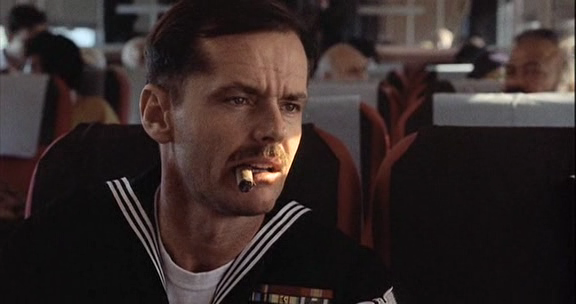
See Jack Nicholson as you always want him to be, a foul-mouthed, cigar-chewing sailor on a last night out with a fellow headed to prison. Two independent film greats, director Hal Ashby and screenwriter Robert Towne, are on top of their game, and thankfully, there is hardly a plot in sight during the film’s many loose, rambling scenes. More Info & Tickets>>
This 1932 short-subject interview with horror movie legend Bela Lugosi (born on this date in 1882) is staged and rehearsed as you might expect and has some really jarring shifts in tone. One minute he is saying,
“I am studying now American slang. I know how to say “OK”, “cat’s, uh, whiskers” and “baloney”, and “and HOW!”
We can detect obvious sadness as he talks about being forced to leave his home country of Hungary for political reasons. Then, later, when asked if playing Dracula onstage depressed him, he becomes gloomy and frightening as he intones,
“Very much. It haunted (hunted?) me. I often dreamed of the dead. In the morning when I woke up I was tired and depressed… (trails off)
Then a jump cut to a cheerful Lugosi asking brightly, “Did you see the play?”
Later, after a flirtatious exchange about the Hollywood party life, Lugosi’s brow again darkens and he slips into monologue mode again,
“Well, I guess I’m pretty much of a lone wolf. I don’t say I don’t like people at all but to tell you the truth I only like them if I get a chance to look deep into their heart and their mind. If I find there is something worthwhile, some human kindness, some sympathy.”
Then it gets even stranger and creepier from there.
This November and December, as the AFS Cinema remodel begins, we will offer a large number of events both onsite at the AFS Cinema (pardon our dust please!) and at a number of other local venues. We will continue to offer events around town until the Cinema reopens early in 2017. More news about January and February offerings to come soon.
On Friday, November 4, we will screen New York Times Critics’ PickLITTLE SISTER, the latest film from Zach Clark (WHITE REINDEER) at the AFS Cinema. This is a Free Member Friday. This screening will be preceded by an AFS Member mixer starting at 6pm.
Our long-running free History Of Television series continues at Austin Public on Monday, November 7 with a selection of episodes of the ’70s paranormal series IN SEARCH OF… starring Leonard Nimoy in an assortment of wide collars as he chases Bigfoot and the Loch Ness Monster.
On Friday and Saturday, November 11 and 12, we will again be joined by our friends from our sister city Angers, France as we help celebrate Angers Week with a pair of screenings. On Friday, we will present VINCENT, a favorite from Angers’ Premiers Plans festival, and on Saturday we will host a family-friendly program of animated shorts from France.
Doc Night continues with screenings on Sunday, November 13 and Wednesday, November 16 of FIRE AT SEA, an extraordinary new film, made over the course of a full year, that documents life on the ancient Mediterranean island of Lampedusa, which, in addition to its insular culture of fishermen, now hosts large numbers of refugees from Africa, who are rescued along the treacherous seaways nearby. Winner of the Golden Bear at the Berlin International Film Festival and Amnesty International’s Film Prize.
We are thrilled to present a new restoration of Howard Hawks’ 1934 screwball comedy classic TWENTIETH CENTURY, starring John Barrymore and Carole Lombard, on Tuesday, November 15 at the historic State Theatre. It’s an all-time favorite, and we are excited to partner with the Paramount and State to offer this special screening.
On December 18 and 20 we present one of our favorite new films of the year, IXCANUL, just before we close the doors of the AFS Cinema for the last time in 2016. IXCANUL, from Guatemala and in the spoken Mayan language Kaqchikel, tells the story of a young woman who lives with her family on the side of a volcano, where they harvest coffee beans. A series of events occur that bring the old ways into sharp contrast with modern values. By far the most acclaimed film ever to emerge from Guatemala. We are proud to present it.
We have always been interested in the history of film and its techniques. One of the most fascinating and least appreciated aspects of golden-age filmmaking is the use of painted backdrops. University of Texas lecturer Karen L. Maness has just completed a book on the subject, THE ART OF THE HOLLYWOOD BACKDROP, and will share some of her research and insights with us in a special free screening room presentation on Wednesday, November 30.
We return to the State Theatre on Monday, November 5 for another exciting new restoration. Marlon Brando only directed one film, the weird, existential western ONE EYED JACKS (1961). When original director Stanley Kubrick dropped out, producer/star Brando assumed the directorial reins. In many ways it feels more like Kurosawa than John Ford. After many years in eclipse, this has now received the Film Foundation DCP treatment and can be seen and appreciated as the great film it is.
On Thursday, December 8th at the Bullock we return to present the great new doc A SONG FOR YOU: THE AUSTIN CITY LIMITS STORY. Made by Keith Maitland (TOWER) with the full participation of ACL’s producers and archivists, this is a music-packed, interview-heavy appreciation of not only the greatest music television show of all time, but also the city and attitude that made it possible. With special guests!
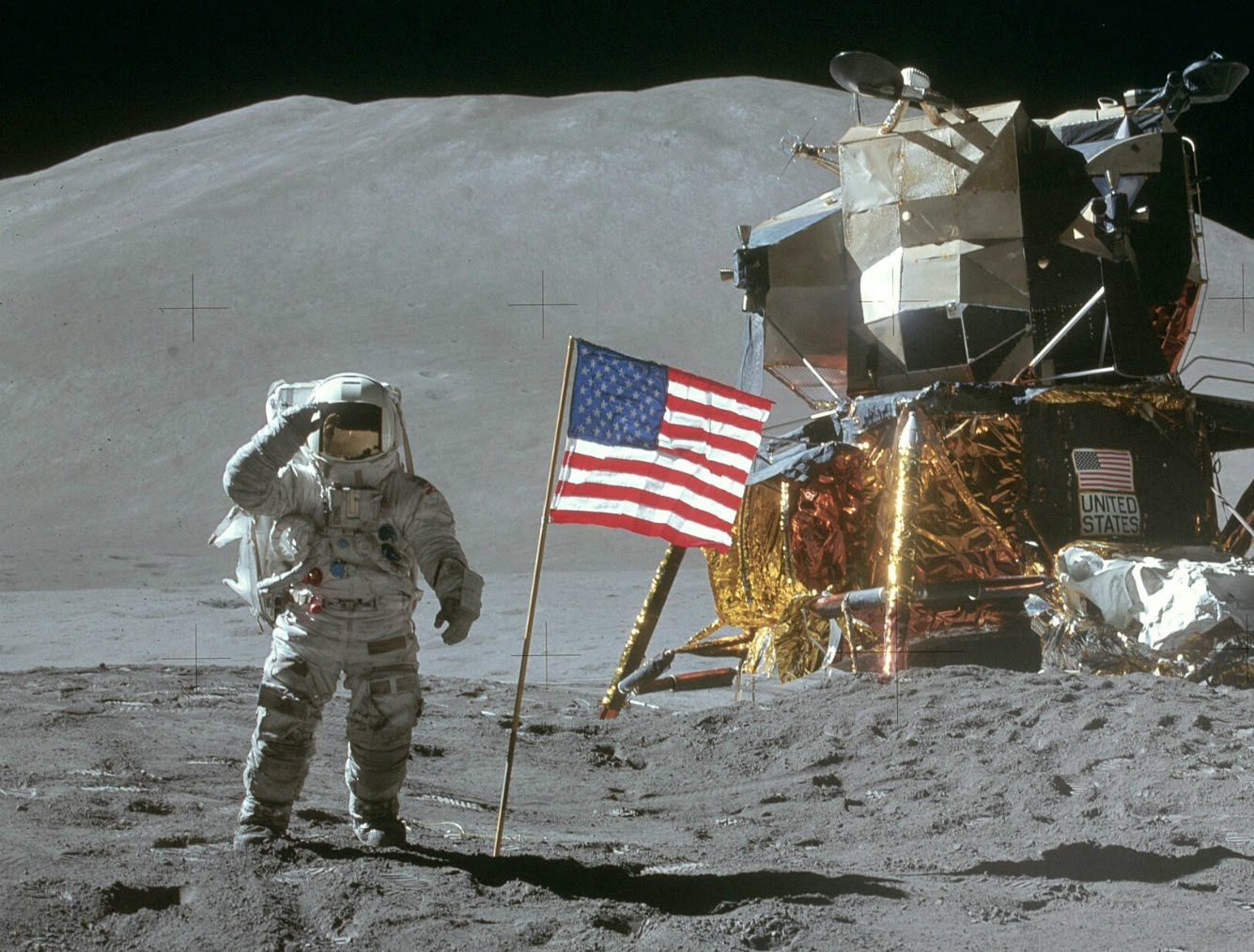
Speaking of special guests, on Sunday December 11, our Science on Screen program resumes at the Bullock with a showing of Al Reinert’s seminal 1989 documentary FOR ALL MANKIND, about the Apollo space missions, culled from over 1,000 hours of raw NASA footage. We will be joined by Reinert and members of the original Mission Control team for an educational discussion after the film.
Julie Dash’s epochal 1991 independent film DAUGHTERS OF THE DUST has been restored and we will screen it at the Bullock on Tuesday, December 13. Before DAUGHTERS OF THE DUST, no film directed by an African-American woman had ever been distributed in the US. The film, set in 1902, tells the story of a Gullah family who live on an island off the coast of Georgia that has had very little contact with the mainland. A film of great cultural and historical importance, DAUGHTERS OF THE DUST was selected for the National Film Registry at the Library Of Congress in 2004.
Joss Whedon (AVENGERS, Buffy The Vampire Slayer) has recently turned his filmmaking attention to the 2016 election with “Save The Day,” writing and directing videos starring some of Hollywood’s biggest talents (Scarlett Johannson and Robert Downey Jr. among them) that aim to register voters and Get Out The Vote. During this special election season event, Joss Whedon joins us in-person at AFS to go behind the scenes of Save The Day’s videos, and have an interactive audience discussion about Hollywood, politics, and the importance of voting to our democratic process.
This event does not advocate for any view, candidate or political party. The content and speakers do not reflect the opinion or views of the Austin Film Society.
Date: Saturday, October 15, 2016 Time: 11:30 AM Location: AFS Cinema (6226 Middle Fiskville Rd) Tickets:https://www.austinfilm.org/film-joss-whedon-in-conversation
$10 General Admission · $7 AFS Watch/Make/Love Members · Free for AFS Premiere Members
In Austin we are lucky to have a big-time, massive film fest (SXSW Film), and some less gigantic but still world-class festivals (Austin Film Festival, Fantastic Fest). And we are also fortunate to have a number of smaller (though not necessarily small), targeted festivals that expose us to international films we might never see otherwise. The Austin Asian American Film Festival (AAAFF) is one of these, and the programming seems to get better and better each year.
We have been honored to share a venue with them in past years, though this year our cinema renovation has forced a move to the very snazzy Blanton Auditorium. As always the focus is on quality rather than quantity. The twelve features and twenty two shorts chosen all look first class, and range from CREEPY by Japanese horror auteur Kiyoshi Kurosawa to the new Hirokazu Koreeda film AFTER THE STORM and the buzzed-about Chinese indie sensation KAILI BLUES.
The AAAFF runs from November 3-6. The full schedule, along with ticket links, is here. Hope to see you there.
As the teenage daughter in an Afghan refugee family in Iran, Sonita Alizadeh is in a difficult position. A free spirit, who aspires to a career in music, she is also a member of a highly religious tradition that forbids the making of music. Additionally, her very poor family can make the equivalent in $9,000 if they agree to offer her in an arranged marriage.
As the tensions ratchet up, Sonita tells her side of the story in the only way she knows how, through her words, music, and filmmaking. The song is a direct plea to her parents and is very, very powerful.