Austin-based film/TV composer Kyle Dixon (a member of the expansive synth outfit S U R V I V E and 1/2 of the duo behind the culture-shifting Stranger Things score) has graciously assembled a grounding collection of minimalist compositions for our Viewfinders blog. Dixon leans into his ambient influences, sourcing sounds that span decades and continents for this mix of “minimal or calm music for staying home, mostly but not exclusively centered around one instrument.” Give it a deep listen and let your mind roam far from the boundaries of your quarantine zone.
Track list:
Maria Teresa Luciani, “Poor Neighborhoods”
Boli Group, “How To Play”
David Chesworth, “The Unattended Serge 1978 Pt 4”
Kimpu-Ryu, Tozan-Ryu, Kikusui-Ryu, “Koku”
Gurdjeiff & de Hartmann, “The Struggle of the Magicians Fragment No 3”
Shiho, “Ki No Nagare”
Tangerine Dream, “Bus Station / Mae’s Theme (Excerpt)”
To the patrons of AFS Cinema, it’s no secret that we love a good movie poster. Richard Linklater’s collection of golden-age film ephemera adorns our walls with bold, creative design and illustration from heavyweights like Saul Bass, Bill Gold, and a host of others. But sometime around the advent of Photoshop things took an aesthetic nosedive, and for the last few decades, creativity has become an outlier in the design-by-marketing-department era of celebrity headshot collages. Thankfully, artists like Akiko Stehrenberger are reversing the course and ushering in a new epoch of imaginative illustration.
If you’ve ever passed one of our light boxes and been taken in by a gorgeous, hand-illustrated poster with a clever visual concept, chances are you’ve seen Akiko’s work. Over the last decade or so, she has been on the vanguard of some of the best arthouse and independent films’ marketing campaigns, making sure they grab the attention they deserve with her eye-catching, evocative art. You could fill a hefty book with her prolific output, which in fact she did this spring.
We were thrilled to have the chance to interview Akiko Stehrenberger about what it’s like working in the fast-paced, niche industry of movie poster design….
VF: Take us back to the beginning of your career. Did you set out to be a film poster designer, or did the career choose you?
It was accidental. I had been working in NY doing spot illustrations for music and entertainment magazines. When I moved back to LA, I needed any job because my student loans were knocking on my door. A good friend of mine was working at a movie poster advertising agency and told me they were in need of a receptionist. I interviewed for the job but at the last minute, decided to bring along that month’s SPIN magazine which had my illustration in it. When I showed one of the owners of the company my piece (he was a painter himself), he asked if I’d ever be interested in being a junior designer of movie posters instead. I’d never really used a computer and knew very little about graphic design, but somehow we both agreed to give it a shot. The rest is history.
VF: Describe your typical process, starting from when a studio or shop first contacts you. How do you go about the task of narrowing down a 2 hour story into one single compelling image?
I’m brought on at so many different stages of a film’s production. If I’m lucky, I’ll get a screener, but I’d say that only happens 1/3 of the time. I’m usually only given a script, a short synopsis, or a trailer, and it’s usually up to me to fill in the gaps. Sometimes I’m given a loose direction in mind, other times it is wide open creatively. The first day on any project, I spend thinking. I write down ideas, sketch, and look at inspiration online, which could come from all types of places: photography, fine art, music. Sometimes, I’ll even just google key words that come to my head when I think of the film’s theme. If there are any assets, like unit photography of the film, they can also help spark ideas.
It’s more on the rare side that I work directly with the director unless it’s a smaller budget film. It’s usually the movie studios marketing team I work with, or if I’m hired by a movie poster advertising agency, I’m working with its creative director. From the ideation stage, I then go to a thumbnail sketch presentation that I provide to see which ideas resonate with my client.
Distilling a 2 hour movie into one single image is no easy feat. Alternative posters you may see on the internet have an easier time because they are dealing with properties that the audience is familiar with. My job is to intrigue someone and introduce them to something new. I do think my background as an editorial illustrator definitely was an asset for this line of work, since I basically would have to summarize a whole article in one image too.
VF: You’re incredibly prolific, having worked on at least a dozen major film and TV projects within the last year, by my count. And almost all of your work involves detailed, hand-drawn illustration – not exactly something you can rush. How do you balance quantity and quality and keep your ideas fresh? Any tips for dealing with creative blocks?
Oh, thank you so much!
I try my very best to manage my clients’ expectations from the very start. Since I am doing everything by myself, I let them know that with me, they are getting a very focused and limited presentation. I don’t present multiple painted options. What I do present is multiple ideas in a rough sketch form and really try to get them to narrow things down before I even start to paint.
My illustrations do take quite a bit of time, although I do consider myself fast compared to illustrators not in this field. I’m constantly teaching myself new tricks to work more efficiently, without cutting any corners.
I have creative blocks all the time and it is next to impossible to keep my ideas fresh all the time. I’ve been doing this for 16 years now and have estimated creating over 9,000 pieces during this time. Very few make it to the end. I am used to my work being thrown in the trash (although luckily I’m always compensated for my time). However, the ideas are never completely thrown away. I keep them archived in my brain for an opportunity to blow the dust off and remix them for another project. I can’t tell you how many times I presented the rainy window idea before the film “After the Storm” finally allowed me to do it. And the fist head for “Da 5 Bloods”, I’ve had a version of that idea for a while but this film finally presented me with the perfect opportunity.
For “Portrait of A Lady on Fire”, I always present optical illusions for a project whenever I can. Anyone that claims their ideas are always completely original and fresh is lying to themselves. Yes, there may be a handful of truly out there concepts you can come up with, but to put that kind of pressure on yourself to sustain that, is unrealistic and I think, impossible. Everything has been done before. It’s just how you do it that makes a difference.
VF: There are lots of nods to the golden age of poster design in your work. Who are some artists and designers that have inspired you, and what is it about their work that excites you? Is there a desert island poster that you could look at again and again and never grow tired of?
Bob Peak definitely inspired me. Not only do I love his work, I admired him for his versatility to adapt to all genres. Not many artists during his era (if any) did that. Because my role is not that of just an illustrator, I am also an art director and designer, it’s very important that the style of illustration serves the film, instead of just serving me. As far as contemporary artists and designers, I have so many really great friends in this field that constantly inspire me. I also see a lot of illustrators crossing over from alternative posters to real ones and it’s so exciting for me. Not only because I love this new wave of illustrated posters, but I also have to be kept on my toes because now other illustrators are seeing my work, not just art directors who may not have a drawing background.
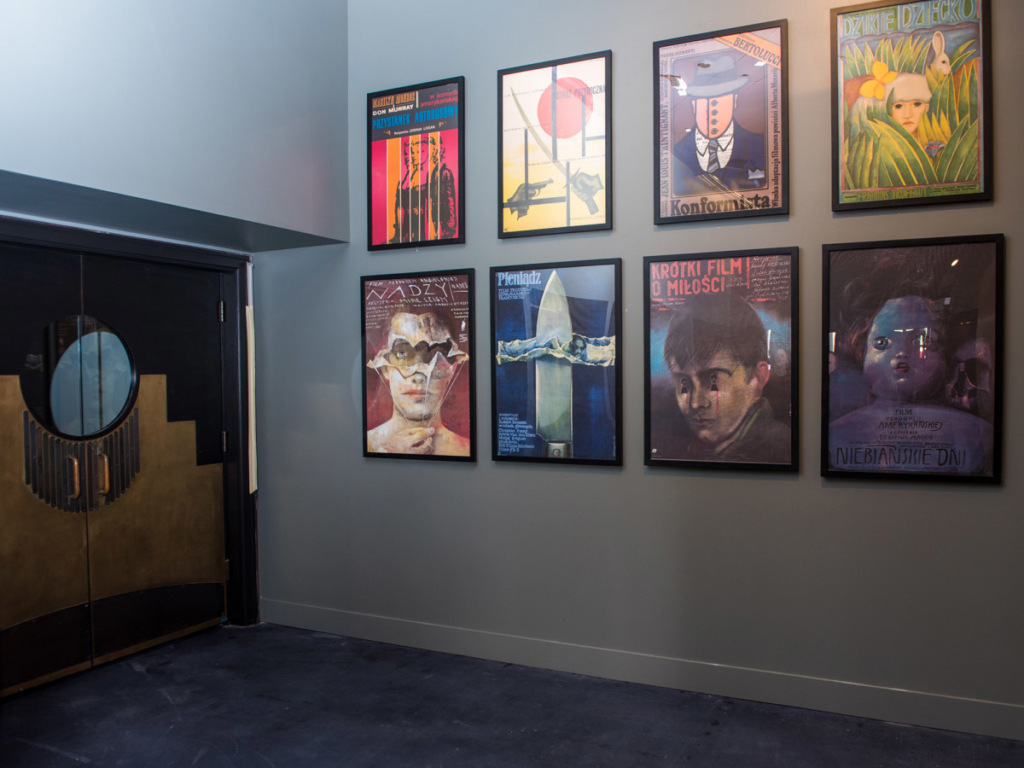
A WALL OF POLISH POSTERS AT AFS CINEMA
As far as a desert island poster I could never grow tired of Polish posters in general. They were my first influence in this field and continue to be.
VF: Is there a film or filmmaker that you’re dying to create a poster for?
I’ve been really lucky to work on projects for most of the directors I truly admire. My interest lies in the up-and-coming directors who will challenge me to think outside of the movie poster box. 🙂
Japanese director Makoto Nagahisa has said that he strives “to bring a speed, dialogue, and sound that doesn’t exist in current filmmaking.” Based on his Sundance award-winning anarchic short AND SO WE PUT GOLDFISH IN THE POOL and his new feature WE ARE LITTLE ZOMBIES (coming to our Virtual Cinema this Friday, July 10th), we would say he is succeeding. Both works crackle with a manic energy and hyper-stylized visuals that create a striking juxtaposition against their precociously deadpan protagonists (the self-declared zombies) – barely-teenage nihilists who just want to watch their mediocre worlds burn.
With these first two titles, Nagahisa has thrown in his bid for the title of Japan’s Most Frenetic Filmmaker, giving contemporaries like Sion Sono (ANTIPORNO, WHY DON’T YOU PLAY IN HELL) and Takashi Miike a run for their money. But you don’t have to take our word for it. Watch AND SO WE PUT GOLDFISH IN THE POOL below for a taste of Makoto Nagahisa’s paintball-splattered pop-art sensibilities, then scrape what’s left of your brain back into your skull and come back this weekend for his debut feature, WE ARE LITTLE ZOMBIES.
It is a sad day for music and film lovers, as we have lost one of the greatest composers of the last century. Ennio Morricone made a household name for himself with his evocative Western soundtracks that permanently burrowed into the popular conscious. But his skill for cinematic expression extended far beyond those catchy whistles and blazing fuzz guitars. He composed masterpieces across the full scope of human emotion, from romance to comedy to terror. He owned them all.
One of the many assets that set Morricone apart was his penchant for experimentation. This was most apparent in his genre film scores, where you can find him conjuring tidal waves of buzzing, droning, electric cacophony. His score for A LIZARD IN A WOMAN’S SKIN contains some prime examples of his manic musical mood swings, where gauzy dreamscapes suddenly mutate into walls of nightmarish noise.
Morricone sharpened his experimental ear in the early 1960s in the visionary ensemble Gruppo di Improvvisazione di Nuova Consonanza (aka Il Gruppo / The Group), which he co-founded with composers Franco Evangelisti and Egisto Macchi. Their aim was to capture unfiltered “instant compositions,” and what they recorded was far ahead of its time, fusing elements of Miles Davis’ acid jazz, musique concrète, and even psychedelic funk to create a sound some have likened to later krautrock heavyweights like Can and Faust.
While some might associate improvisation with a casual “no rules” approach, Il Gruppo’s sonic experiments were more like mad science. The 1967 German documentary below captures a moment in which The Group tinkers over the treated strings of a grand piano, looking more like neurosurgeons than musicians (perhaps they were, in some sense). Il Gruppo‘s sonic excursions contain the seeds of what would become Morricone’s compositional tool-kit: dissonant atonal brass swells, psychedelic effects-drenched arrangements, jazzy mod drum breaks, and much more. It’s a true privilege to witness some of the great Italian composers collaboratively dissect their art form and reassemble it into something entirely original. Enjoy Theo Gallehr’s fascinating Nuova Consonanza, Improvisational Composition Collective.
Filmmaker Robert Mugge claims he never meant to spend his career making music documentaries, but we sure are thankful he did. Beginning with his 1980 film SUN RA: A JOYFUL NOISE, Mugge has crafted intimate portraits of legendary Black musicians, capturing invaluable snapshots of the artists and their creative environments. With the recent streaming availability of a huge portion of his filmography via Amazon Prime, we felt the time was right to revisit some of our favorites.
Mugge was raised in a civil rights household and politics are ingrained in his filmmaking. Although not a music doc, his 1978 film AMATEUR NIGHT AT CITY HALL: THE STORY OF FRANK L. RIZZO applies the form’s conventions to a profile of the notoriously racist, authoritarian mayor of Philadelphia. In doing so, Rizzo’s blustering huckster routine, eerily echoed in today’s political arena, is reframed in the context of the cheap entertainers that could be found serenading the inebriated working class in dive bars and VFW halls across Philly.
Moving forward, Mugge made the sage decision to let his politics speak through the rich perspectives of his subjects. His next film, 1980’s SUN RA: A JOYFUL NOISE, is full of colorful off-stage interviews that vividly bring to life the world in which Sun Ra’s seminal space jazz was produced. In one such scene, we visit Arkestra member Danny Thompson’s community-building convenience store, Pharaoh’s Den, where he shares his motivations, “I felt like something needed to be done in the neighborhood for the young ones who would listen… they need to be taught discipline from a young age so when they get older there won’t be no problems.” From a cultural and historical perspective, the value of these ample interviews cannot be overstated. In just one of many mind-expanding monologues, Sun Ra, framed in front of Reagan’s White House, offers this prescient dissection of our dysfunctional justice system: “You can’t have a justice department that only penalizes people when they do wrong, and doesn’t do anything to help them when they’re trying to do right.”
Perhaps Mugge’s most inherently political musical subject is Gil Scott-Heron, whose heady mix of poetry, soul-jazz, blues, and funk is widely considered the blueprint for hip-hop. You’d be hard-pressed to find a song in his uncompromising discography that doesn’t take a civil rights issue to task, from his biggest hit “The Revolution Will Not Be Televised” to the amnesty plea for wrongfully-convicted Gary Tyler in “Angola, Louisiana.” In BLACK WAX, we follow the charming, lanky songwriter as he struts around the nation’s capital shouldering a boom box and singing along with his scathing ode to the “outhouse of bureaucracy, Washington, DC.” As with A JOYFUL NOISE, we cut in and out from blazing nightclub performances to evocative locations where our subject unleashes unfiltered opinions. The scenes of Gil Scott-Heron coolly ad-libbing acerbic observations among wax figures of the founding fathers and Uncle Sam are well worth the watch. If, by the time the film reaches the final performance of the Reagan-skewering “B-Movie” with Scott-Heron hypnotically incanting “This ain’t really your life, ain’t really your life, ain’t really nothing but a movie,” you aren’t ready to storm the streets, you should check yourself for a pulse.
Other highlights from Mugge’s filmography include the up-close and intimate THE GOSPEL ACCORDING TO AL GREEN (1984), featuring stripped-down performances from the soul singer that will give you chills, and SONNY ROLLINS: SAXOPHONE COLOSSUS, which takes audiences behind the scenes into the jazz giant’s rehearsals and shows. Incredible instances, big and small, are archived in these indispensable documents, including the moment when Rollins leaps off a stage to play among the crowd, but fractures his heel bone instead. Without missing a beat, the legendary performer lays down and seamlessly continues the show.
We were deeply saddened to learn of Carl Reiner’s passing this morning. His contributions to modern comedy are far too numerous to count. Perhaps one of the greatest testaments to his timeless humor comes in the form of one of his earliest and most beloved creations with his close friend, Mel Brooks. The two had met working on Your Show of Shows in the early ’50s, where Reiner was an actor and Brooks was a writer. As Reiner recalls, he had the inspiration for a sketch where he would be a news announcer reporting on absurd events…
“I turned to Mel and I said, “Here’s a man who was actually seen at the crucifixion 2,000 years ago,” and his first words were “Ohh, boy.” We all fell over laughing. I said, “You knew Jesus?” “Yeah,” he said “Thin lad, wore sandals, long hair, walked around with 11 other guys. Always came into the store, never bought anything. Always asked for water.”
The two loved the bit–apparently more than the show’s producers–and so “The 2000 Year Old Man” instead became a regular party gag, with Reiner and Brooks improvising brilliantly quippy interviews to the astonishment of their audiences. It was soon their most requested sketch, leading them to record an album in 1960 at the behest of fans Steve Allen and Sid Caesar.
Reiner remembered: “We weren’t sure yet whether everybody was going to like it. And it was Cary Grant, who was my neighbor at Universal, he came over and I gave him a record and I said the new record came out, you may like this. And he came back a week later, said, Can I have two dozen? I said, What are you going to do with them? He said, I’m going to take them to England. I said, You’ll take these to England? He said, Yeah, they speak English there. Anyway, he came back and said, She loved it. I said who? The Queen Mother. I said, You played this in Buckingham Palace? He said yes. And then Mel says, Well, if the biggest shiksa in the world loves it, we’re home free.”
The 2000 Year Old Man became a mainstay throughout Reiner and Brooks’ careers, generating over 5 albums, dozens of TV appearances, and even an animated TV special in 1975. Its influence can’t be understated – their first album’s success was an early breakthrough for Jewish humor in mainstream entertainment, and the skit’s format expanded the notions of what stand-up comedy could be, upending the traditional formula of canned jokes and punchlines by introducing character-based humor and on-stage improvisation.
Here’s just a taste of The 2000 Year Old Man from a 1967 performance on the Colgate Comedy Hour. Many more hours can be found by digging around on Youtube or listening to the Shout Factory compilation.
Filmmakers Ben & Bo Powell joined AFS Head of Film & Creative Media Holly Herrick for a virtual Q&A, discussing what drew them to filming their home region of Mississippi, and how their approach to filmmaking allowed them to capture subjects and stories that are often overlooked.
You can see from the interview that the Powells have a lot of passion about the stories that these rural Mississippians have to tell about themselves – stories that are often quite different than the ones you might have seen in other media. NOTHIN’ NO BETTER, a follow-up to the very well-received doc BARGE, was just about to make the rounds of festivals when the COVID pandemic hit, so their world premiere is taking place in the virtual realm.
AFS is honored to support filmmakers like these with the AFS Grant and we are proud to present NOTHIN’ NO BETTER this week as an AFS Virtual Cinema offering, opening Friday May 15. You can click here to see the trailer and pre-order the film. Your pre-order supports these kind of bold projects, and helps AFS’ ongoing mission to help them reach the people who will appreciate them.
For those still keeping track of the days and months, you know that May Day is almost upon us. And while our plans to celebrate with a screening of the folk horror classic THE WICKER MAN at the AFS Cinema have sadly been cancelled (but you can still watch it at home via Netflix), as a small consolation we offer this music mix: “Sounds of Summerisle: Free Range Psych-Folk,” courtesy our resident DJ, Adult Themes. Turn on, tune in, and frolic in a field (6 feet apart, please).
Lars Nilsen here, of AFS. In commemoration of the new virtual release of the doc THE BOOKSELLERS, opening this Friday via AFS, we wanted to have a little panel discussion with some of our favorite local booksellers. Full disclosure: I have known these folks for nearly two decades, so we’re having a little fun here – and the discussion at times verges on some more vulgar content – but not too vulgar.
There’s also a technical abnormality throughout that sounds like an intoxicated duck with intestinal gas jogging, so that’s annoying, but we’re all learning here and I think that the discussion is interesting enough to overcome the distraction of the farting duck sound.
Anyhow, whether or not you see THE BOOKSELLERS with us – and you should! – enjoy this panel with South Congress Books’ Sheri Tornatore and Half Price Books North Lamar’s Merrit Spencer and Turisa Rucker. And read a book!
Directed by AFS-supported filmmaker Annie Silverstein. Kris, a headstrong teenager from a rural neighborhood on the outskirts of Houston, is destined to follow her mother to the state penitentiary, until she’s forced to work for her equally willful neighbor, Abe, an aging bullrider struggling to keep a foothold in the rodeo circuit. Drawing consolation from an unlikely bond, Kris and Abe both attempt to right their paths, before it’s too late.
Watch a Virtual Intro from director Annie Silverstein
https://youtu.be/6az93m5GBCo
Watch a Virtual Q&A with Annie Silverstein, Producer Monique Walton, and stars Rob Morgan and Amber Havard.
REVIEWS
“A wondrous vision of life on the edge.”- Indiewire
“It’s not often that a piece of cinema like this comes along, something so simply composed and precise, that it is genuinely affecting. …A masterstroke.”- Forbes
Antiquarian booksellers are part scholar, part detective and part businessperson, and their personalities and knowledge are as broad as the material they handle. They also play an underappreciated yet essential role in preserving history. THE BOOKSELLERS takes viewers inside their small but fascinating world, populated by an assortment of obsessives, intellects, eccentrics and dreamers.
“THE BOOKSELLERS is a documentary for anyone who can still look at a book and see a dream, a magic teleportation device, an object that contains the world.”– VARIETY
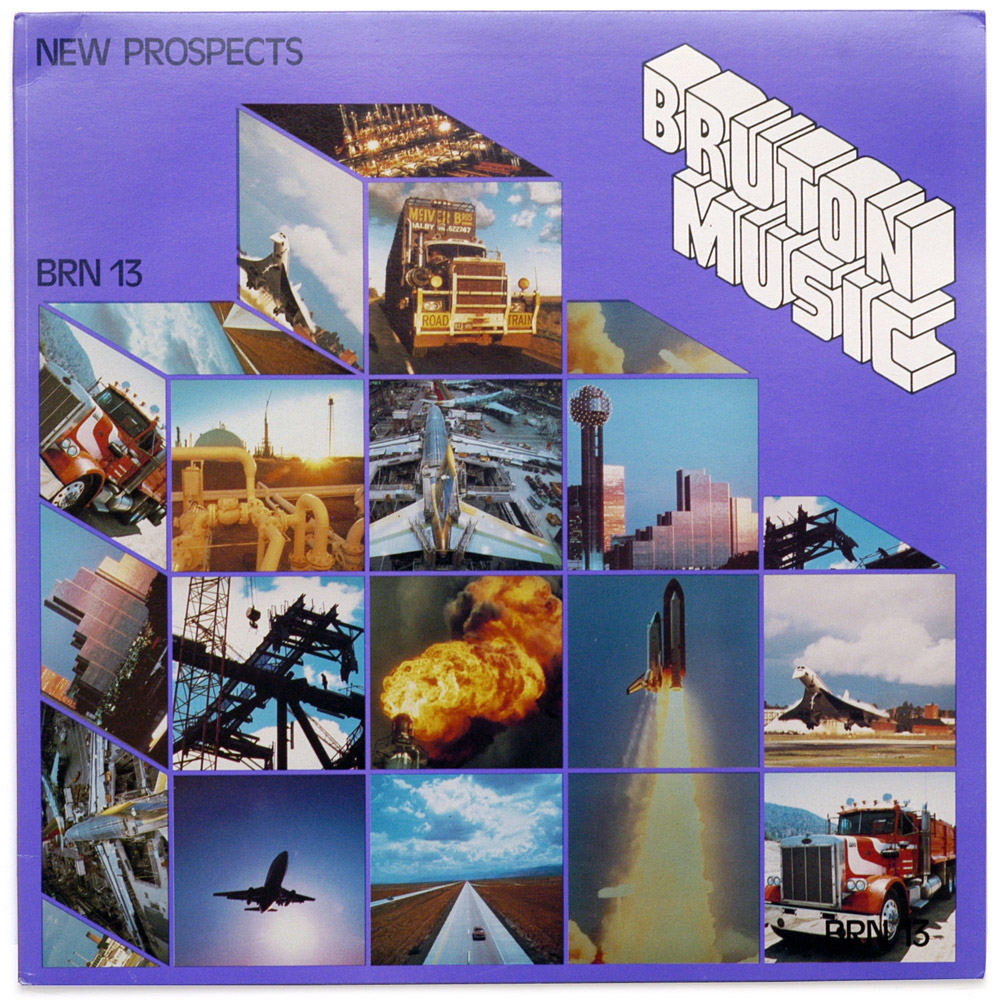
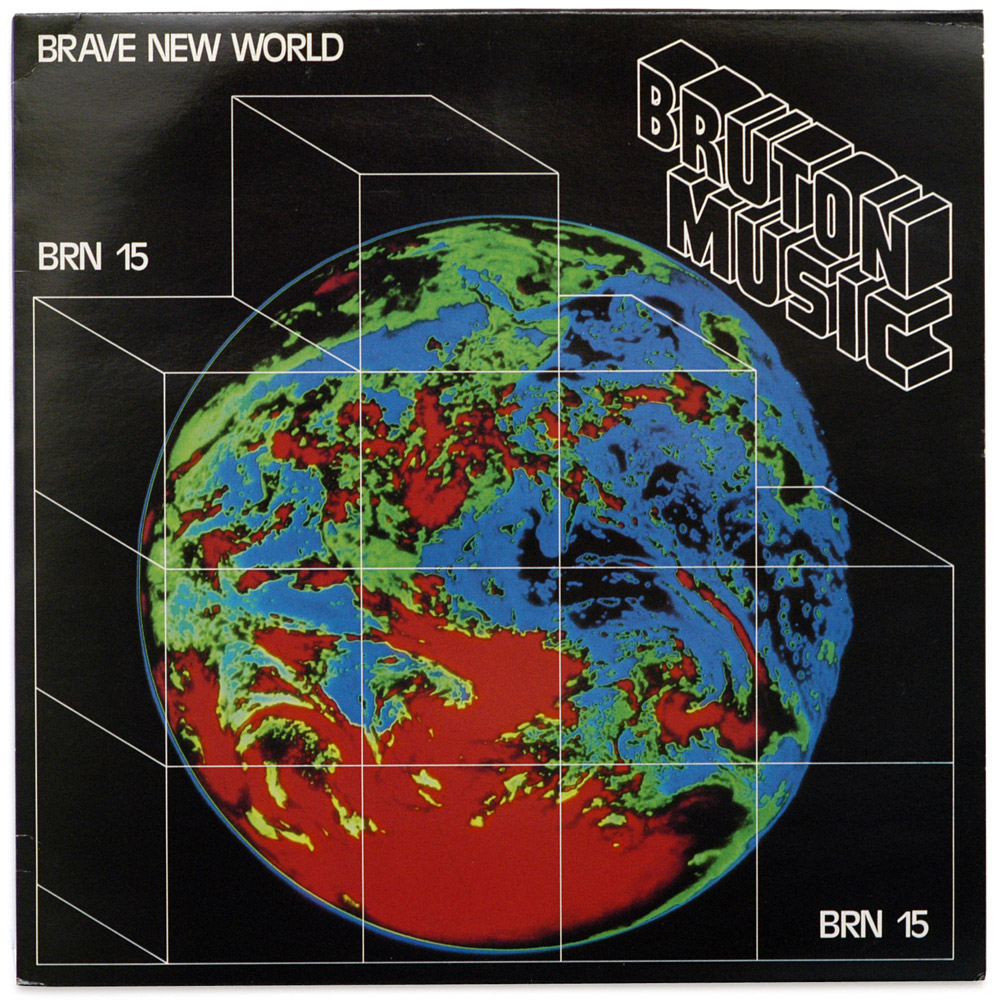
For as long as budget-strapped film and TV productions have existed, there’s been a cottage industry of “stock” music libraries providing them with cheap canned soundtracks, cutting the cost of hiring a dedicated composer. While the utilitarian intersection of creativity and commerce hardly seems like fertile creative ground, at its heyday in the 60s, 70s and 80s, this niche “library music” market yielded surprisingly eclectic sounds, as dozens of catalogues competed to offer increasingly unique moods and styles for every imaginable scenario.
The promise of a quick paycheck and relatively few creative restrictions attracted musicians of all stripes, including mainstream talent like Piero Umiliani, BBC Radiophonic Workshop alumni, and even the great Ennio Morricone. Buried amidst an abundance of AM radio rock imitations and waiting room muzak are some truly inspired and innovative musical experiments: bubbling synth arpeggios for underwater exploration, cosmic electronic soundscapes for science fictions, raw and funky break-beats for crime dramas, and everything in between.
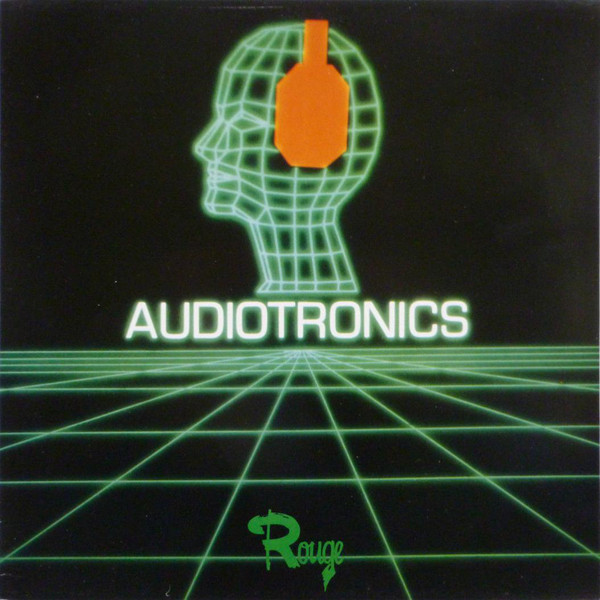
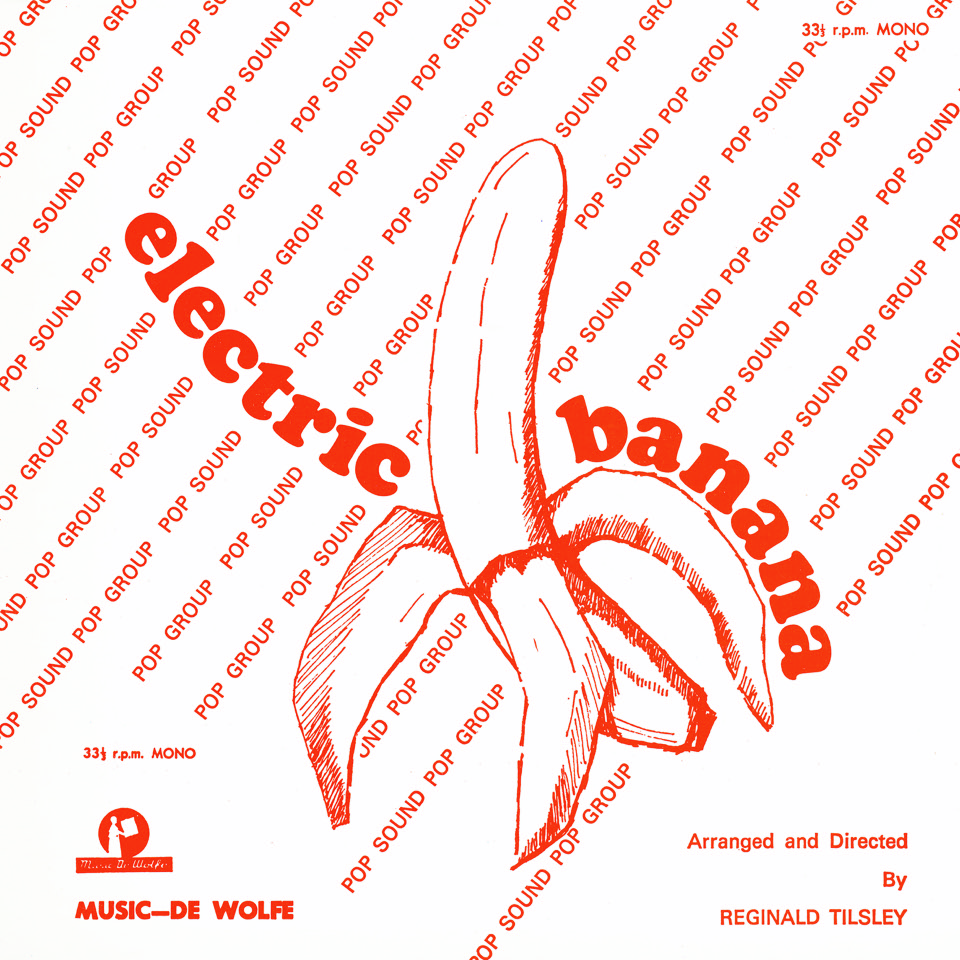
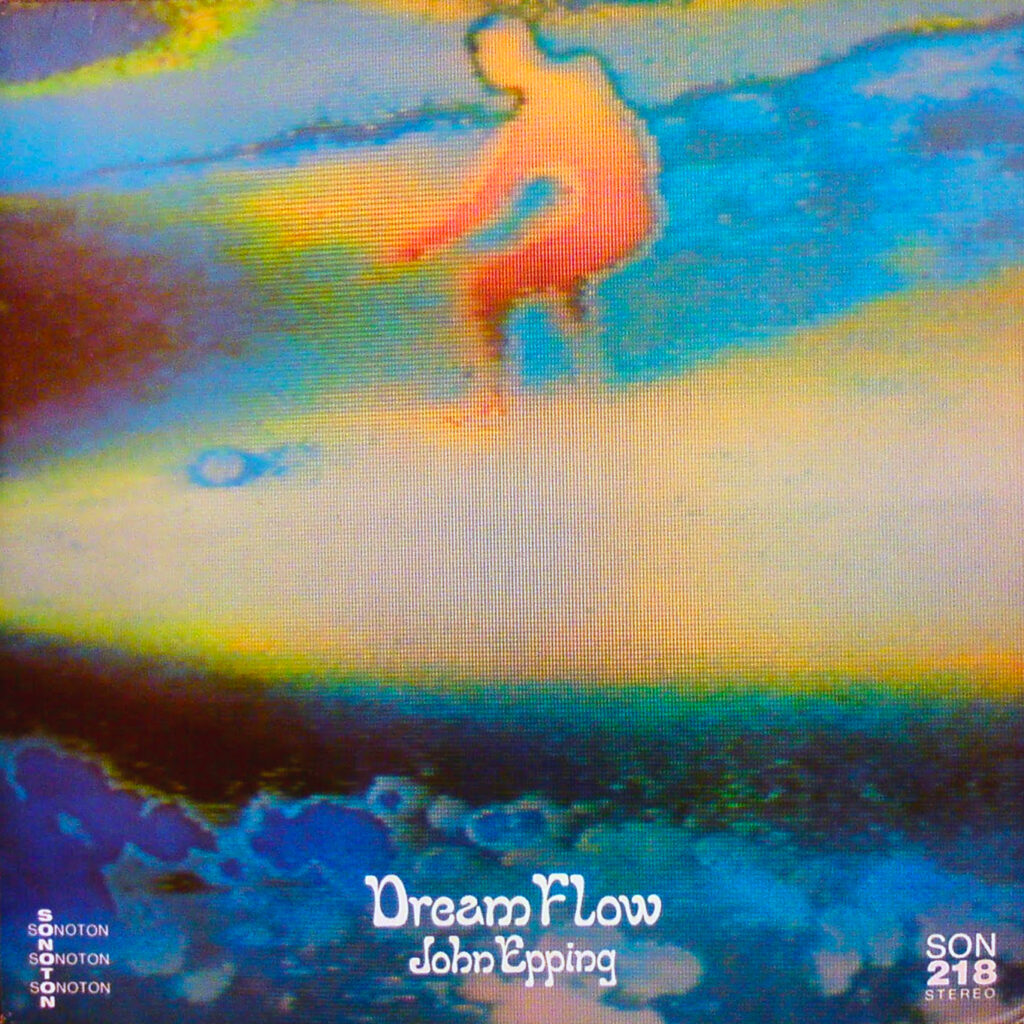
Over the years, a growing cult of adventurous listeners has tuned in to this private world of “library music.” Production catalogues like KPM, Bruton, De Wolfe and Sonoton have garnered almost the same reverence among DJs and producers as labels like Blue Note, Brain, or ESP. AFS staffer Gabe Chicoine, who moonlights as DJ Adult Themes, has put together a mix of his favorite library music sub-genre: synth-heavy, high energy compositions to soundtrack your stay-at-home adventures (and be sure to keep scrolling for a gallery of his favorite library LP cover designs).
While most instances of library music use faded along with the ephemera of the past, a few have endured, including Alan Tew’s production music used in the BBC TV show The Hanged Man, certain library cues employed by George Romero in DAWN OF THE DEAD, and more recently, Curb Your Enthusiasm has resurrected the music of Italian library composer Franco Mizallini to instant recognition.
Bonus: feast your eyes on some of the charmingly industrial library record designs.

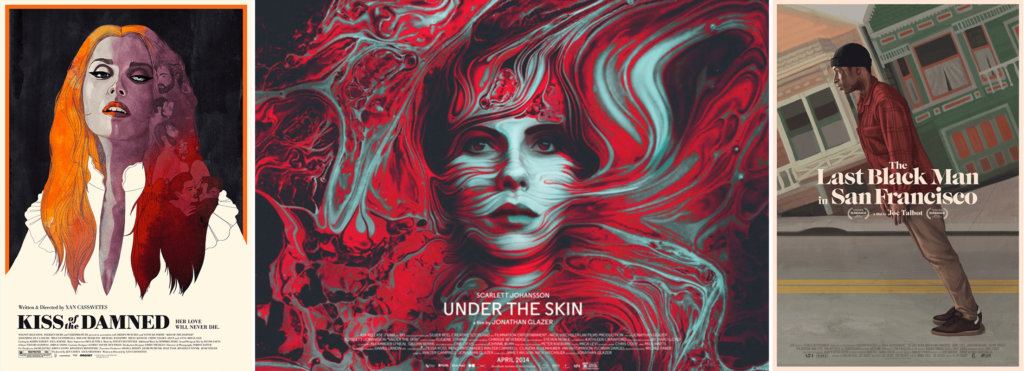
 It was accidental. I had been working in NY doing spot illustrations for music and entertainment magazines. When I moved back to LA, I needed any job because my student loans were knocking on my door. A good friend of mine was working at a movie poster advertising agency and told me they were in need of a receptionist. I interviewed for the job but at the last minute, decided to bring along that month’s SPIN magazine which had my illustration in it. When I showed one of the owners of the company my piece (he was a painter himself), he asked if I’d ever be interested in being a junior designer of movie posters instead. I’d never really used a computer and knew very little about graphic design, but somehow we both agreed to give it a shot. The rest is history.
 VF: Describe your typical process, starting from when a studio or shop first contacts you. How do you go about the task of narrowing down a 2 hour story into one single compelling image?
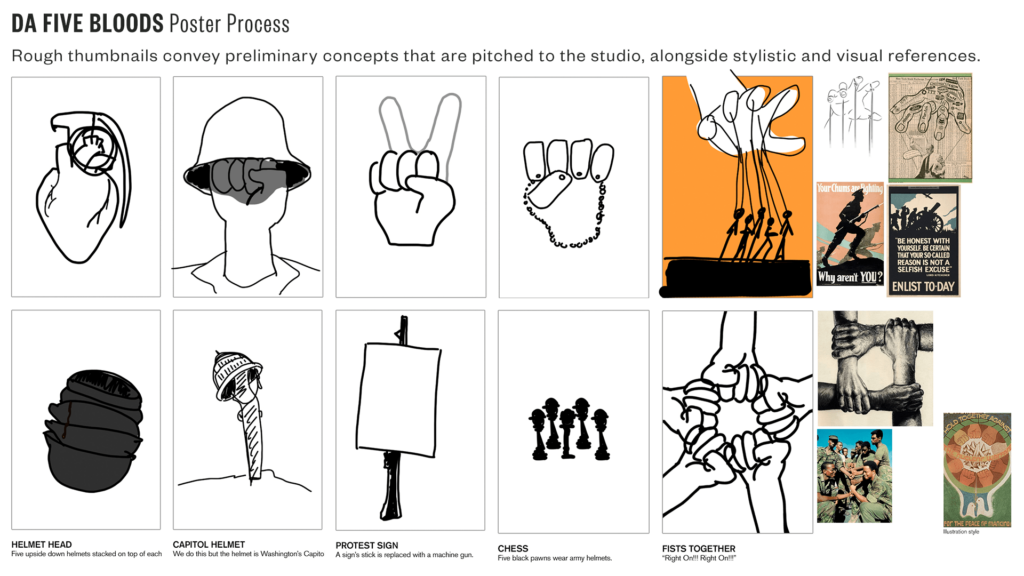 Distilling a 2 hour movie into one single image is no easy feat. Alternative posters you may see on the internet have an easier time because they are dealing with properties that the audience is familiar with. My job is to intrigue someone and introduce them to something new. I do think my background as an editorial illustrator definitely was an asset for this line of work, since I basically would have to summarize a whole article in one image too.
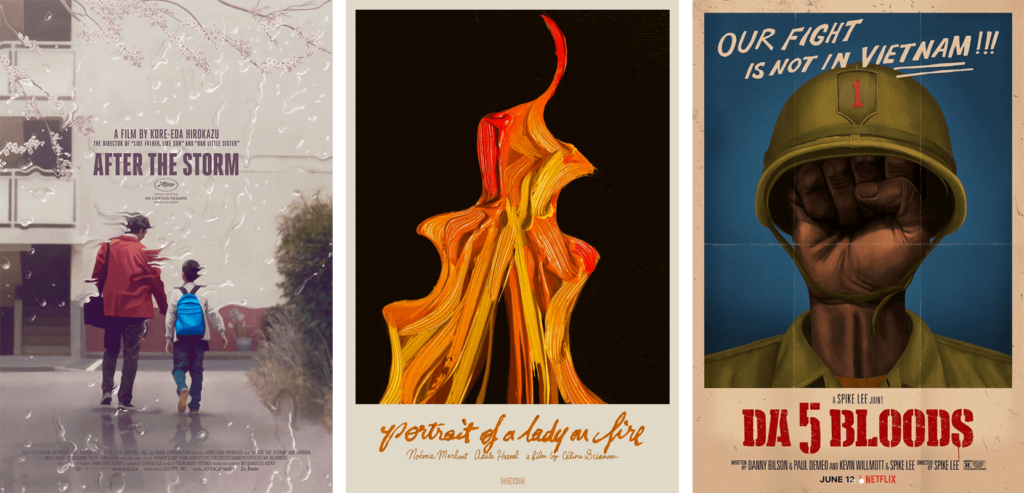 I have creative blocks all the time and it is next to impossible to keep my ideas fresh all the time. I’ve been doing this for 16 years now and have estimated creating over 9,000 pieces during this time. Very few make it to the end. I am used to my work being thrown in the trash (although luckily I’m always compensated for my time). However, the ideas are never completely thrown away. I keep them archived in my brain for an opportunity to blow the dust off and remix them for another project. I can’t tell you how many times I presented the rainy window idea before the film “After the Storm” finally allowed me to do it. And the fist head for “Da 5 Bloods”, I’ve had a version of that idea for a while but this film finally presented me with the perfect opportunity.
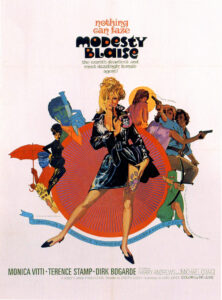 Bob Peak definitely inspired me. Not only do I love his work, I admired him for his versatility to adapt to all genres. Not many artists during his era (if any) did that. Because my role is not that of just an illustrator, I am also an art director and designer, it’s very important that the style of illustration serves the film, instead of just serving me. As far as contemporary artists and designers, I have so many really great friends in this field that constantly inspire me. I also see a lot of illustrators crossing over from alternative posters to real ones and it’s so exciting for me. Not only because I love this new wave of illustrated posters, but I also have to be kept on my toes because now other illustrators are seeing my work, not just art directors who may not have a drawing background.