Whether you are a hardcore VHS horror collector or not, chances are you have come into contact with these rectangular blocks of polypropylene #5, housing magnetic ribbons of ever-increasingly fussy and fragile videotape.
You may not have as many as the author of this piece, depicted below having an existential crisis and starring at one small section of his collection, but chances are you have a few around, labeled “Family Picnic ’96” or “E.T. – DO NOT ERASE!!!!!”
If, for any reason you should find yourself with a lot of free time, you can explore a virtual mountain of videotapes using this amazing resource from the always indispensable site Archive.org. It’s a multi-user collection called the VHS Vault.
Clearly, this is not for everyone, but it is a potentially pretty fascinating way to kill 400 or so hours if you need one. Thank us – or curse us – later.
On the latest AFS Viewfinders podcast we are joined by Amanda Reyes, who has certainly staked out a place as one of the preeminent experts on that much-maligned hybrid entertainment form, the Made-For-TV movie. Amanda runs the podcast and site Made For TV Mayhem and has done a large number of disc commentaries, most recently for the excellent TV Movie PRAY FOR THE WILDCATS. She has also lectured all around the world on the subject of TV movies. Her book “Are You In The House Alone: A TV Movie Compendium 1964-1999” is both an essential resource for fans of the form and a very entertaining read.
Here, we talk about the origins of the TV Movie, the creative forces behind the best ones, and why they were an important outlet for some very talented women. We also take a moment to discuss the episodic television show CHARLIE’S ANGELS, since our History Of Television screening on that subject was so rudely canceled in light of the current crisis.
Finally, Amanda offers some recommendations of Made For TV movies available on Amazon Prime for streaming.
Here are Amanda’s recommendations for streaming TV Movies, though you will find many more films for your watchlist mentioned in the discussion, so take notes as you listen, or use this handy Letterboxd list as a resource.
GO ASK ALICE (1973, D. John Korty)
BORN INNOCENT (1974, D. Donald Wrye)
COME DIE WITH ME (1974, D. Burt Brinckerhoff)
SHADOW OF FEAR (1974, D. Herbert Kenwith)
INVASION OF CAROL ENDERS (1974, D. Burt Brinckerhoff)
NIGHTMARE AT 43 HILLCREST (1974, D. Dan Curtis, Lela Swift)
TRILOGY OF TERROR (1975, D. Dan Curtis)
KILLJOY (1981, D. John Llewellyn Moxey)
POLICEWOMAN CENTERFOLD (1983, D. Reza Badiyi)
THE EXECUTION (1985, D. Paul Wendkos)
FEAR STALK (1989, D. Larry Shaw)
CAROLINE? (1990, D. Joseph Sargent)
FACE OF EVIL (1996, D. Mary Lambert)
Listen via the embedded player below or on your preferred podcast platform.
Can’t find us? Let us know and we’ll work on adding our podcast to your preferred service.
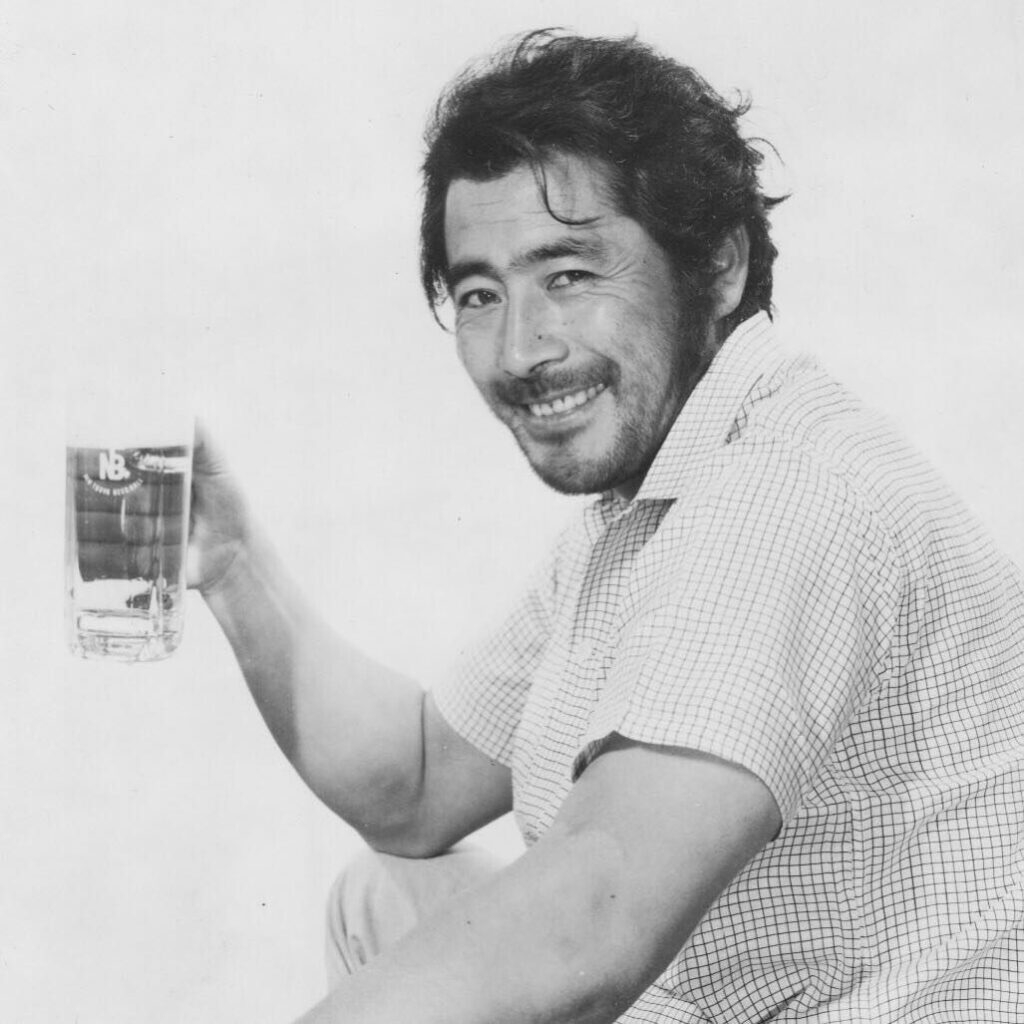
On this day, which would have been his 100th birthday if the world were a fair and just place, we present a gallery of photographs of a man who was not only one of the great actors of the screen – but also an undeniably great movie star: Toshiro Mifune. The camera loves some people more than others, and you can see which side of that equation Mifune falls on. In an era when Americans and Europeans were the major male screen sex symbols, Mifune brought a force and authority that arguably blew them all away. So, obviously, watch all his movies, but until then, enjoy the magic of Mifune.
This is the pissed-off Mifune who thrilled arthouse audiences as a man of war or bandit starting in the 1950’s.
But prior to that, he had been a smoldering young romantic figure in films like his first, 1947’s SNOW TRAIL.
And had appeared in modern crime films like Akira Kurosawa’s STRAY DOG (1949).
By 1958’s THE HIDDEN FORTRESS he was an established screen figure, and an actor at the top of his game.
Here he is relaxing at home.
Here he is pretending to relax in a photo studio.
Here he is smoking a cigarette like it owes him money. Don’t smoke, but let’s admit that it looks cool.
And here he is in the last collaboration with Akira Kurosawa, RED BEARD (1965), proof that shaving is a complete waste of time.
For many of us, this period is a good time to do some deep listening. Sure, watch movies and TV, read books, all that, but also take some time to just listen to music. It’s a great way to clear the head and to reset your emotional and sensory responses – science says so.
Here’s a selection that is appropriately cinematic, it is the suite from Fellini’s absolutely crucial film LA STRADA, composed by Nino Rota and played by our close friends the Münchner Rundfunkorchester, led by that baton master Ulf Schirmer. Rota’s scores in Fellini films often came first in priority and the images were edited to illustrate the music. Rota himself was no fan of cinema and at one point told fellow composer Michel Legrand that he had never watched a film except ones he himself had scored!
When we get the old AFS Cinema up and running again, we will be celebrating Federico Fellini’s birth Centennial with this and a number of his other great films. In the meantime, just sit back and enjoy this.
It should come as no surprise that Andrew Bujalski (SUPPORT THE GIRLS, COMPUTER CHESS, FUNNY HA HA) is one of our favorite filmmakers. From his micro-budget beginnings to his current status as one of the most respected writer-directors out there, he is a force not only as an artist but also as an educator and reliable source of great movie recommendations.
We asked Andrew for some of his streaming recommendations during this period when so many of us are restricted to our homes. Here’s what he sent.
HIS GIRL FRIDAY (Amazon Prime)
1940, D. Howard Hawks
You’re stuck at home, might as well enjoy pretty much the most fun and delightful movie ever. Don’t think it’s lost a step in 80 years.
W.R. MYSTERIES OF THE ORGANISM (Criterion)
1971, D. Dusan Makavejev
I don’t think anyone before had attempted such a wild, fluid erasure of the walls between fiction and documentary, comedy and politics and fever dream, and doubt anyone’s come close since.
THE LITTLE FUGITIVE (Kanopy, Sundance Now)
1953, D. Morris Engel, Ruth Orkin, Raymond Abrashkin
A total charmer and a mainspring for all indie cinema that followed. If you’re trapped in the house with children whose attention spans haven’t been too Disney-fried yet, they may actually be willing to sit through this with you and you’ll all feel the richer for it.
Speaking of indie cinema, this movie won the Grand Jury Prize at SXSW in 2008, it’s one of the best microbudget indies of the digital-video era, and the director is so horrid at self-promotion (a fair indicator of integrity) that you can only–but thankfully!–watch it on his own Vimeo page. Well worth it.
LIFE IS SWEET (Criterion)
1990, D. Mike Leigh
…or maybe bittersweet. Any Mike Leigh should be good for the soul right now, and this one about the people closest to us in particular.
THIS IS THE END (Netflix)
2013, D. Evan Goldberg, Seth Rogen
I can’t in good conscience suggest you watch apocalypse movies right now, but if you must, this one is funnier than CONTAGION and OUTBREAK combined. (Though I guess Romero’s DEAD series comes close for comedy.) Like all good Hollywood satires it is fueled by blazing coals of self-loathing.
The COVID-19 crisis has affected all sectors of our lives and our various forms of work. The cancellation of SXSW has had enormous ramifications for our city and region. Take a moment to consider one small corner of this disaster – it’s not as serious as the loss of life, of course, but it is enormously meaningful to the people affected.
Film festivals offer short film programs for a very good reason. For many filmmakers it provides an entry-point into festival-going. Time and time again, the inclusion of a short into a respected fest has been the beginning of a productive film career for its maker – and often for cast and crew as well. The chance to spend time among peers and meet potential funders is an enormous help, and the loss of this opportunity will necessarily have a negative effect on their professional development, and on the art form in an unquantifiable way.
As many of you know, AFS supports filmmakers with production grants, travel funding and finishing resources. It is a big part of why we’re here. So in that spirit, we wanted to share some of the short films created by AFS-supported filmmakers and members with you and encourage you to share the ones you like with others on social media or in whatever way suits you. And don’t stop there. Watch all the available SXSW selected shorts here.
A fight to be born, a fight to survive, a fight to find your place, and the fight to maintain. All degrees of the same struggle.
THE PAINT WIZZARD
Dir. Jessica Wolfson & Jessie Auritt, AFS Grant-supported film
A portrait of Millie “The Paint Wizzard” McCrory, who decided at the age of 58 to change her name and pronouns and embrace her authentic self, cat ears and all.
WAFFLE
Dir. Carlyn Hudson, AFS Filmmaker Support programs alum
Kerry attends a sleepover with Katie, a socially awkward, mysteriously orphaned heiress. Kerry learns the hard way that Katie gets what she wants.
The great star of stage and screen Marlene Dietrich was interviewed as part of the BBC’s long-running “Desert Island Discs” program in 1965. She was in a theater dressing room while on one of her many cabaret tours. As you might expect from her screen persona, the real Dietrich was a brilliant and restless explorer of life. This is reflected in her musical selections.
The interviewer gives a brief recital of her career, frequently interrupted by Miss Dietrich’s corrections and amendments. The musical numbers are omitted in this recording, but if you have the time – and you probably do, let’s face it – you can find them all on YouTube, Spotify, or, perhaps in your own collection.
And, because it is one of the most incandescent entrées into stardom, below is Miss Dietrich’s screen test for her self-professed debut film THE BLUE ANGEL in 1930. In fact, she had done a good amount of screen acting before this, but out of respect for this great artist, we will allow her story to stand. We think you can detect some glimmer of screen presence here:
In the whole nearly-three years of AFS Cinema history, no film has been seen by more people than FANTASTIC FUNGI. It is a fascinating mix of science, spirituality and truly stunning time lapse photography.
Now it’s available to watch at home and share with your family and friends. Plus, as a special bonus, there are three live Q&As on March 26 with mycologist extraordinaire Paul Stamets and FANTASTIC FUNGI director Louie Schwartzberg that you can participate in from the comfort of your home, or a wi-fi enabled mossy knoll near your home if you prefer.
We like the film a lot, and we love the fact that the filmmakers are not only providing us with this chance to share it, but also in the process to gain some greatly needed income in this time of our greatest need.
Meiko Kaji, the Japanese screen star and singer, was born on this date in 1947. Her film career began with bit parts in Yakuza films for Nikkatsu Studios. There the outlaw provocateur director Teruo Ishii met her and cast her in the lead role of a film that would in many ways foretell the heady mix of violence and elegance that she became identified with. BLIND WOMAN’S CURSE (1970) is very bloody, super strange and it contains a stylized duel in a beautifully artificial studio setting. Kaji also sang the theme ballad for the film, and it became her first record release of many.
Here’s the trailer for BLIND WOMAN’S CURSE. Warning: the video clips posted in this article are seriously violent and not for everyone.
Next, Kaji was cast as the second banana to pop singer Akiko Wada in the wonderfully titled STRAY CAT ROCK: DELINQUENT GIRL BOSS, a teenage gang movie that crammed every possible exploitation element into the mix. Though Wada was the star of the film, audiences responded best to Kaji and she became the lead in the remaining entries in the STRAY CAT ROCK series.
Here’s the trailer for the fourth installment of that series: STRAY CAT ROCK: MACHINE ANIMAL, in which Kaji’s proto-goth persona feels a little strange against the backdrop of roaring motorcycles and LSD.
Then, Kaji jumped to a new studio, Toei, and teamed up with director Shunya Ito for the extraordinarily strange women-in-prison-based FEMALE CONVICT SCORPION series. Here, Kaji’s gothic tendencies were given free rein, especially in the astonishing second chapter FEMALE CONVICT SCORPION: JAILHOUSE 41. She plays an action hero, but the film has some unexpected supernatural touches as well, and is imbued with what appears to be a leftist political message. Watch the trailer, but be warned: it’s VERY strong stuff.
That was Kaji singing the dirge-like ballad again, of course. After this series had run its course, she played the lead in a few Yakuza films for Toei and then made the leap to the big leagues. Toho Studios cast her as the lead in a film that would define her legacy as much as any of the above films. LADY SNOWBLOOD was, like the SCORPION series, an adaptation of a popular manga series. It also gave Kaji a chance to truly showcase all of her best attributes, her elegance, her ghostly distance and her graceful way with a blade. She has appeared in more movies since LADY SNOWBLOOD and its sequel, but these films would be the capper to this particular part of Kaji’s iconic career as one of the most imposing and dynamic screen presences we have yet seen.
It’s rare that a subtitled, black-and-white, Eastern European art film like COLD WAR crosses over and becomes a must-see for even general audiences. But the film, written and directed by Polish filmmaker Pawel Pawlikowski (IDA) strikes so many universal chords in its story of star-crossed love, and is such a gorgeous example of cinematography – every frame truly is a work of art – that it achieves a kind of visual and emotional purity of expression that we see very rarely in today’s cinema.
Additionally, there is the human element. The leads Joanna Kulig and Tomasz Kot, give exceptional performances in their roles, based on the director’s own parents, as a passionate couple ripped apart by powerful political factions. Not only are they skilled performers, they are beautiful camera subjects. This is not a trivial matter in a movie that is effectively a construction of idealized images. Cinematographer Lukasz Zal places the two in a Cartier-Bresson-like visual reality that accentuates their old-school movie-star planes and angles. It really works. The film is an emotional symphony of images.
The film received three Oscar nominations today, for Best Foreign Film (Pawlikowski’s previous film IDA won this category in 2015), Best Director, and Best Cinematography.
Here’s what the critics are saying about COLD WAR:
“A near-perfect film, an artfully crafted, flawlessly acted meditation on love, memory and invented history that’s both deeply personal and politically attuned.” – Ann Hornaday, Washington Post
“Glorious. Made with a verve and lyricism which rekindles memories of the glory days of European New Wave cinema. Invokes memories of Milos Forman, Jiri Menzel, and Francois Truffaut at the start of their careers.” – George McNab, The Independent (UK)
“Wholly riveting to watch, Joanna Kulig rifles through moods and attitudes with the casual magnetism of a young Jeanne Moreau, or even a Euro Jennifer Lawrence. The lovingly handpicked soundtrack, ranging from darkly mesmerizing folks curiosities to torchy blues standards to a climatic, ethereal wave of Glenn Gould-interpreted Bach. A film crafted with almost eerie exactitude across the board… (with) finely wrought black-and-white compositions, each frame an exquisite tile of milk-and-malt melancholy.” – Guy Lodge, Variety
There are some pretty prolific filmmakers out there in the world, but none have been as relentlessly productive as the perversely driven Rainer Werner Fassbinder, whose work is being celebrated this summer at the AFS Cinema.
Born into a ruined and fractured Germany in 1945, the young director began his work on the live stage, where he mounted a fierce ideological opposition to the official “safe” state theatre with his experimental “Antitheater” principles. These early theatrical productions, in a sense, continued the work of the exiled playwright and dramatic theorist Bertolt Brecht. From Brecht, Fassbinder learned that the dramatis personae need not be figures of personal identification for the audience, but may instead be unsympathetic or even abhorrent.
Fassbinder’s first film, LOVE IS COLDER THAN DEATH (1969), mixes Brecht’s sense of alienation with a story influenced by American film noir and the production aesthetics of the French New Wave. For the first few years, Fassbinder’s shoestring budgets forced him to make films at a lightning pace, often using the same cast and crew for multiple productions and stepping in front of the camera as an actor when needed. In LOVE IS COLDER THAN DEATH, the young writer/director cast himself as the small-time pimp Franz. In his leather jacket, sunglasses, and with a rebellious sneer that offsets his round face and baby-fat, he presents an iconic image of the post-war German generation’s rebellion.
Fassbinder’s personal life was as explosive as his body of work. He didn’t really care to draw a boundary between his onscreen and offscreen lives, often adding lovers and friends to his recurring cast of film players. In 1969, Fassbinder began a passionate love affair with the then-married actor Günther Kaufmann, who would go on to play the lead role in the director’s 1971 western (and biggest flop) WHITY. By that year the relationship had run its course – leaving in its wake one broken heart and the copious driveway oil puddles left by the four (4!) Lamborghinis Fassbinder had purchased to win Kaufmann’s affection—three of them sold off and the fourth completely destroyed.
All the while, the work continued at a Herculean pace. Fassbinder did not even stop production for his marriage to Ingrid Caven, another member of his cinematic stock company. He instead recycled his own wedding reception for a film he was making titled THE AMERICAN SOLDIER (1970). By the time 1971’s WHITY came along, Fassbinder’s off-screen drama had come to rival the turmoil that was captured by the camera. The tensions with WHITY’s production would be transmuted to a kind of shaggy comedy in 1971’s BEWARE OF A HOLY WHORE, in which Fassbinder turns a sardonic eye to his own idiosyncrasies and the treatment of his cast and crew.
This year marked a turning point for Fassbinder: the end of his “Antitheater” films and the beginning of his relationship with the recently divorced actor El Hedi ben Salem. The two met at a bathhouse and began a rocky romance peppered with jealousy, violence, drugs, and alcohol.
Salem stars in Fassbinder’s ALI: FEAR EATS THE SOUL (1974), in which his onscreen relationship with an elderly German woman subjects the pair to racism and ageism. This technique of analogizing other socially-challenging relationships to the dilemma of gay couples is, of course a Hollywood tradition. This film marks the period when the influence of the German-born Hollywood director Douglas Sirk had fully come to the fore in Fassbinder’s work. Fassbinder loved Hollywood films and, along with the Brechtian theatrical tradition, they grounded the form of his greatest works.
The Fassbinder/ben Salem story had a decidedly unhappy ending. Shortly after their relationship ended, Salem stabbed three people in Berlin and had to be smuggled out by car. According to Daniel Schmid, a Swiss director and Fassbinder’s close friend, the filmmaker cried the entire ride home. There was to be more tragedy in these men’s futures.
By this time, Fassbinder had reached international acclaim. He began seeing Armin Meier, a former butcher with no prior experience in show business. The relationship was especially lonely for Meier: when Fassbinder wasn’t around, no one would come visit him. After the director ended things between them in April of 1978 and neglected to invite him to his birthday celebration, Meier committed suicide—overdosing in the kitchen he had once shared with Fassbinder.
Fassbinder coped with this the only way he knew how: by continuing to work. That same year, he released IN A YEAR OF THIRTEEN MOONS, his most personal and bleakest film yet. The last four years of Fassbinder’s life saw its most diverse work, the disbanding of his recurring cast, and his romantic relationship with editor Julienne Lorenz.
In 1982, while living with Lorenz, Fassbinder received the news that El Hedi ben Salem had hanged himself. Not only that—he had done so five years prior, a fact which had been kept from the volatile Fassbinder.
By then, the director was up to his neck in the in post-production work for the queer drama QUERELLE and looking ahead at the next project. The 37-year old drove himself relentlessly—he snorted cocaine to get going, drank whiskey to soothe the jitters, and popped downers to go to sleep.
In June of 1982, Lorenz found Fassbinder dead in his room, a victim of intoxicants and overwork. QUERELLE was released posthumously a month later and the film was dedicated to El Hedi ben Salem.
Fassbinder’s legacy is as complicated as his life. The numbers themselves are impressive: 38 feature films, several ambitious television miniseries, short films, and countless plays in a career that spanned a only 17 years and ended at an age when most filmmakers are just beginning to make their best work.
It is easy to romanticize Fassbinder’s tortured artistry, but his films are so consistent and compelling that they force us to deal with the whole of his existence—not only the person that Fassbinder was, but also the space and time he occupied in Germany – and in the world.
There is no isolating the political, sexual, or the personal in Fassbinder’s work. It is all caught up together in each soul-bearing film. Even today, we are still catching up with Fassbinder’s volcanic output. His back catalog has seen new rediscoveries as recently as two years ago with the restored television mini-series EIGHT HOURS DON’T MAKE A DAY (1972).
It’s safe to say Fassbinder is not done surprising us yet. He said it best himself: “I don’t throw bombs, I make films.”